Warning signs tell you what the road is about to do. They do not order you to do anything, which is exactly why people lose marks on them: the answer is almost never 'stop' or 'you may not', it is 'slow down and be ready for this'.
They are triangular with a red border when the hazard is permanent, and diamond-shaped with a yellow ground when it is temporary, which in practice means roadworks. A rectangular plate under the triangle narrows the warning down: how far ahead the hazard is, how long it goes on for, or which direction it applies to.
The manual sorts them by what is changing: the layout of the road itself, the situation on it, hazards that move, and the places where your own vehicle has to change what it is doing. Read them in that order and the shapes stop being a memory game.
In the test: A triangle points at a permanent hazard; a yellow diamond means the hazard was put there this morning and may be gone next week. Both mean slow down, neither means stop.
Road layout changes ahead
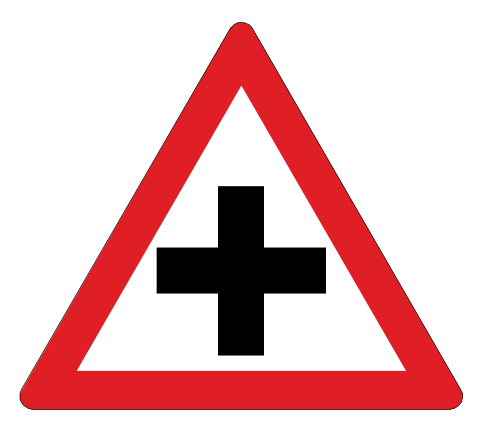
Crossroad ahead.
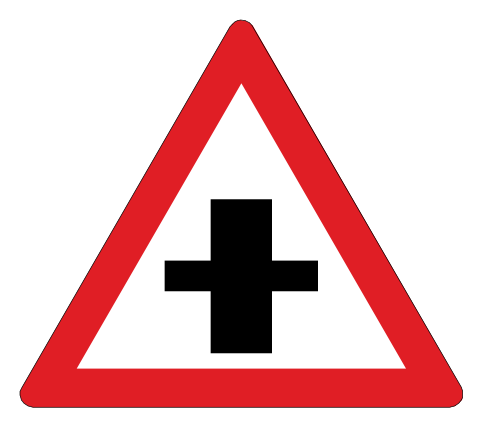
Priority road with secondary crossroad ahead.
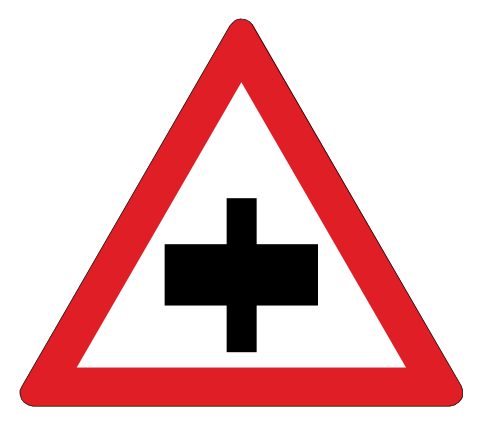
Secondary road with priority crossroad ahead.
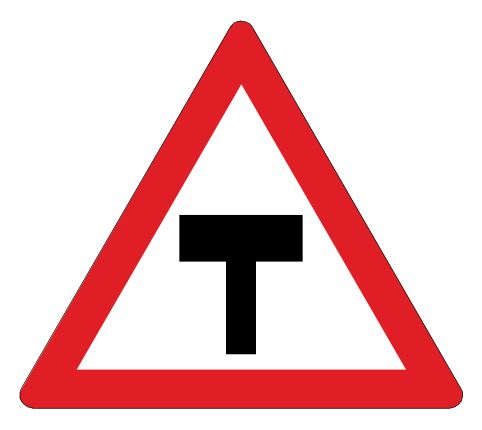
T-junction ahead.
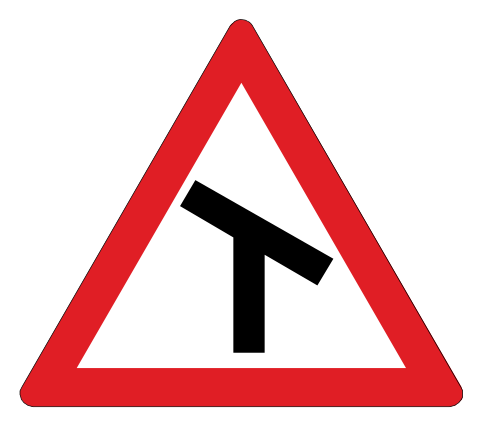
Skew T-junction ahead.
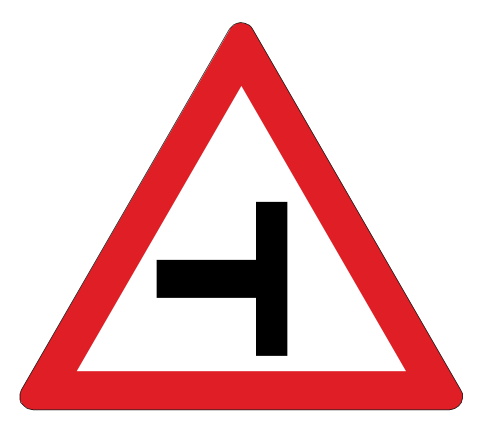
Side road junction ahead.
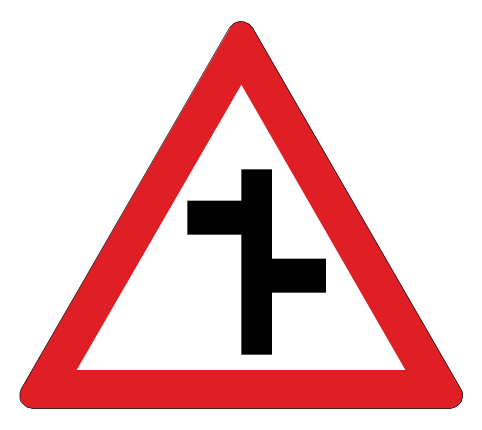
Staggered junctions ahead.
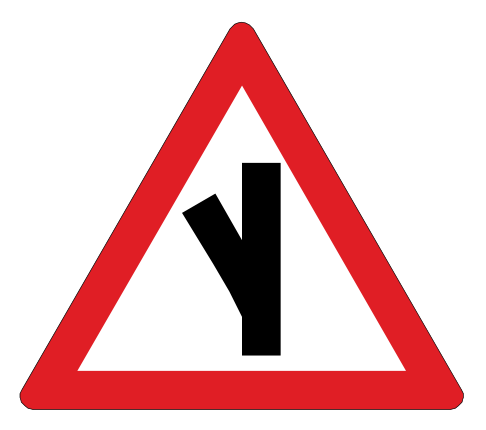
Sharp junction ahead.
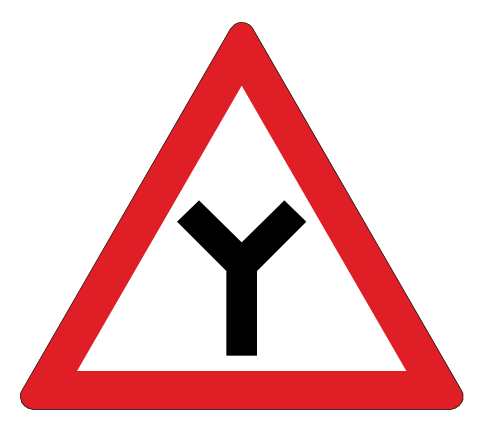
Y junction ahead.
Road situations ahead
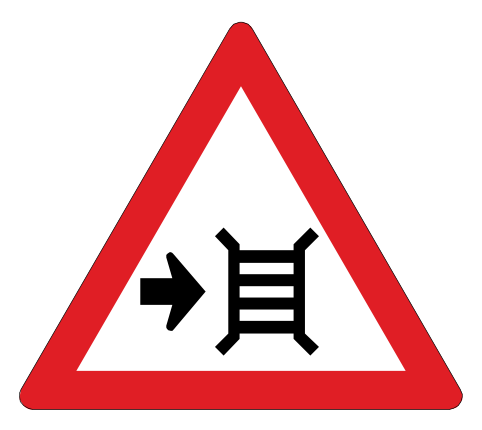
Motor gate ahead with cattle grid. Pass on the side of the cattle grid.
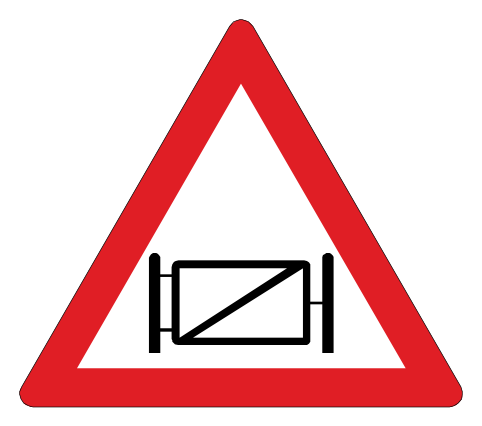
Gate, railway boom or barrier ahead.
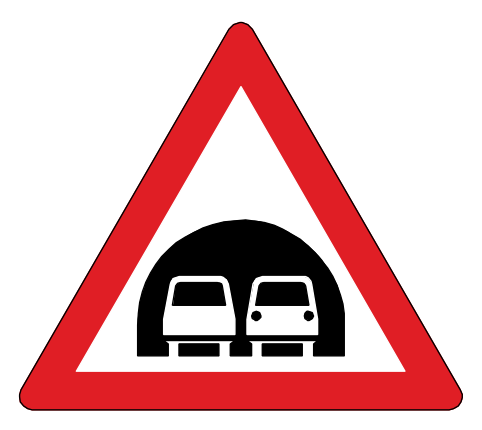
Tunnel ahead. Switch your headlights on and don’t overtake.
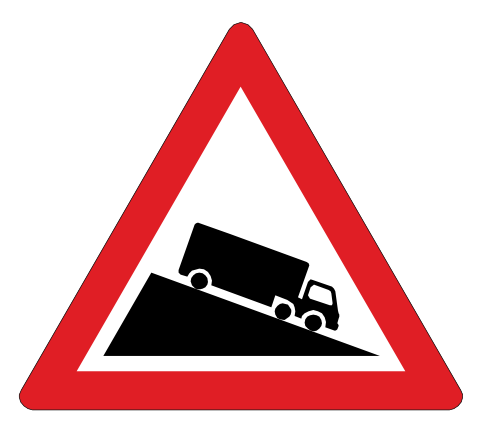
Steep downhill ahead. Change to a lower gear if necessary.
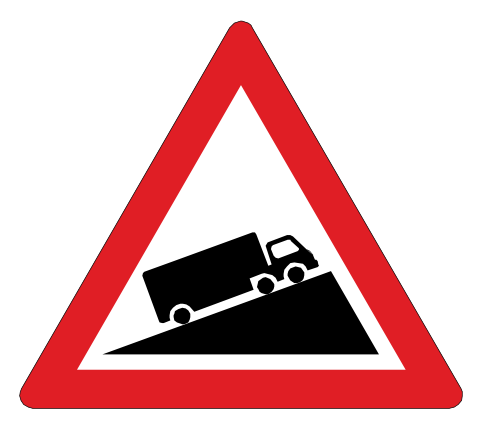
Steep uphill ahead. You may not cross a No Overtaking line to overtake a slow moving vehicle.
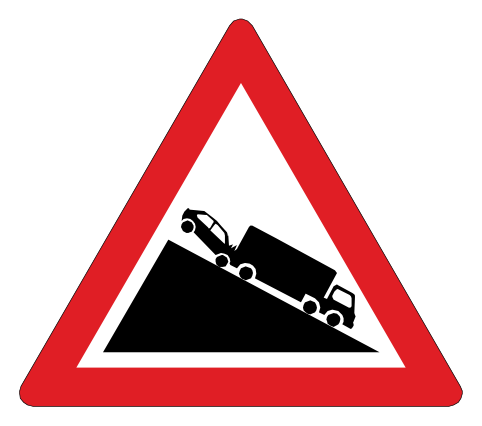
Slow moving vehicles ahead.
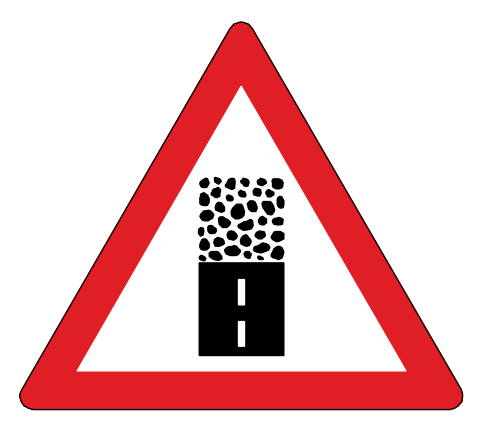
Tarred road becomes a gravel road ahead, with loose stones that can damage windscreens and paintwork.
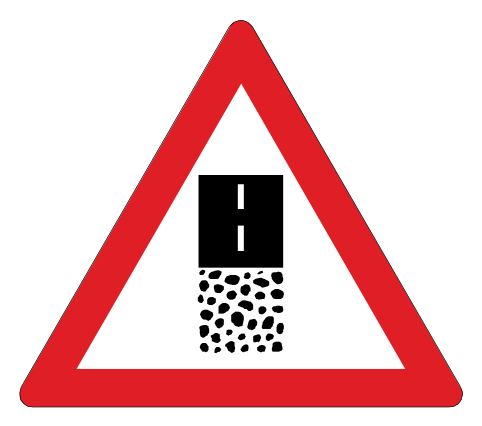
Gravel road becomes a tarred road ahead.
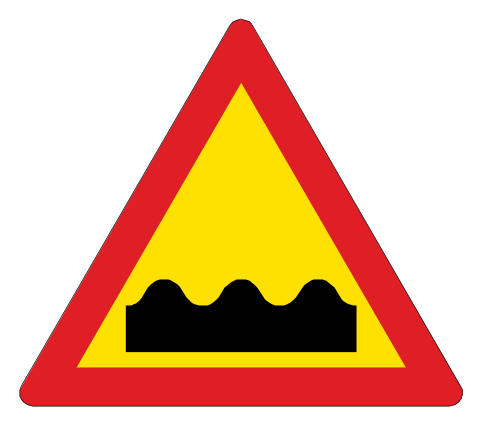
Temporary uneven, potholed, or bumpy road surface ahead.
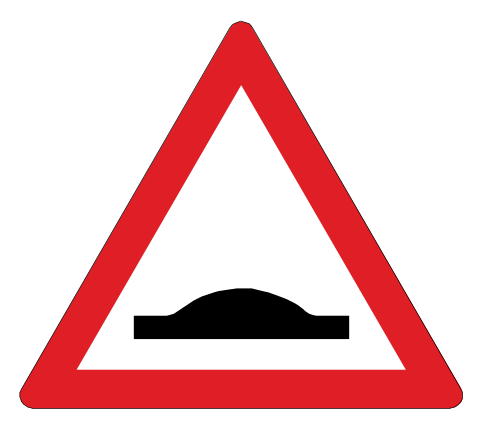
Speed humps ahead. Slow down and obey any speed limit sign.
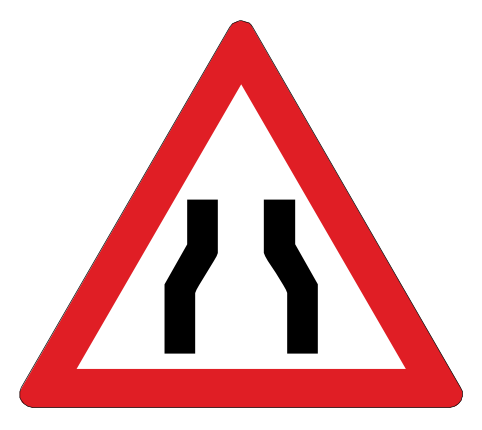
Road ahead narrows from both sides. Keep well to the left.
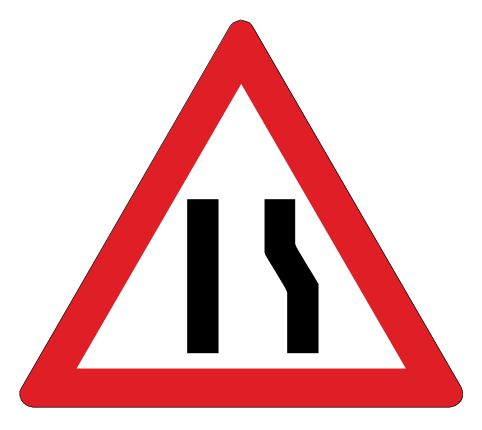
Road ahead narrows from one side. Keep well to the left.
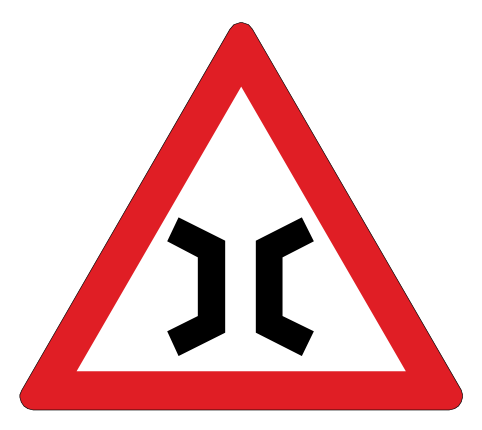
Road narrows at a bridge ahead. Slow down and approach with caution.
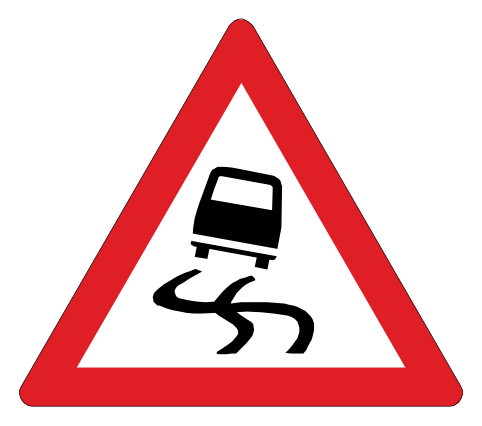
Slippery road ahead, especially when wet. Drive with caution.
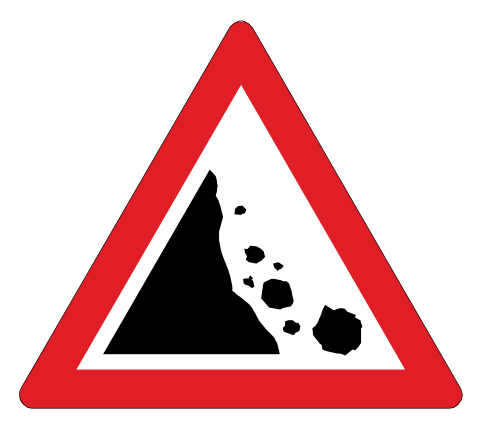
Falling rocks ahead, especially after rain.
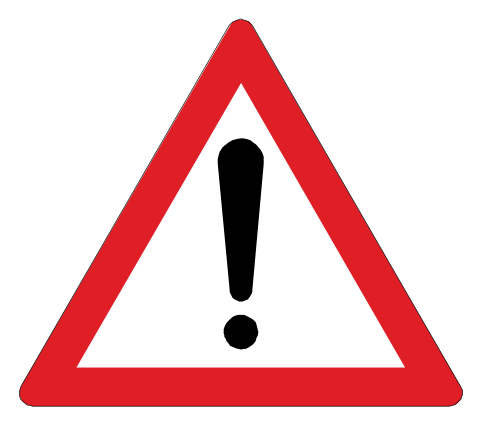
General warning sign, usually with an explanatory plate beneath it.
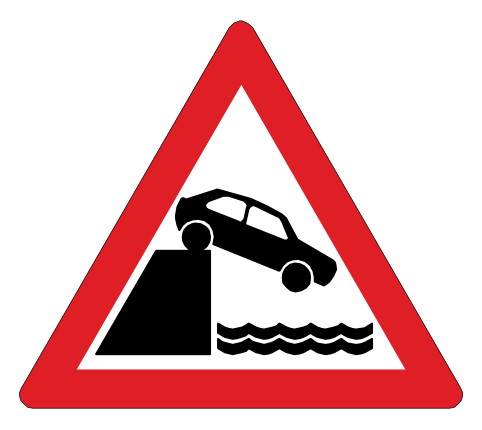
Jetty edge or river bank ahead, close to the road.
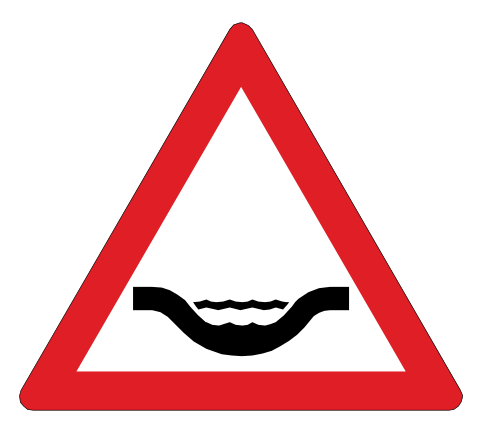
Water crosses the road at a drift ahead. Go very slowly and test the brakes afterwards.
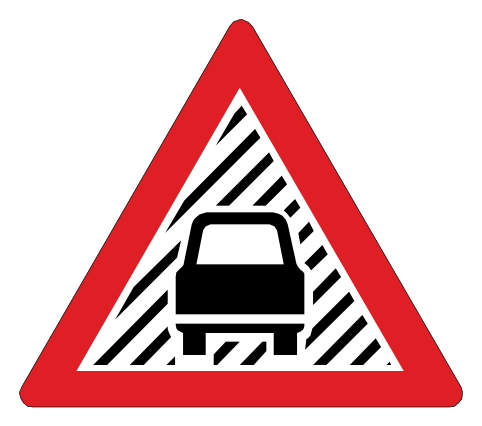
Reduced visibility can be expected ahead (e.g. frequent mist).
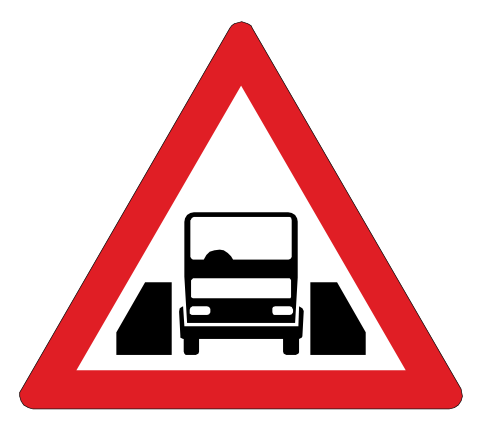
Structure ahead that is less than 5m wide, e.g. bridge.
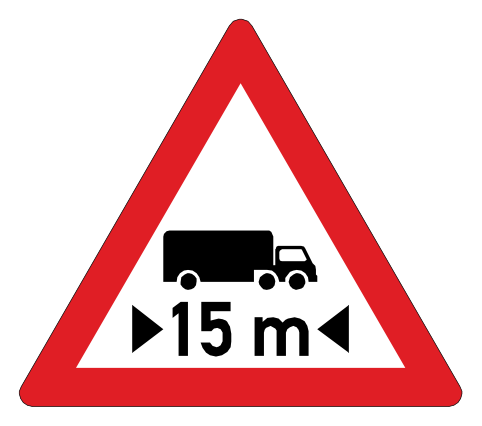
Vehicle length regulatory restriction ahead.
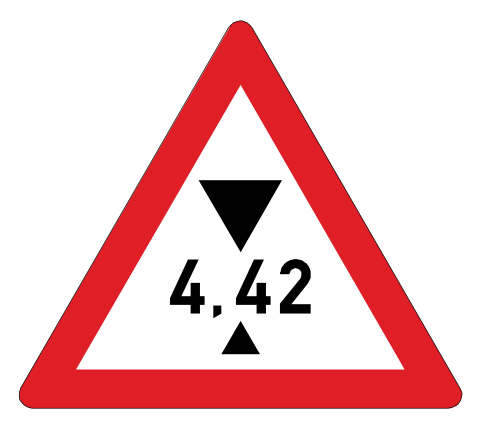
Vehicle height regulatory restriction ahead.
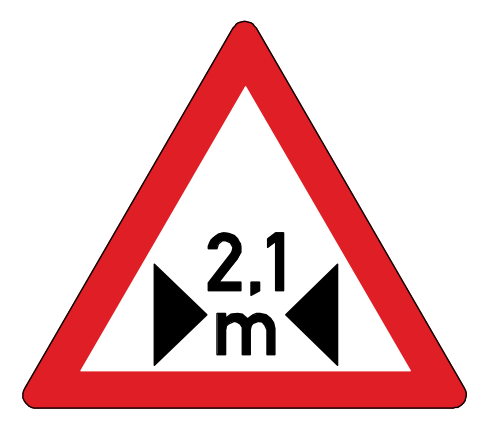
Road width regulatory restriction ahead.
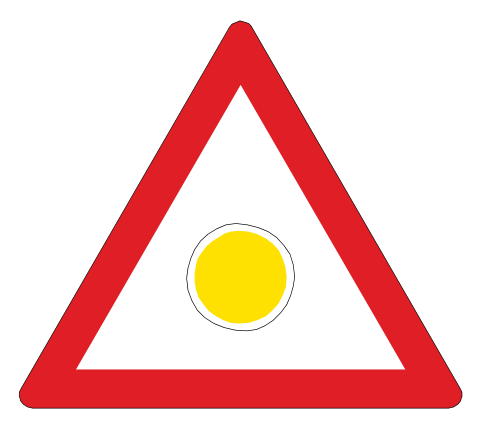
Hazard ahead. Slow down and approach with caution.
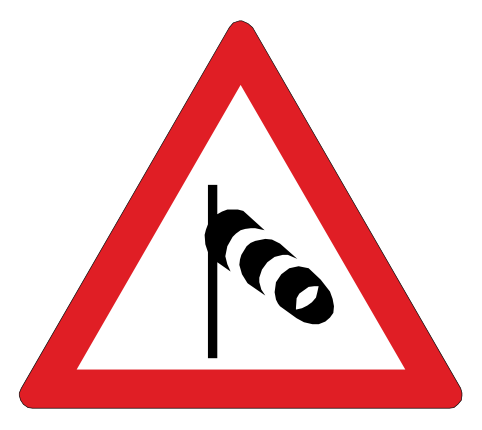
Strong crosswinds can be expected ahead.
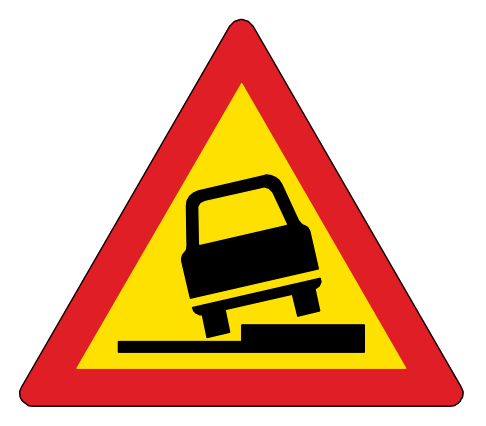
Surface step in the road surface ahead (temporary version).
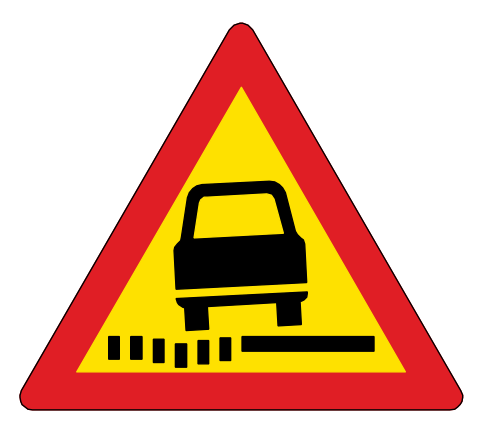
Soft shoulder at road’s edge ahead (temporary version).
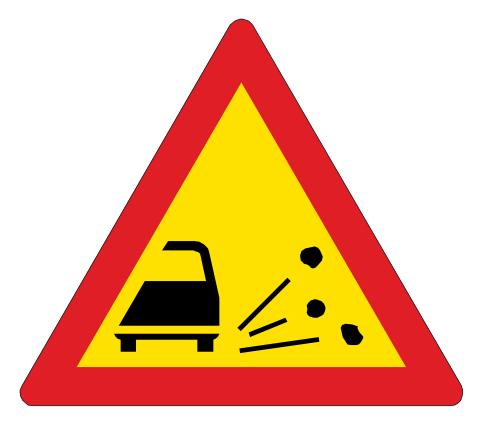
Loose stones on road surface ahead (temporary version).
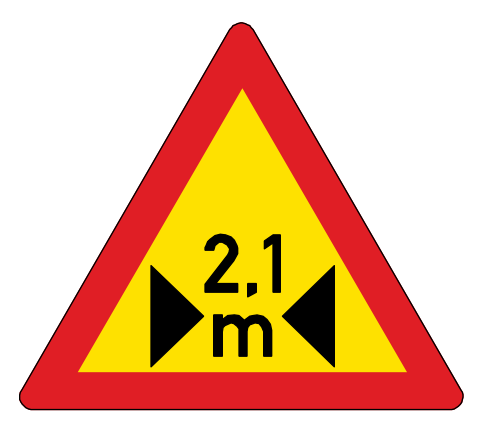
Road width regulatory restriction ahead (temporary version).
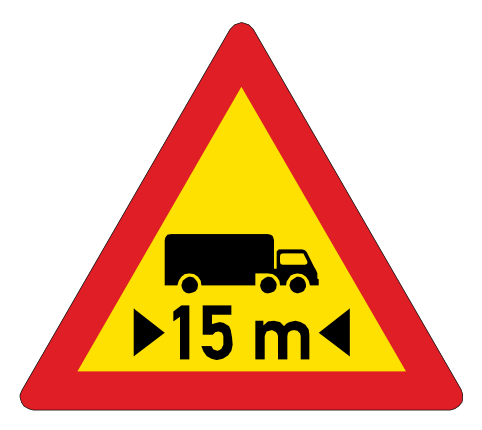
Vehicle length regulatory restriction ahead (temporary version).
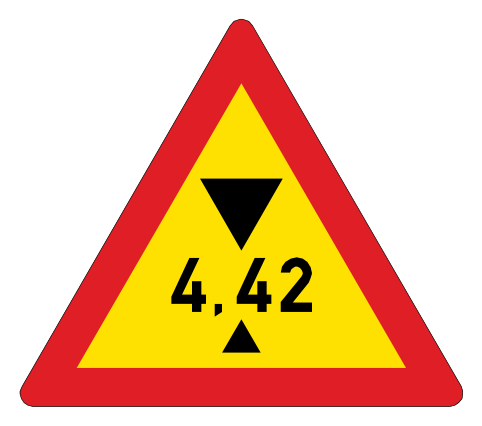
Vehicle height regulatory restriction ahead (temporary version).
Moving hazards ahead
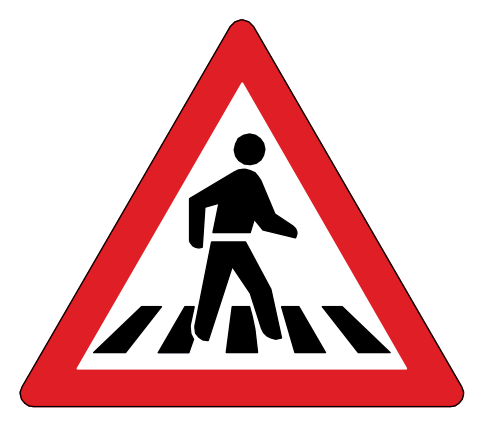
Marked pedestrian crossing ahead.
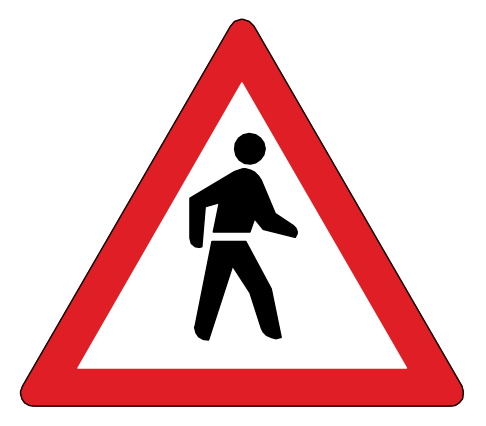
Pedestrians ahead.
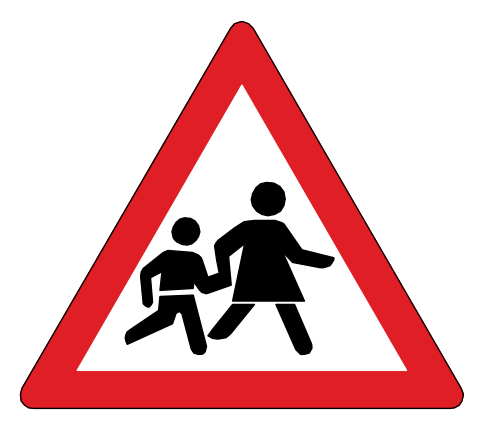
Children ahead.
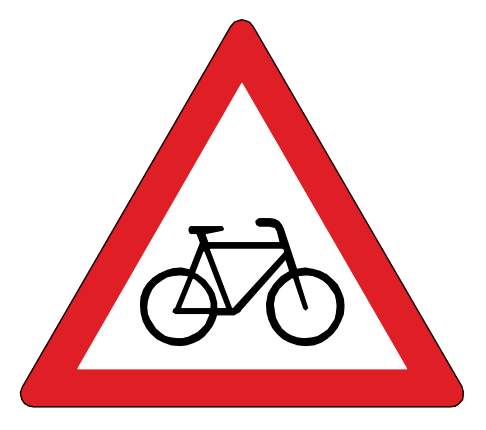
Cyclist ahead.
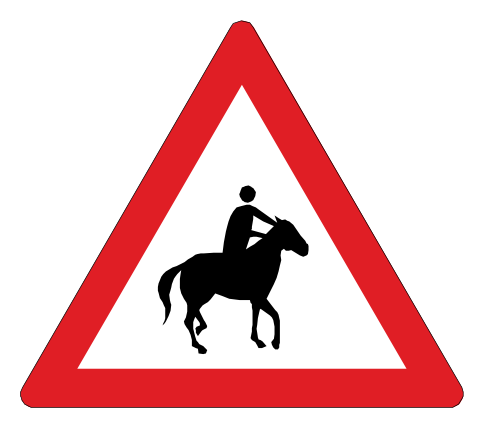
Horses and riders ahead.
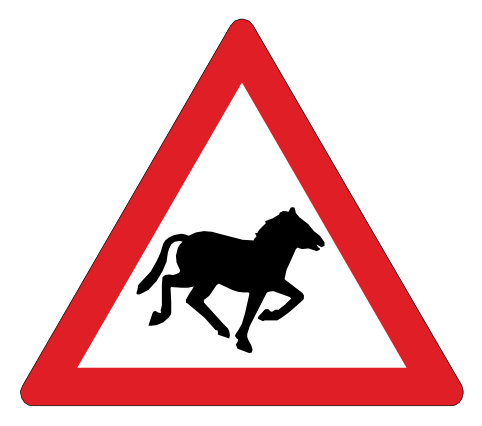
Horses ahead.
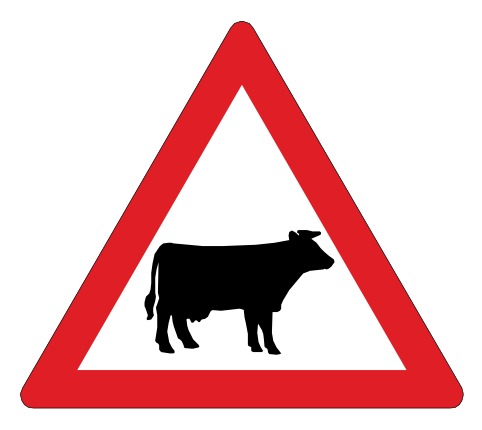
Cattle ahead.
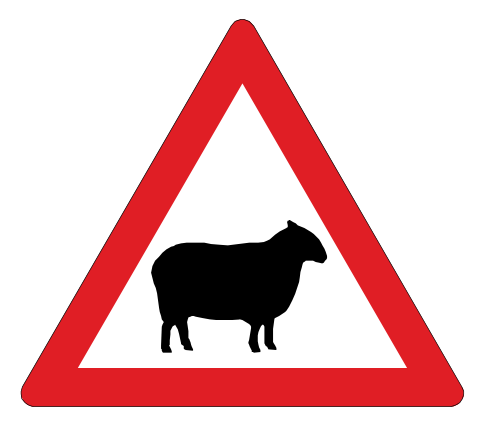
Sheep ahead.
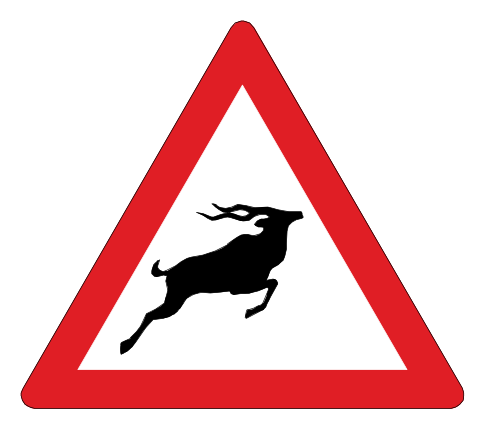
Wild animals ahead.
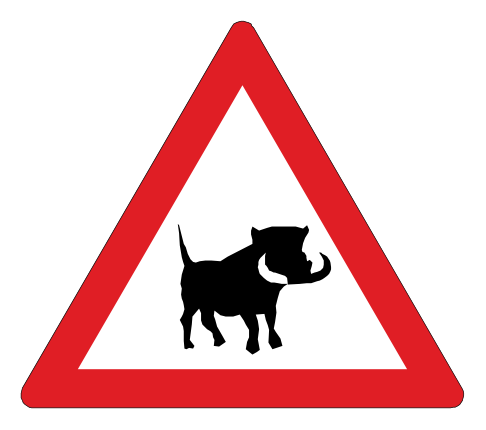
Warthogs ahead.
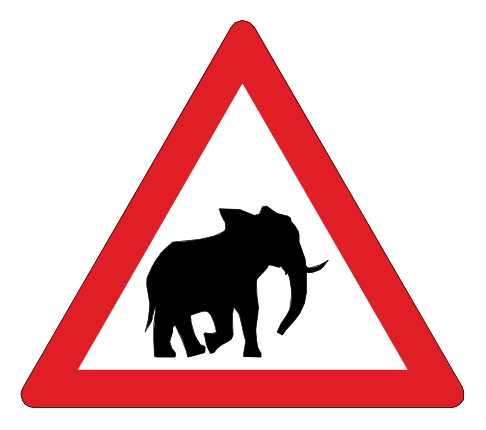
Elephants ahead.
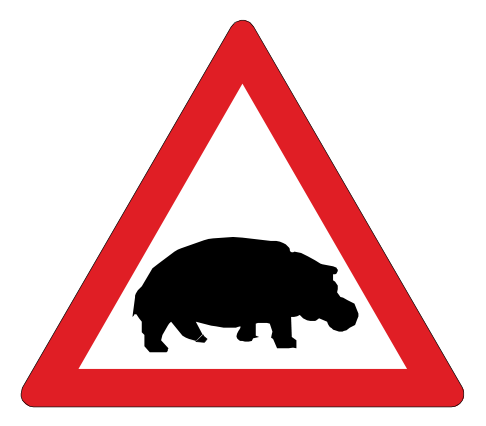
Hippos ahead.
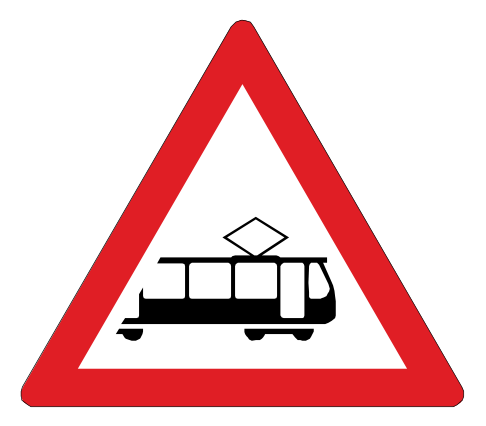
Trams ahead.
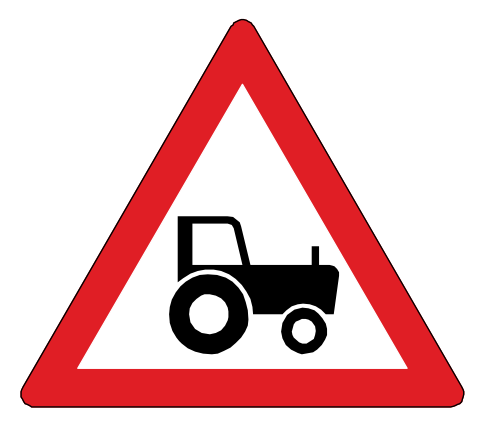
Agricultural vehicles ahead.
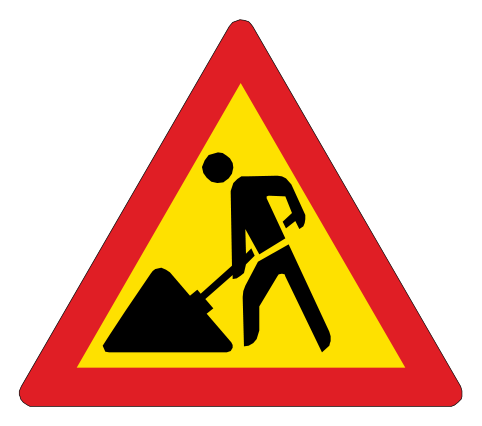
Road works ahead.
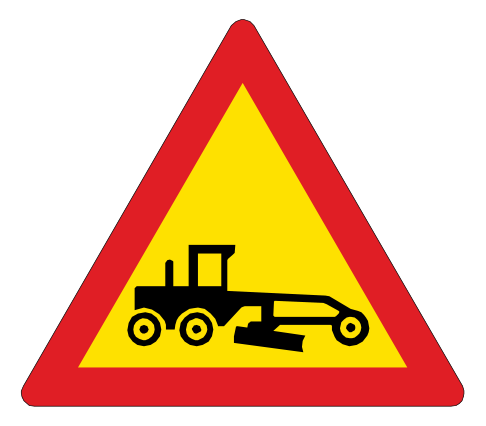
Grader working ahead.
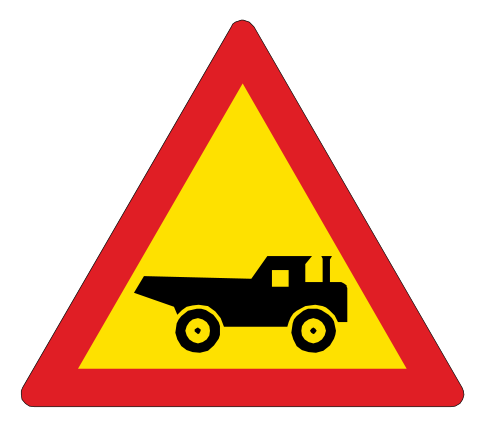
Construction vehicles entering or crossing the road ahead.
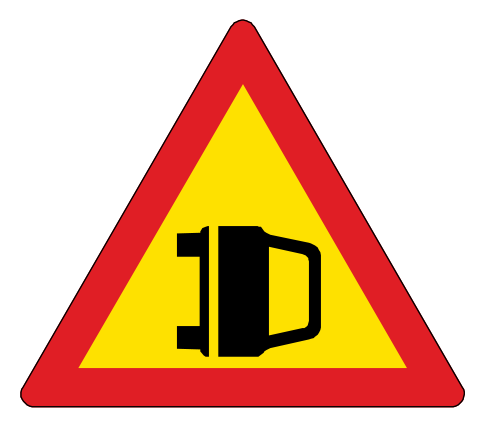
Accident ahead.
Changes in vehicle movement ahead
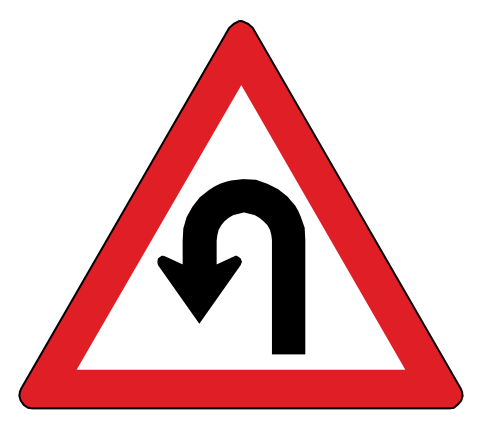
WARNING SIGNS: CHANGES IN VEHICLE MOVEMENT AHEAD.
Temporary traffic control
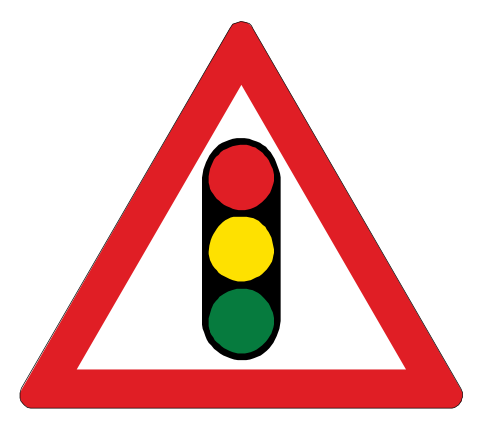
WARNING SIGNS: TRAFFIC CONTROL.
Hazard marker plates
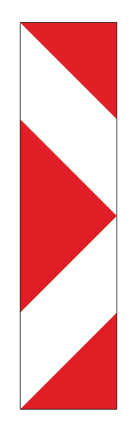
Danger plate. Pass the hazard on the side to which the arrowhead points.
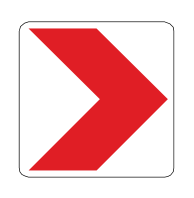
Marks the place and direction of a sharp bend in the road.
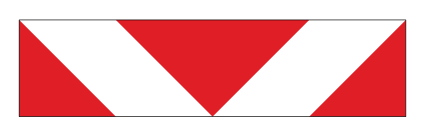
Danger plate. Marks the position of an overhead structure across the road.
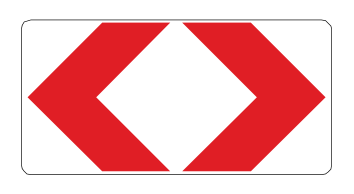
Marks the position of a separation in the road (e.g. at a freeway exit).
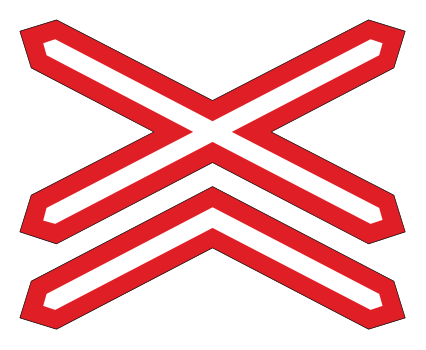
Railway crossing. Extra lower plate indicates two or more railway lines.
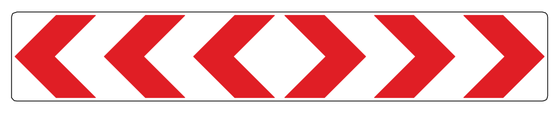
Outward pointing arrows indicate where the road ends at a T-junction and you must turn either left or right.
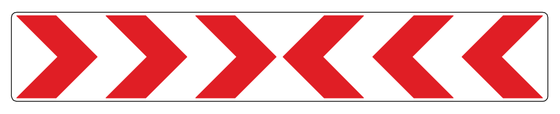
Inward pointing arrows indicate that the road ends at this point and does not continue beyond the plate. You must turn back.

The red and white stripes indicate a boom control. Access is allowed only when the boom is raised.
Combination signs
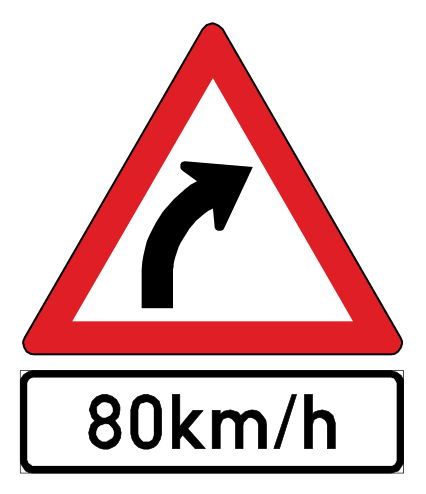
Advanced warning signs in high visibility backgrounds.
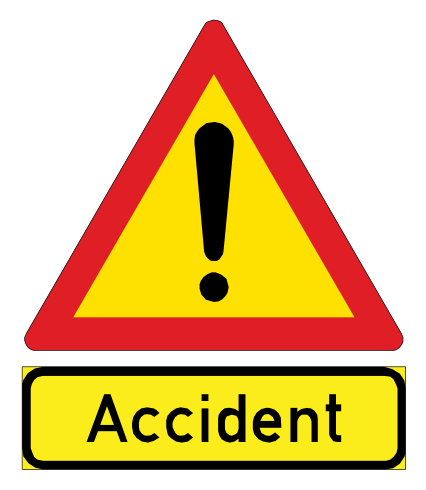
Advanced warning signs with supplementary plates.
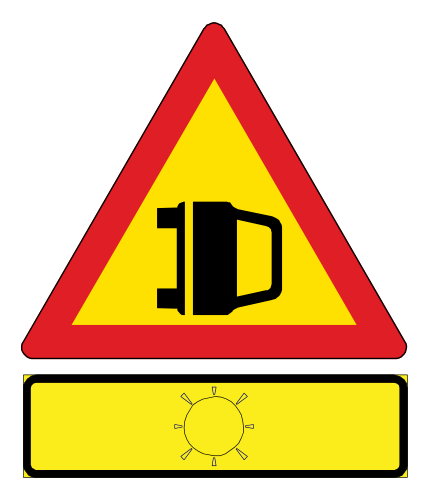
Advanced warning signs with multiple combinations.
The other signs
Learn them properly, not by scrolling
A reference page is for looking something up. The course teaches the same signs in short narrated lessons and then asks you about them until you stop getting them wrong.
Start free