Learner's licence questions and answers
All 570 of them, grouped the way the test groups them, each with the answer marked and the reason for it. Free to read, nothing to sign up for.
Download all 570 as a PDFRoad signs and markings
385 questions. The real paper asks 28 of these and you need 23 right.
Sit this section as a test1.How many purposes do road signs, signals and markings serve?
- ✓ Four
- · Three
- · Five
Why: The lesson states they exist for four reasons: to regulate flow, warn, give information and guide.
2.Which colour indicates a temporary sign that overrides permanent signs?
- ✓ Yellow
- · Red
- · Blue
Why: Yellow means temporary and a temporary sign takes precedence over any permanent sign.
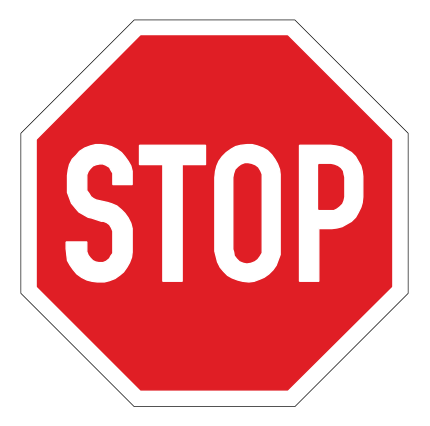
3.What shape and colour combination is used for a regulatory sign that tells you to stop?
- ✓ Red octagon
- · Blue rectangle
- · Red‑bordered triangle
Why: A red octagon is the regulatory stop sign.
4.Signs, signals and markings exist to regulate traffic, warn you, give information and do what else?
- ✓ Guide you to places
- · Record traffic fines
- · Mark private property
Why: Every sign regulates, warns, informs or guides you to places.
5.Which of the following is NOT one of the three forms that traffic control can take?
- · Road markings
- · Traffic signals
- ✓ Speed cameras
Why: The three forms are signs on poles/overhead, road markings and signals, not speed cameras.
6.What does this sign or marking mean?
- ✓ Yellow background: takes precedence
- · A yellow prohibition is still a prohibition
- · Temporary warning at roadworks
Why: This one means: Yellow background: takes precedence.
7.What must you do when you see this?
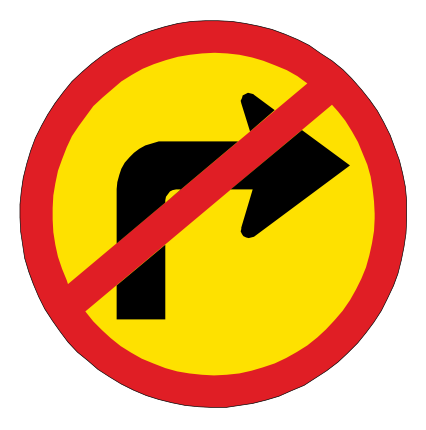
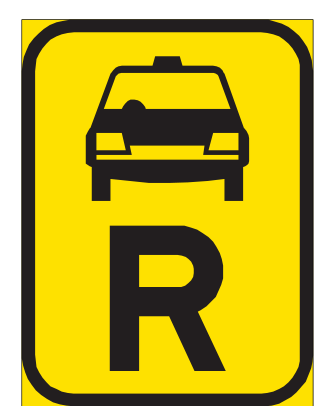
- · Red triangle, point down: yield
- ✓ A yellow prohibition is still a prohibition
- · Red triangle, point up: warning
Why: This one means: A yellow prohibition is still a prohibition.
8.What shape and colour is the stop sign?
- ✓ Red octagon
- · Red triangle
- · Blue rectangle
Why: The stop sign is described as a red octagon.
9.At a four‑way stop, in what order should you proceed?
- · Left before right
- ✓ Right before left
- · First come, first served
Why: You go in order of arrival, right before left.
10.What is the maximum speed allowed in a pedestrian priority zone unless a sign permits more?
- · 30 km/h
- · 45 km/h
- ✓ 15 km/h
Why: Inside a pedestrian zone you may not go faster than fifteen kilometres per hour unless a sign allows more.
11.What does a red‑bordered triangle pointing down indicate?
- · Stop
- · No entry
- ✓ Give way
Why: A red‑bordered triangle pointing down is the yield sign, meaning give way.
12.When a stop sign allows a left turn without stopping, what must a driver turning left do?
- · Stop and wait for a green light
- ✓ Proceed when safe, giving way to pedestrians
- · Yield to on‑coming traffic only
Why: If you are turning left you may go when it is safe, giving way to pedestrians.
13.What must you do when you see this?
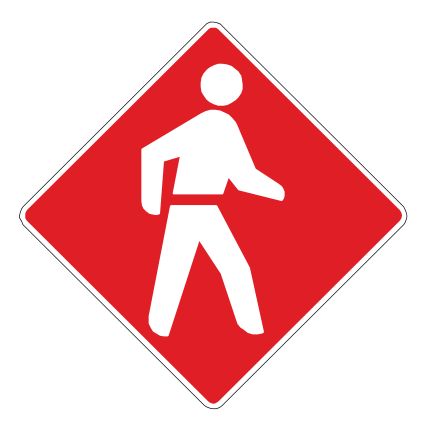
- · 4-way stop: arrive together, right before left
- ✓ Enter only to deliver, to work, or in an emergency
- · One-way straight ahead
Why: This one means: Enter only to deliver, to work, or in an emergency.
14.What does this sign or marking mean?
- · This is to indicate that there is a one-way carriageway to the right
- ✓ Come to a complete halt in line with the stop sign
- · This is to indicate that there is a one-way carriageway straight ahead
Why: Come to a complete halt in line with the stop sign, or before the stop line. Remain stationary and move only when it is safe to do so.
15.What does this sign or marking mean?
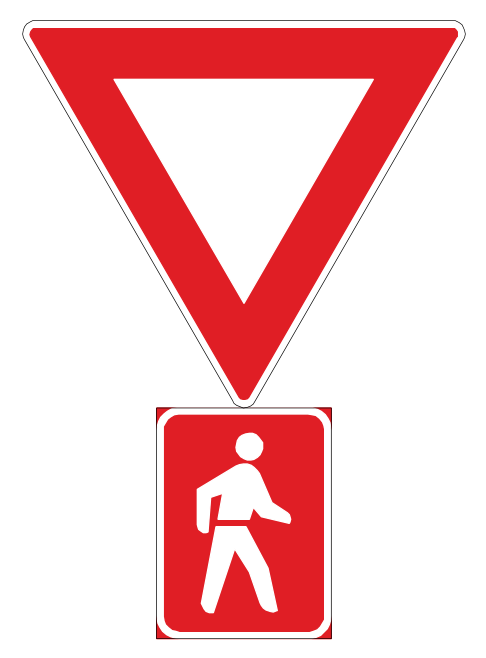
- · The area is set aside for use by pedestrians
- · This is a manually operated sign
- ✓ Give way to any pedestrians on or about to enter the pedestrian
Why: Give way to any pedestrians on or about to enter the pedestrian crossing on your side of the road.
16.What does this sign or marking mean?
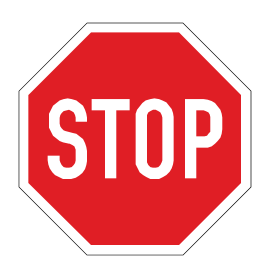
- · This is to indicate that there is a one-way carriageway to the left
- · Give way to any pedestrians on or about to enter the pedestrian
- ✓ This is a manually operated sign
Why: This is a manually operated sign, with the word STOP on one side and GO on the other. Stop when necessary and proceed cautiously when GO is displayed.
17.What does this sign or marking mean?
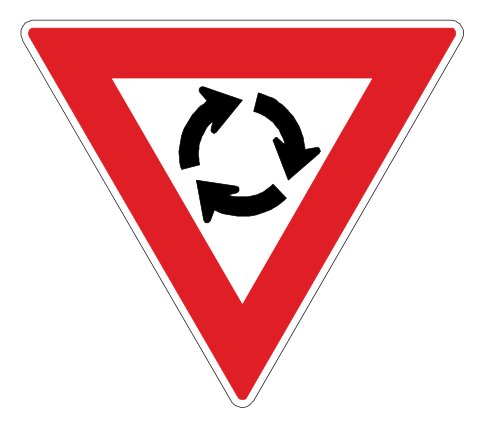
- · The area is set aside for use by pedestrians
- ✓ Traffic circle ahead ( mini circle or round about)
- · Come to a complete halt in line with the stop sign
Why: Traffic circle ahead ( mini circle or round about).
18.What does this sign or marking mean?
- · No vehicles may enter this road at any time
- · Come to a complete halt in line with the stop sign
- ✓ The area is set aside for use by pedestrians
Why: The area is set aside for use by pedestrians. Vehicles may enter only to deliver or work, or to attend to an emergency. Such vehicles must yield right of way to any pedestrian/s crossing or about to cross their path, and must not move faster than 15km/h unless a road sign indicates a higher speed limit.
19.What does this sign or marking mean?
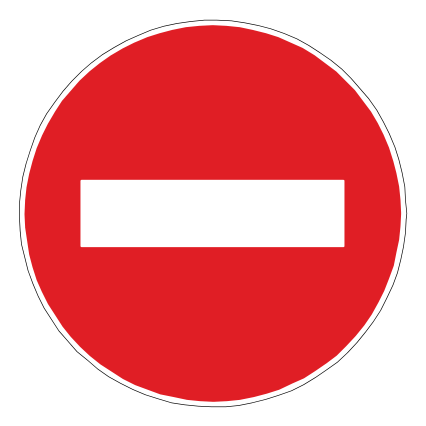
- ✓ No vehicles may enter this road at any time
- · This is to indicate that there is a one-way carriageway to the left
- · This is to indicate that there is a one-way carriageway straight ahead
Why: No vehicles may enter this road at any time.
20.What does this sign or marking mean?
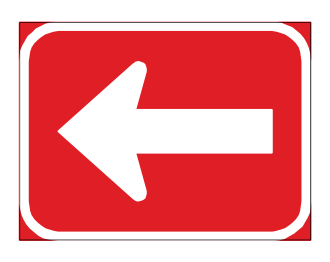
- · No vehicles may enter this road at any time
- ✓ This is to indicate that there is a one-way carriageway to the left
- · Give way to any pedestrians on or about to enter the pedestrian
Why: This is to indicate that there is a one-way carriageway to the left, proceed in the direction of the arrow indicated.
21.What does this sign or marking mean?
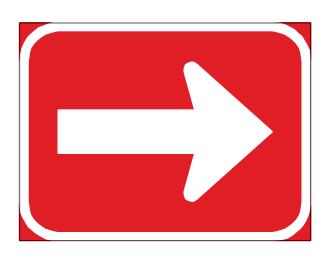
- · This is a manually operated sign
- · No vehicles may enter this road at any time
- ✓ This is to indicate that there is a one-way carriageway to the right
Why: This is to indicate that there is a one-way carriageway to the right, proceed in the direction of the arrow indicated.
22.What does this sign or marking mean?
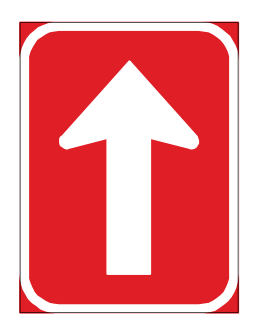
- ✓ This is to indicate that there is a one-way carriageway straight ahead
- · Give way to any pedestrians on or about to enter the pedestrian
- · Come to a complete halt in line with the stop sign
Why: This is to indicate that there is a one-way carriageway straight ahead, proceed in the direction of the arrow indicated.
23.What must you do when you see a blue disc with a white headlight symbol?
- ✓ Switch on headlights in the dipped position
- · Turn off headlights
- · Use high beam
Why: The lesson says a blue disc with a headlight symbol tells you to switch on your headlights in the dipped position to see and be seen.
24.What does a blue disc that shows a single arrow tell drivers to do?
- ✓ Drive only in the direction of the arrow
- · Turn that way at the next junction
- · Proceed in any direction
Why: An arrow on a blue disc means drive only in the direction of the arrow.
25.Three arrows forming a circle on a blue disc command you to:
- · Proceed straight ahead
- · Stop and give way
- ✓ Move clockwise around the junction
Why: Three arrows in a circle on a blue disc mean move clockwise around the junction – the mini‑circle and roundabout command.
26.Which blue disc symbol reserves the road for goods vehicles up to 10 tonnes?
- · Taxi symbol
- ✓ Goods vehicle symbol with 10t
- · Pedestrian symbol
Why: A goods vehicle symbol on a blue disc, sometimes with a mass shown in tons, reserves the road for goods vehicles.
27.Under the shape rule, a blue rectangle is used for:
- ✓ Reserving a lane or parking bay
- · Commanding an action
- · Prohibiting a movement
Why: The shape rule states a blue rectangle, which is covered later, reserves a lane or a parking bay.
28.What does this sign or marking mean?
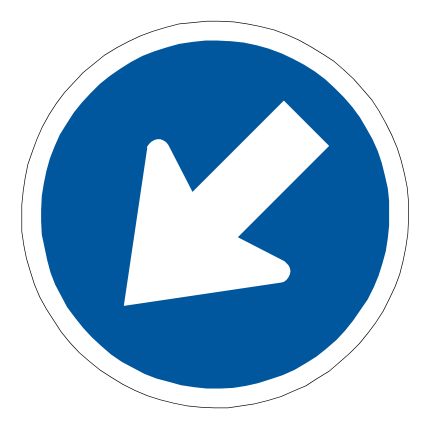
- · Turn this way at the next junction
- · Pay toll, or take the alternative route
- ✓ Keep to the side shown of an obstruction
Why: This one means: Keep to the side shown of an obstruction.
29.What must you do when you see this?
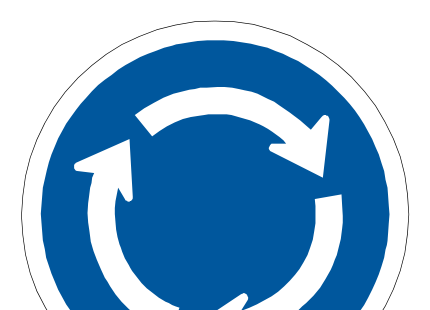
- ✓ Move clockwise around the junction
- · Drive only in the direction of the arrow
- · Goods vehicles only
Why: This one means: Move clockwise around the junction.
30.What does this sign or marking mean?
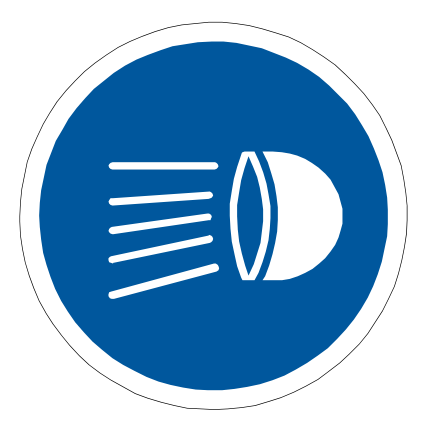
- · To indicate that road users must drive to the side of an obstruction
- · Indicates the direction in which you must proceed
- ✓ To indicate that you must switch on your headlights to see and be seen
Why: To indicate that you must switch on your headlights to see and be seen. Switch lights on in the dip position.
31.What does this sign or marking mean?
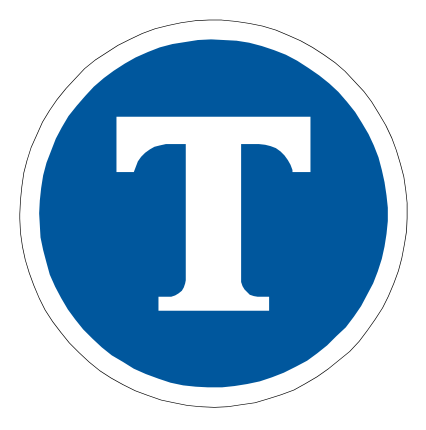
- ✓ To give drivers an opportunity to follow an alternate route
- · To indicate that the road or part of it may be used by pedestrians only
- · Indicates the direction in which you must proceed
Why: To give drivers an opportunity to follow an alternate route or proceed on the route and pay toll fees.
32.What does this sign or marking mean?
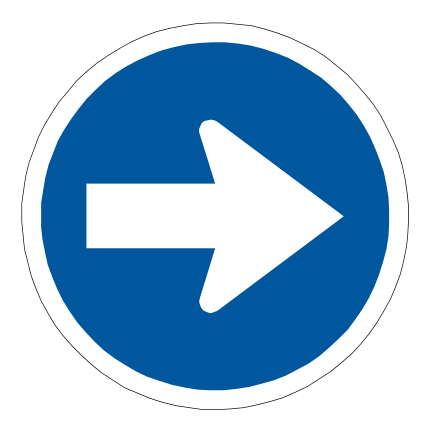
- ✓ Indicates the direction in which you must proceed
- · To indicate that the road
- · To indicate that the road or part of it may be used by cyclists
Why: Indicates the direction in which you must proceed, drive only in the direction indicated by the arrow.
33.What does this sign or marking mean?
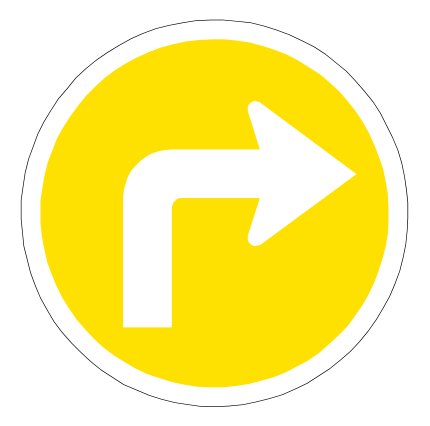
- ✓ Indicates the direction in which you must proceed
- · To indicate that you must move in a clockwise direction at the junction
- · To indicate that you must switch on your headlights to see and be seen
Why: Indicates the direction in which you must proceed, drive only in the direction indicated by the arrow at the next junction.
34.What does this sign or marking mean?
- · To indicate that the road or part of it is set aside for use by buses
- · To indicate that road users must drive to the side of an obstruction
- ✓ To indicate that you must move in a clockwise direction at the junction
Why: To indicate that you must move in a clockwise direction at the junction.
35.What does this sign or marking mean?
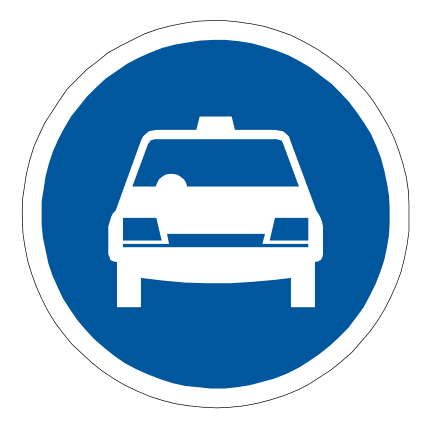
- · To indicate that the road or part of it may be used by cyclists
- ✓ To indicate that the road
- · To give drivers an opportunity to follow an alternate route
Why: To indicate that the road or part of it is set aside for use by taxis only.
36.What does this sign or marking mean?
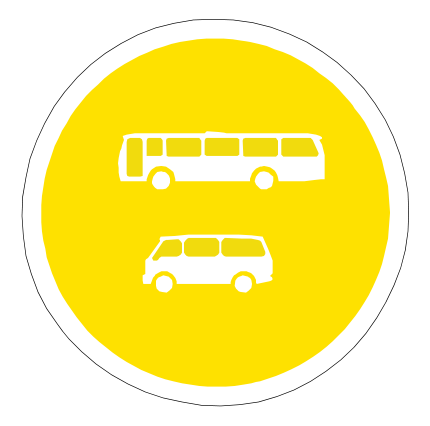
- · To indicate that you must move in a clockwise direction at the junction
- ✓ To indicate that the road or part of it is set aside for use by buses
- · To indicate that the road or part of it may be used by cyclists
Why: To indicate that the road or part of it is set aside for use by buses and minibuses only.
37.What does this sign or marking mean?
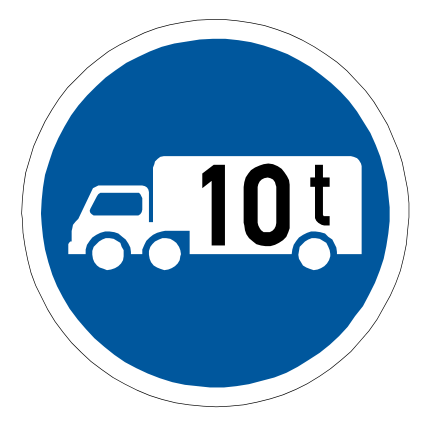
- · Indicates the direction in which you must proceed
- ✓ To indicate that the road
- · To indicate that you must switch on your headlights to see and be seen
Why: To indicate that the road or part of it is set aside for use by goods vehicles with a gross vehicle mass or gross combination mass exceeding the mass indicated in tons by a number on such a sign.
38.What does this sign or marking mean?
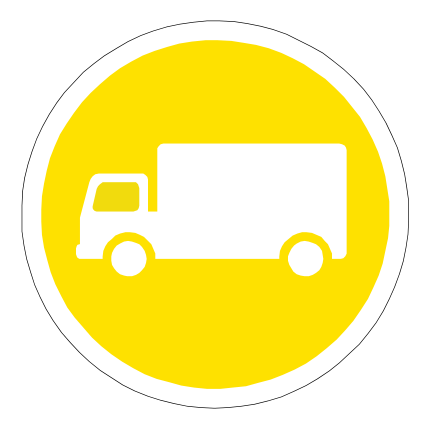
- · To indicate that you must move in a clockwise direction at the junction
- ✓ To indicate that the road
- · To indicate that road users must drive to the side of an obstruction
Why: To indicate that the road or part of it is set aside for use by goods vehicles only.
39.What does this sign or marking mean?
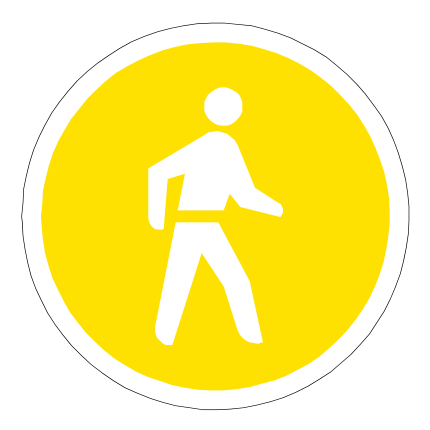
- ✓ To indicate that the road or part of it may be used by pedestrians only
- · To give drivers an opportunity to follow an alternate route
- · To indicate that the road or part of it is set aside for use by buses
Why: To indicate that the road or part of it may be used by pedestrians only.
40.What does this sign or marking mean?
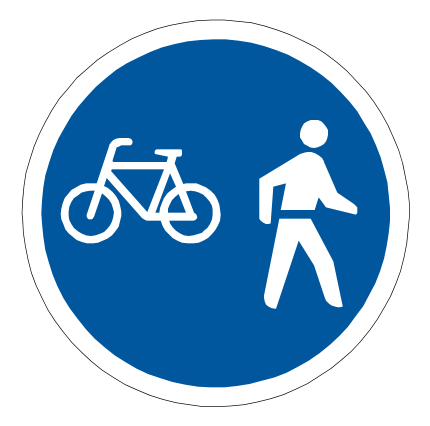
- ✓ To indicate that the road or part of it may be used by cyclists
- · Indicates the direction in which you must proceed
- · To give drivers an opportunity to follow an alternate route
Why: To indicate that the road or part of it may be used by cyclists and pedestrians only. Indicates to cyclists and pedestrians which part of the road they may use.
41.What colour disc is used for a permanent prohibition sign?
- ✓ White
- · Yellow
- · Blue
Why: Prohibition signs are white discs with a red border.
42.Which sign takes precedence if both a permanent and a temporary prohibition sign are present?
- · The permanent white disc sign
- ✓ The temporary yellow disc sign
- · Both are equal
Why: A temporary version has a yellow disc instead of white, and it takes precedence.
43.How far does a 'no overtaking' sign apply?
- · Until the next junction
- · 1 kilometre
- ✓ 500 metres
Why: No overtaking ... means overtaking is prohibited for the next five hundred metres or until the restriction ends.
44.What is allowed under a 'no parking' sign?
- · Parking for any length of time
- ✓ A brief stop to drop someone off
- · Stopping to load goods
Why: The no-parking sign ... means you may not park there at any time; a brief stop to drop someone off is allowed.
45.After a 'no hooting' sign, for how many metres may you not use the hooter?
- · 200 metres
- ✓ 100 metres
- · 500 metres
Why: No hooting ... you may not use the hooter for one hundred metres after the sign.
46.What does this sign or marking mean?
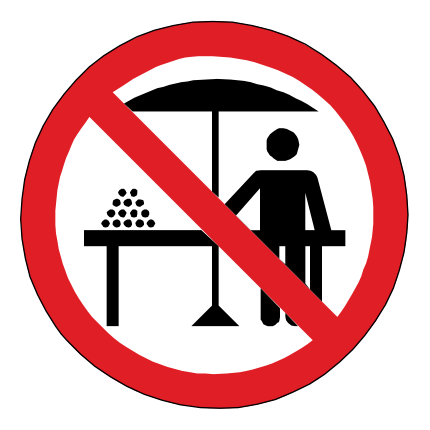
- · No U-turn
- ✓ No hawkers
- · No motorcycles
Why: This one means: No hawkers.
47.What must you do when you see this?
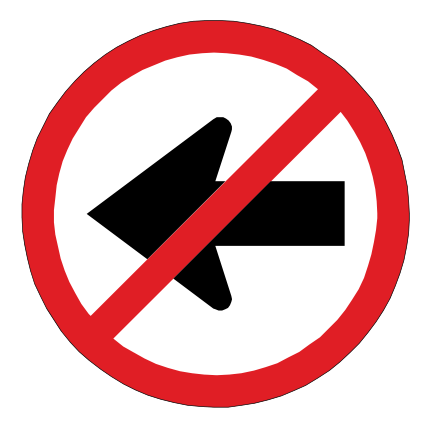
- ✓ No left turn
- · No U-turn
- · No overtaking
Why: This one means: No left turn.
48.What does this sign or marking mean?
- ✓ To prohibit vehicles from turning left
- · To prohibit drivers from parking during any time of the day or night
- · To prohibit vehicles from turning right at an intersection
Why: To prohibit vehicles from turning left.
49.What does this sign or marking mean?
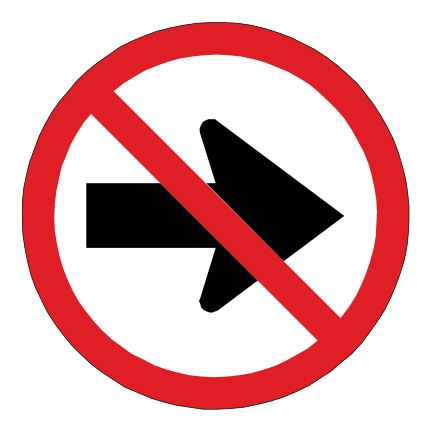
- · To prohibit vehicles from turning around (u-turn) so that it faces
- ✓ To prohibit vehicles from turning right
- · Over taking vehicles is prohibited for the next 500m
Why: To prohibit vehicles from turning right.
50.What does this sign or marking mean?
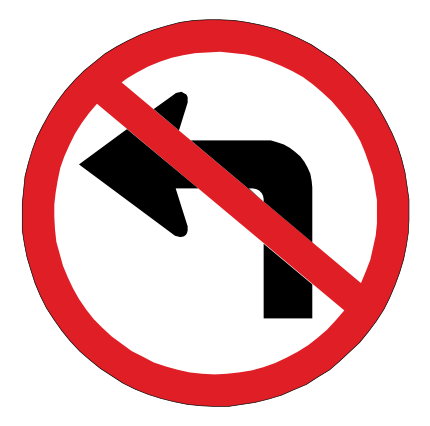
- ✓ To prohibit vehicles from turning left at an intersection
- · To prohibit vehicles from turning left
- · To prohibit noise, if the noise level of your vehicle is high, you may
Why: To prohibit vehicles from turning left at an intersection.
51.What does this sign or marking mean?
- · To prohibit noise, if the noise level of your vehicle is high, you may
- · To prohibit pedestrians from proceeding past this sign where they could
- ✓ To prohibit vehicles from turning right at an intersection
Why: To prohibit vehicles from turning right at an intersection.
52.What does this sign or marking mean?
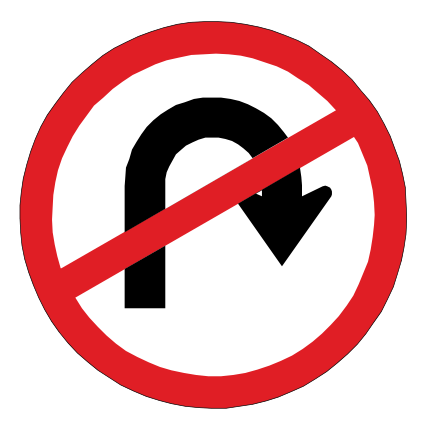
- ✓ To prohibit vehicles from turning around (u-turn) so that it faces
- · To prohibit vehicles from turning right
- · Over taking vehicles is prohibited for the next 500m
Why: To prohibit vehicles from turning around (u-turn) so that it faces the opposite direction.
53.What does this sign or marking mean?
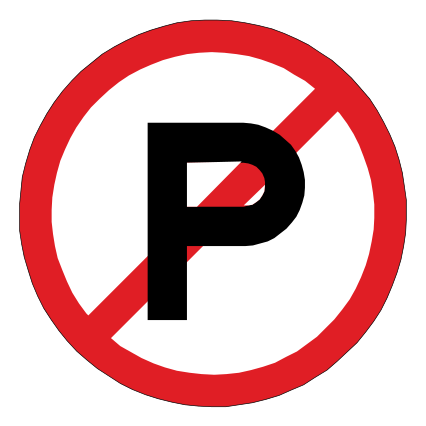
- ✓ To prohibit drivers from parking during any time of the day or night
- · To prohibit pedestrians and stationary vehicles
- · No over taking vehicles by goods vehicles for the next 500m
Why: To prohibit drivers from parking during any time of the day or night.
54.What does this sign or marking mean?
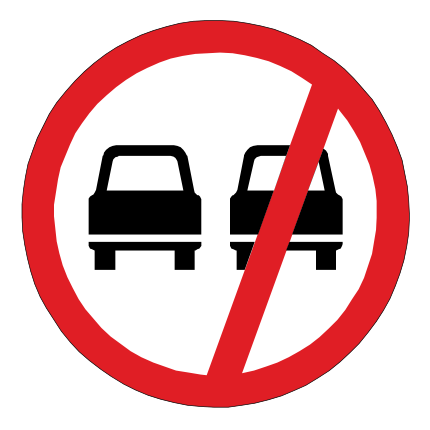
- ✓ Over taking vehicles is prohibited for the next 500m
- · To prohibit vehicles from turning right at an intersection
- · No over taking vehicles by goods vehicles for the next 500m
Why: Over taking vehicles is prohibited for the next 500m.
55.What does this sign or marking mean?
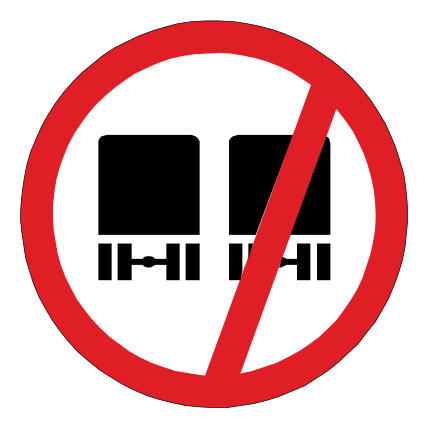
- · To prohibit vehicles from turning around (u-turn) so that it faces
- · To prohibit drivers from parking during any time of the day or night
- ✓ No over taking vehicles by goods vehicles for the next 500m
Why: No over taking vehicles by goods vehicles for the next 500m.
56.What does this sign or marking mean?
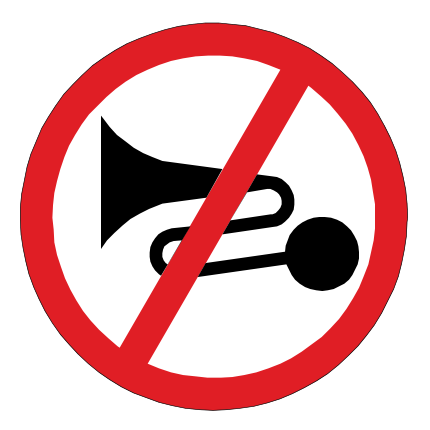
- · To prohibit pedestrians from proceeding past this sign where they could
- ✓ To prohibit noise, if the noise level of your vehicle is high, you may
- · To prohibit vehicles from turning right
Why: To prohibit noise, if the noise level of your vehicle is high, you may not proceed past the sign. Vehicles hooter may not be used for 100 meters after pass this sign.
57.What does this sign or marking mean?
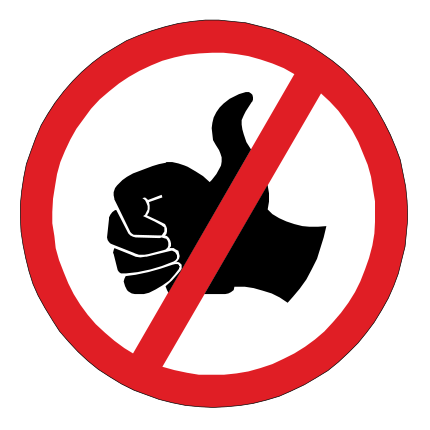
- · To prohibit noise, if the noise level of your vehicle is high, you may
- · To prohibit vehicles from turning around (u-turn) so that it faces
- ✓ To prohibit pedestrians and stationary vehicles
Why: To prohibit pedestrians and stationary vehicles. A driver of a vehicle may not pick up passengers for the next 500m.
58.What does this sign or marking mean?
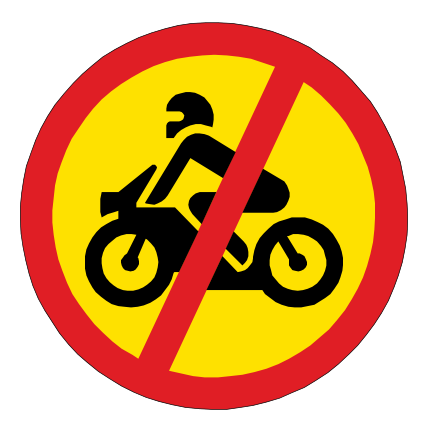
- ✓ To prohibit motorcycles on a part of a carriageway for safety reasons
- · To prohibit hawkers in this area during any time of the day or night
- · Over taking vehicles is prohibited for the next 500m
Why: To prohibit motorcycles on a part of a carriageway for safety reasons.
59.What does this sign or marking mean?
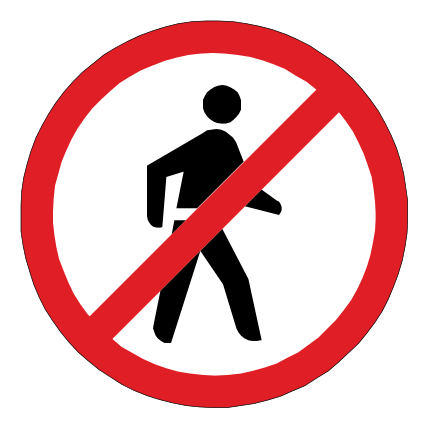
- ✓ To prohibit pedestrians from proceeding past this sign where they could
- · No over taking vehicles by goods vehicles for the next 500m
- · To prohibit vehicles from turning around (u-turn) so that it faces
Why: To prohibit pedestrians from proceeding past this sign where they could cause danger to themselves and vehicles.
60.What colour disc indicates a temporary limit sign?
- · White
- ✓ Yellow
- · Blue
Why: Temporary versions have a yellow disc and are real limits.
61.Which of the following limits is expressed in tonnes?
- · Speed limit
- · Height limit
- ✓ Mass limit
Why: The mass limit, in tons, means vehicles heavier than that may not proceed.
62.If a speed limit sign shows "80", what does the number represent?
- ✓ Maximum speed in km/h
- · Minimum speed in km/h
- · Recommended speed in km/h
Why: The number is the maximum speed in kilometres per hour on that road.
63.What happens when a limit sign is present on a road?
- · General limits still apply
- ✓ The sign overrides the general limits
- · Only the general limits apply at night
Why: With a sign, the sign applies and it overrides the general limits.
64.Which limit would be placed before a low bridge?
- · Width limit
- ✓ Height limit
- · Length limit
Why: Height limit, in metres, warns of a low bridge or overhead structure.
65.What colour and shape are reservation signs?
- · Red circular
- ✓ Blue and white rectangle
- · Green triangle
Why: Reservation signs are blue and white rectangles.
66.What does the curved yellow line on a reservation sign show?
- · Maximum speed limit
- · Location of a pedestrian crossing
- ✓ Where the reservation begins
Why: The curved yellow line on the sign shows where the reservation begins.
67.Which sign reserves a parking space for a vehicle carrying a person with a disability?
- ✓ P with a wheelchair symbol
- · P with a time limit
- · P with a police badge
Why: A P with a wheelchair symbol reserves it for a vehicle carrying a person with a disability.
68.What does a red cross over a sign indicate?
- · The rule is a warning
- ✓ The rule shown is cancelled
- · The rule is mandatory
Why: A red cross over a sign cancels the restriction, command or set of rules.
69.A lane to the left of the yellow line on a reservation sign is usually reserved for which vehicle class?
- · Motorcycles
- · Heavy trucks
- ✓ Buses
Why: The lane to the left of the yellow line is reserved for the class shown, usually buses.
70.What does this sign or marking mean?
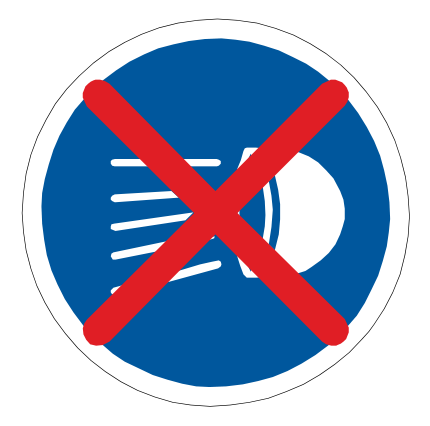
- · Mass restriction ends
- ✓ Headlights no longer required
- · Police vehicles only
Why: This one means: Headlights no longer required.
71.What must you do when you see this?
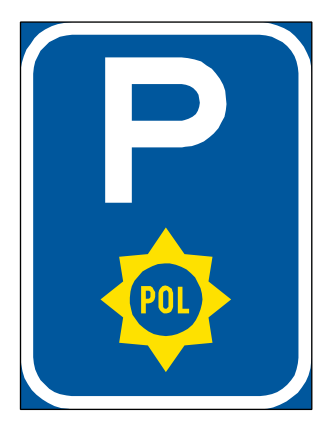
- · End of residential area: its rules end
- ✓ Police vehicles only
- · Reserved for parking
Why: This one means: Police vehicles only.
72.What does this sign or marking mean?
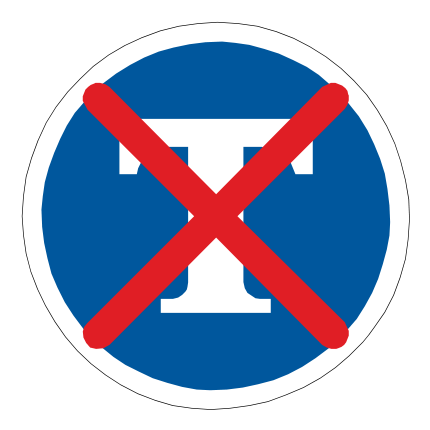
- · You no longer need to drive with your headlights switched on
- ✓ End of toll road
- · End of lane use reservation and all vehicles may now use this lane
Why: End of toll road.
73.What does this sign or marking mean?
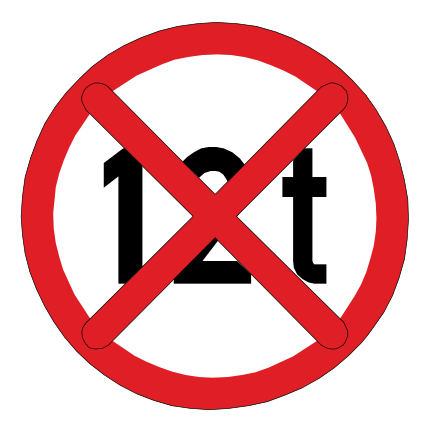
- · End of dual carriage freeway and freeway rules no longer apply
- · End of residential area and rules for a residential area no longer apply
- ✓ Vehicle mass restriction no longer applies
Why: Vehicle mass restriction no longer applies.
74.What does this sign or marking mean?
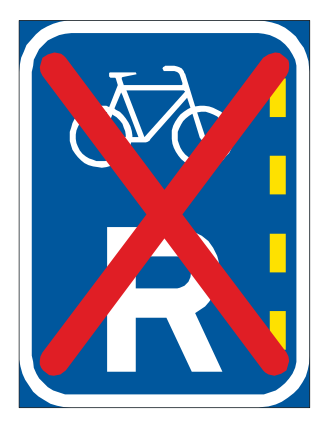
- · You no longer need to drive with your headlights switched on
- ✓ End of lane use reservation and all vehicles may now use this lane
- · End of residential area and rules for a residential area no longer apply
Why: End of lane use reservation and all vehicles may now use this lane.
75.What does this sign or marking mean?
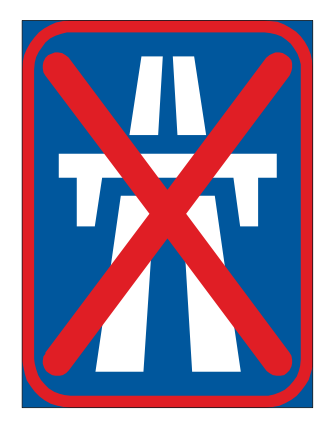
- · End of lane use reservation and all vehicles may now use this lane
- · You no longer need to drive with your headlights switched on
- ✓ End of dual carriage freeway and freeway rules no longer apply
Why: End of dual carriage freeway and freeway rules no longer apply.
76.What does this sign or marking mean?
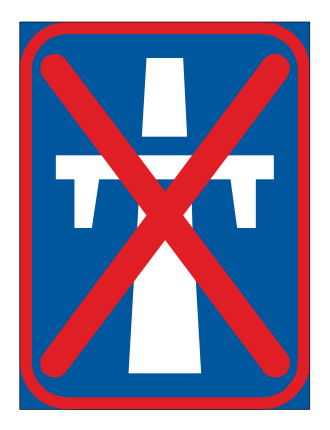
- · End of toll road
- · End of residential area and rules for a residential area no longer apply
- ✓ End of single carriage freeway and freeway rules no longer apply
Why: End of single carriage freeway and freeway rules no longer apply.
77.What does this sign or marking mean?
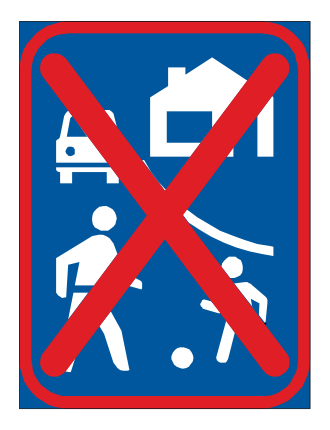
- ✓ End of residential area and rules for a residential area no longer apply
- · End of toll road
- · End of dual carriage freeway and freeway rules no longer apply
Why: End of residential area and rules for a residential area no longer apply.
78.What does this sign or marking mean?
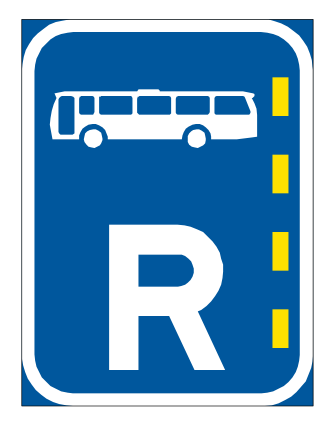
- ✓ The lane on the left of the yellow line is reserved for the exclusive
- · The lane on the right of the right of the yellow line is reserved
- · The curved yellow line indicates the start of a lane reserved
Why: The lane on the left of the yellow line is reserved for the exclusive use of the class of vehicle indicated, in this case buses.
79.What does this sign or marking mean?
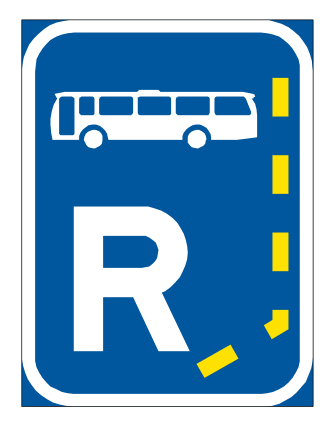
- · The lane on the right of the yellow line is reserved for the exclusive
- · The lane on the right of the right of the yellow line is reserved
- ✓ The curved yellow line indicates the start of a lane reserved
Why: The curved yellow line indicates the start of a lane reserved for the exclusive use of the class of vehicle indicated.
80.What does this sign or marking mean?
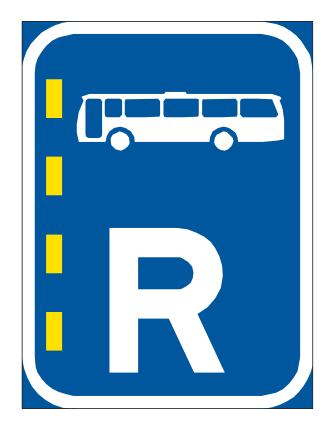
- ✓ The lane on the right of the yellow line is reserved for the exclusive
- · This area is temporarily reserved for parking by the class of vehicle
- · The curved yellow line indicates the start of a lane reserved
Why: The lane on the right of the yellow line is reserved for the exclusive use of the class of vehicle indicated.
81.What does this sign or marking mean?
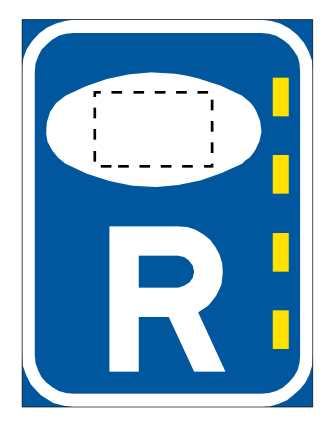
- ✓ The lane on the left of the yellow line is reserved for the exclusive
- · This portion of roadway is temporarily reserved for the exclusive use
- · This area is temporarily reserved for parking by the class of vehicle
Why: The lane on the left of the yellow line is reserved for the exclusive use of authorized public transport vehicles.
82.What does this sign or marking mean?
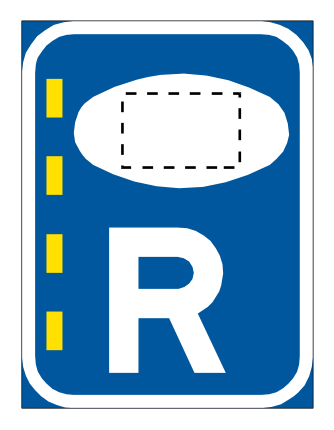
- ✓ The lane on the right of the right of the yellow line is reserved
- · This area is reserved for parking, up to a maximum of 60 minutes
- · Parking here is reserved for a vehicle carrying people with disabilities
Why: The lane on the right of the right of the yellow line is reserved for the exclusive use of authorized public transport vehicles.
83.What does this sign or marking mean?
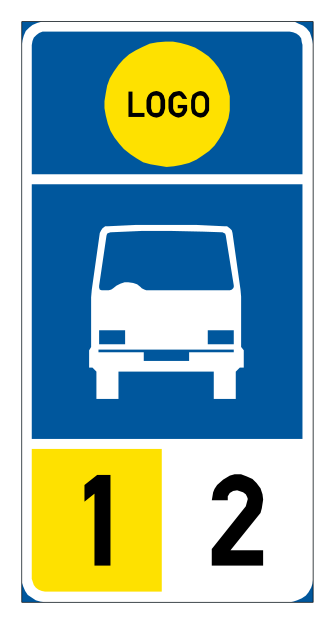
- · The lane on the right of the yellow line is reserved for the exclusive
- ✓ This stop zone is reserved for the exclusive use of the class of vehicle
- · This area is reserved for parking, up to a maximum of 60 minutes
Why: This stop zone is reserved for the exclusive use of the class of vehicle and organization shown by the symbol and logo.
84.What does this sign or marking mean?
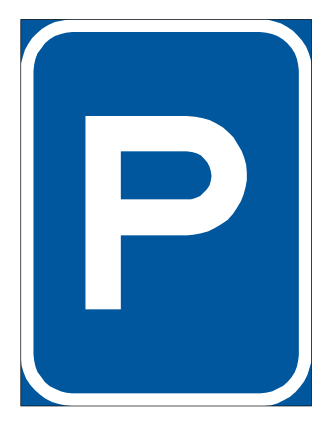
- · The lane on the right of the right of the yellow line is reserved
- · This area is temporarily reserved for parking by the class of vehicle
- ✓ This area is reserved for parking
Why: This area is reserved for parking.
85.What does this sign or marking mean?
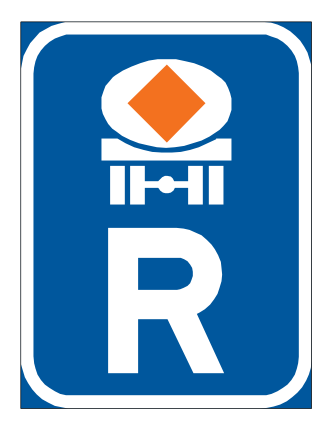
- ✓ This area is reserved for parking by the class of vehicle shown
- · Parking here is reserved for a vehicle carrying people with disabilities
- · The lane on the right of the yellow line is reserved for the exclusive
Why: This area is reserved for parking by the class of vehicle shown.
86.What does this sign or marking mean?
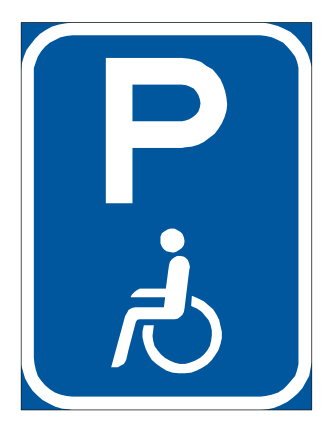
- · The lane on the right of the right of the yellow line is reserved
- ✓ Parking here is reserved for a vehicle carrying people with disabilities
- · This area is reserved for parking, up to a maximum of 60 minutes
Why: Parking here is reserved for a vehicle carrying people with disabilities.
87.What does this sign or marking mean?
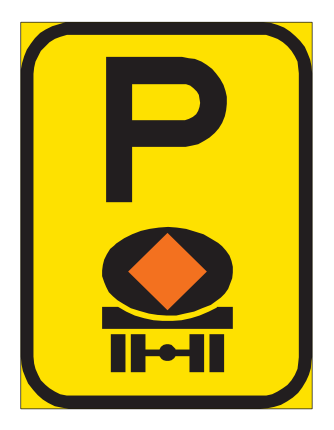
- · The curved yellow line indicates the start of a lane reserved
- ✓ This area is temporarily reserved for parking by the class of vehicle
- · The lane on the right of the right of the yellow line is reserved
Why: This area is temporarily reserved for parking by the class of vehicle shown.
88.What does this sign or marking mean?
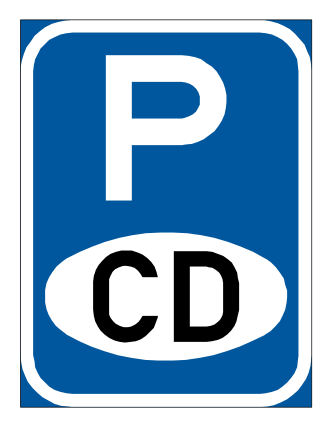
- · This stop zone is reserved for the exclusive use of the class of vehicle
- · This area is reserved for parking by the class of vehicle shown
- ✓ This area is reserved for parking by authorized vehicles
Why: This area is reserved for parking by authorized vehicles.
89.What does this sign or marking mean?
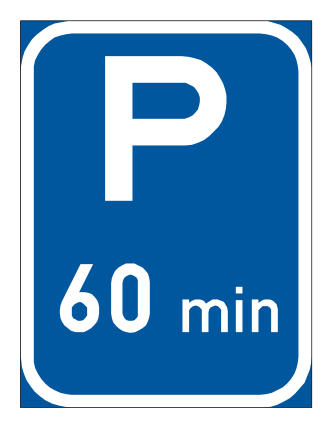
- ✓ This area is reserved for parking, up to a maximum of 60 minutes
- · The lane on the right of the right of the yellow line is reserved
- · This area is reserved for parking
Why: This area is reserved for parking, up to a maximum of 60 minutes.
90.What does this sign or marking mean?
- · This portion of roadway is temporarily reserved for the exclusive use
- ✓ This area is reserved for parking by police vehicles
- · This area is temporarily reserved for parking by the class of vehicle
Why: This area is reserved for parking by police vehicles.
91.What is the speed limit inside a residential area?
- ✓ 30 kilometres per hour
- · 50 kilometres per hour
- · 80 kilometres per hour
Why: The residential area sign sets the speed limit at thirty kilometres per hour.
92.Which vehicles may not enter a residential area except to reach a local address?
- · Vehicles under 1 500 kilograms
- ✓ Vehicles over 3 500 kilograms
- · Vehicles with five passenger seats
Why: Vehicles over three thousand five hundred kilograms, or with more than ten passenger seats, are prohibited from entering residential areas.
93.When are hand signals allowed on a freeway?
- · Whenever you change lanes
- · Never allowed
- ✓ Only in an emergency
Why: Hand signals are not allowed on a freeway except in an emergency.
94.Which of the following is permitted on a freeway?
- ✓ Learner driver with a properly licensed accompanying driver
- · Pedal cycle
- · Tractor not doing freeway maintenance
Why: Learner drivers may use the freeway if a properly licensed driver accompanies them.
95.If you are in the far‑right lane on a freeway and the driver behind wants to pass, you must:
- · Accelerate to let them pass
- ✓ Move left safely and do not accelerate while being overtaken
- · Stay in lane and signal with a hand
Why: When in the far right lane and overtaken, you must move left safely and not accelerate.
96.What must you do when you see this?
- ✓ End of residential area
- · Dual carriageway freeway begins
- · End of freeway
Why: This one means: End of residential area.
97.What does a sun symbol on a selective restriction plate indicate?
- ✓ Daytime only
- · Nighttime only
- · All day
Why: The sun symbol means the sign applies daytime only.
98.A left‑turn arrow on a plate means the sign applies only when you are ______.
- ✓ Turning left
- · Turning right
- · Going straight
Why: A left‑turn arrow means the sign applies only when you are turning left.
99.A plate showing the number "15" means ______.
- ✓ Maximum fifteen vehicles
- · Minimum fifteen vehicles
- · Exactly fifteen vehicles
Why: A number of vehicles on a plate indicates a maximum, e.g., fifteen vehicles.
100.A plate with a moon symbol combined with a no U‑turn sign means ______.
- · No U‑turns during the day
- · U‑turns are always allowed
- ✓ No U‑turns at night
Why: A moon on a plate means the restriction applies at night, so no U‑turns at night.
101.A minimum speed plate of 50 with a truck symbol applies to ______.
- · All vehicles must travel at least 50 km/h
- ✓ Goods vehicles must travel at 50 km/h or faster
- · Trucks must not exceed 50 km/h
Why: A minimum speed of fifty with a truck symbol means goods vehicles must travel at fifty or faster.
102.What does this sign or marking mean?
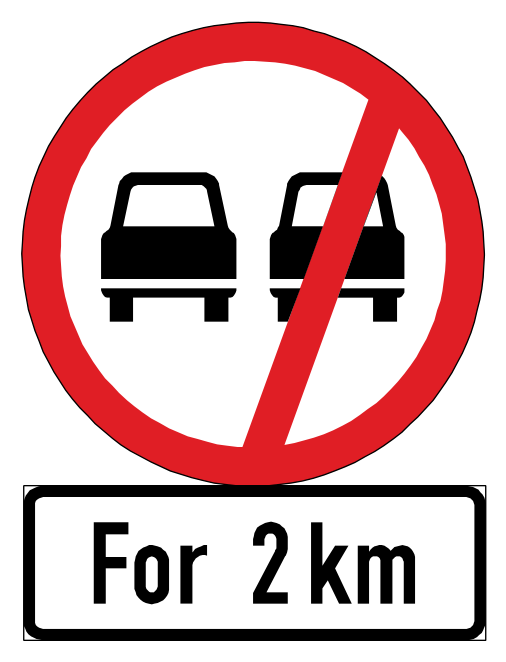
- · With a moon plate: no U-turn at night
- ✓ With a 2 km plate: no overtaking for 2 km
- · With a truck plate: goods vehicles at 50 or faster
Why: This one means: With a 2 km plate: no overtaking for 2 km.
103.What must you do when you see this?
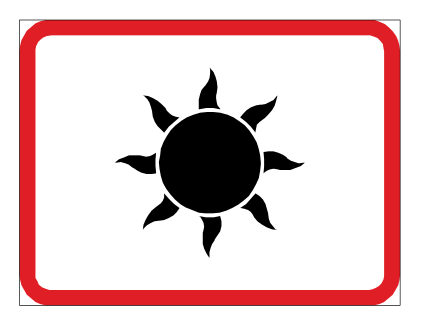
- · A maximum of 15 vehicles
- ✓ Daytime only
- · With a motorcycle plate: 60 for motorcycles only
Why: This one means: Daytime only.
104.What does this sign or marking mean?
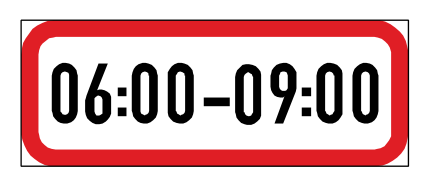
- · Applies for the period and during the times shown
- · Applies only to mini-buses
- ✓ Applies during the times shown
Why: Applies during the times shown.
105.What does this sign or marking mean?
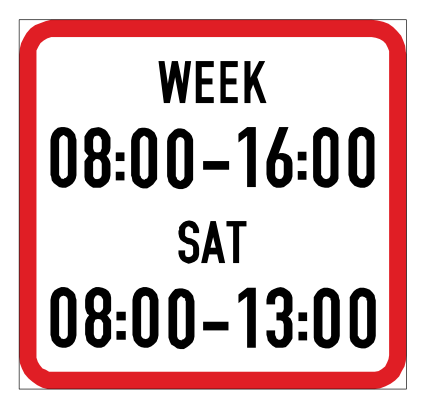
- · Applies during the times shown
- · Parking only if you pay the parking fee
- ✓ Applies on the days and during the times shown
Why: Applies on the days and during the times shown.
106.What does this sign or marking mean?
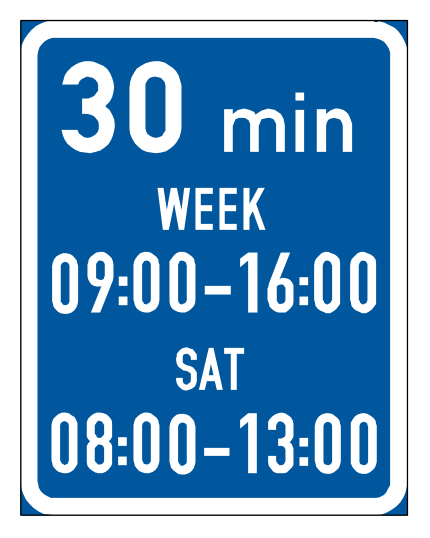
- · Local access is also allowed
- ✓ Applies for the period and during the times shown
- · No right turn by buses allowed at the next junction
Why: Applies for the period and during the times shown.
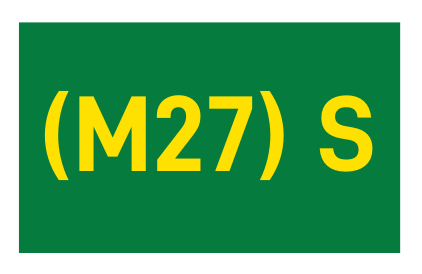
107.What does this sign or marking mean?
- · Applies only to the operator as indicated
- · Applies for the next 5km
- ✓ Applies during day time only
Why: Applies during day time only.
108.What does this sign or marking mean?
- · No right turn by buses allowed at the next junction
- · Local access is also allowed
- ✓ Applies at night only
Why: Applies at night only.
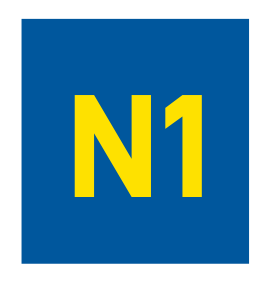
109.What does this sign or marking mean?
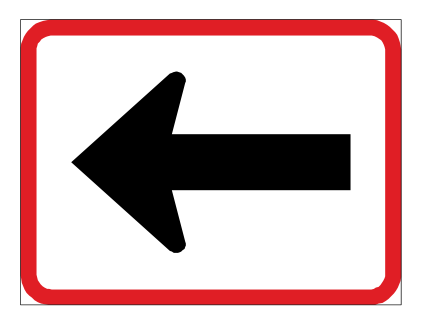
- · Local access is also allowed
- · 60 – min parking area requiring a parking fee
- ✓ Applies only when proceeding left
Why: Applies only when proceeding left.
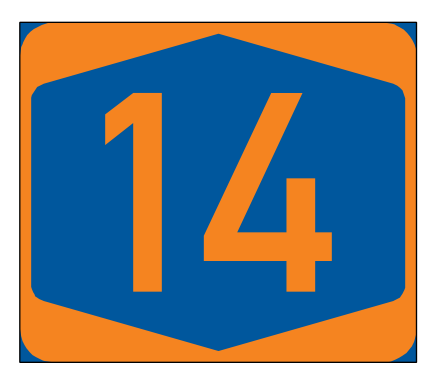
110.What does this sign or marking mean?
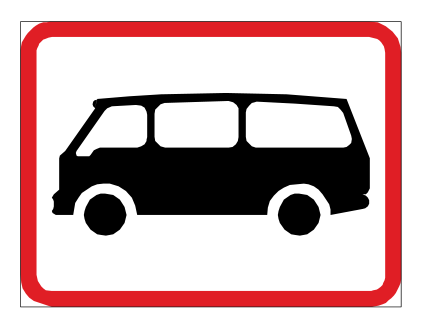
- ✓ Applies only to mini-buses
- · Goods vehicles must travel at 50km/h or faster
- · Parking only if you pay the parking fee
Why: Applies only to mini-buses.
111.What does this sign or marking mean?
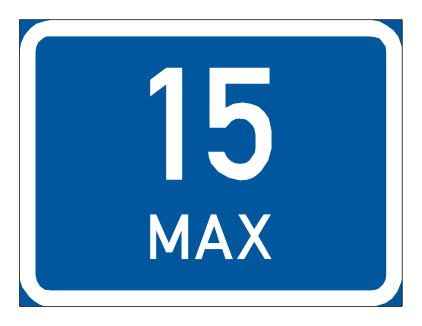
- ✓ Maximum of 15 vehicles
- · Overtaking prohibited for the next 2km
- · Applies for the period and during the times shown
Why: Maximum of 15 vehicles.
112.What does this sign or marking mean?
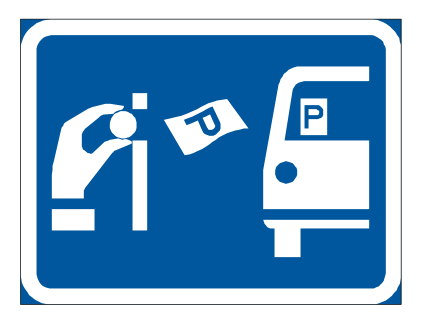
- ✓ Parking only if you pay the parking fee
- · 60 – min parking area requiring a parking fee
- · Speed limit of 60km/h applies to motorcycles only
Why: Parking only if you pay the parking fee.
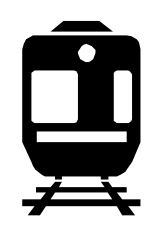
113.What does this sign or marking mean?
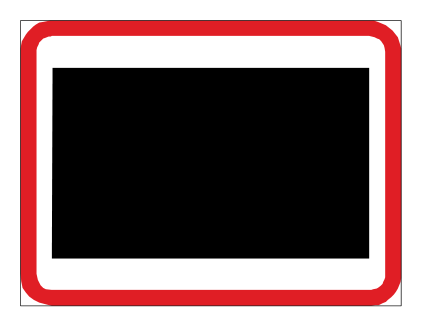
- · Turn right at the next junction during these times
- · Maximum of 15 vehicles
- ✓ Applies only to the operator as indicated
Why: Applies only to the operator as indicated.
114.What does this sign or marking mean?
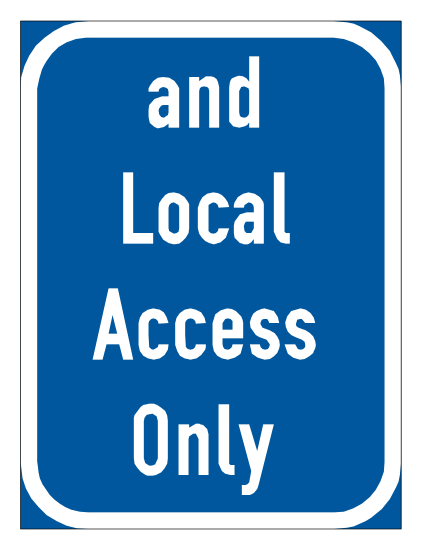
- · Goods vehicles must travel at 50km/h or faster
- · Applies only when proceeding left
- ✓ Local access is also allowed
Why: Local access is also allowed.
115.What does this sign or marking mean?
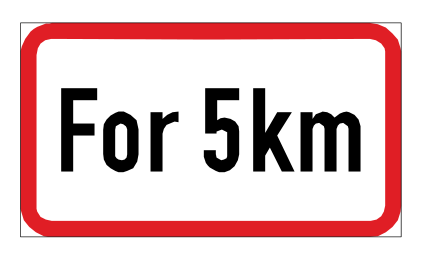
- ✓ Applies for the next 5km
- · Overtaking prohibited for the next 2km
- · Applies for the period and during the times shown
Why: Applies for the next 5km.
116.What does this sign or marking mean?
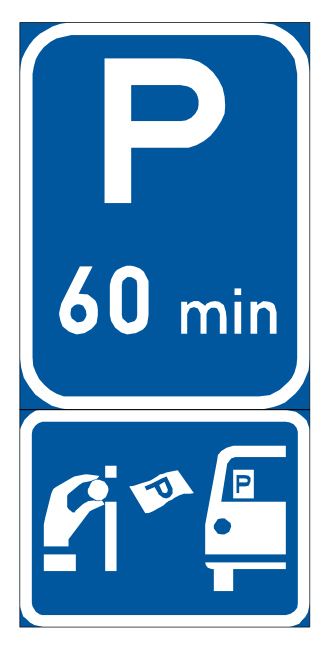
- · Overtaking prohibited for the next 2km
- ✓ 60 – min parking area requiring a parking fee
- · Applies only to mini-buses
Why: 60 – min parking area requiring a parking fee.
117.What does this sign or marking mean?
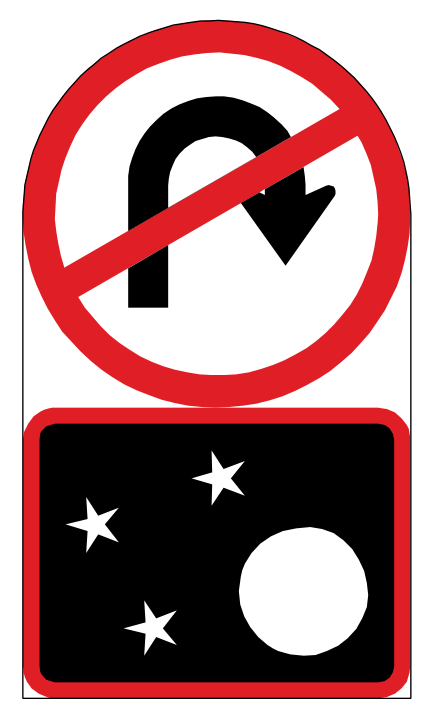
- · Goods vehicles must travel at 50km/h or faster
- · Applies during day time only
- ✓ U-turn prohibited at night
Why: U-turn prohibited at night.
118.What does this sign or marking mean?
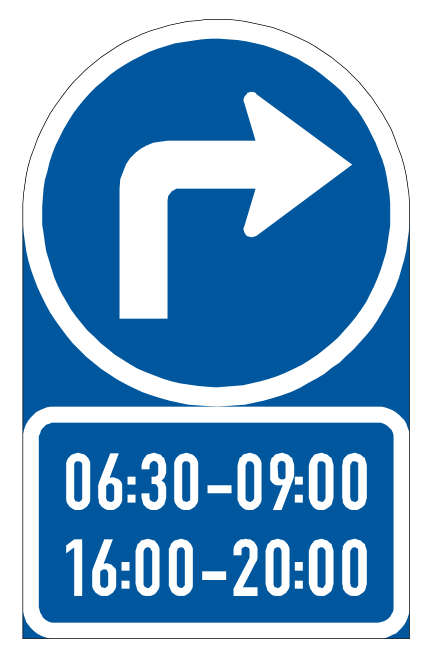
- ✓ Turn right at the next junction during these times
- · Applies only when proceeding left
- · Applies for the next 5km
Why: Turn right at the next junction during these times.
119.What does this sign or marking mean?
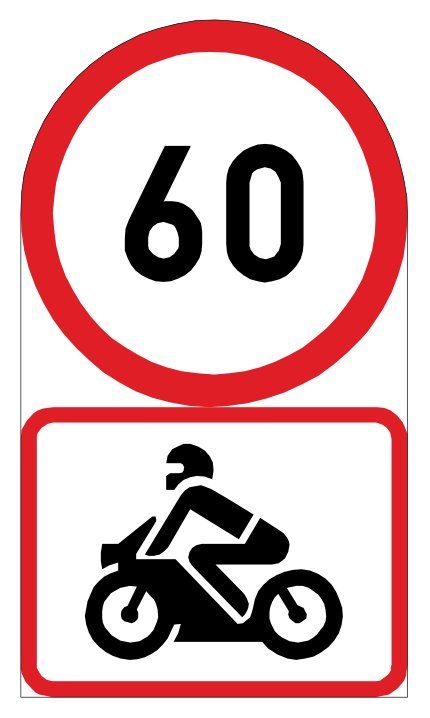
- · Applies only when proceeding left
- ✓ Speed limit of 60km/h applies to motorcycles only
- · Applies only to the operator as indicated
Why: Speed limit of 60km/h applies to motorcycles only.
120.What does this sign or marking mean?
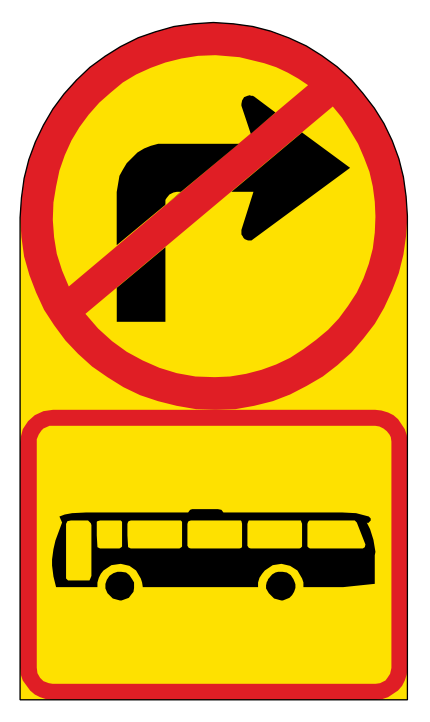
- · 60 – min parking area requiring a parking fee
- · Applies during the times shown
- ✓ No right turn by buses allowed at the next junction
Why: No right turn by buses allowed at the next junction.
121.What does this sign or marking mean?
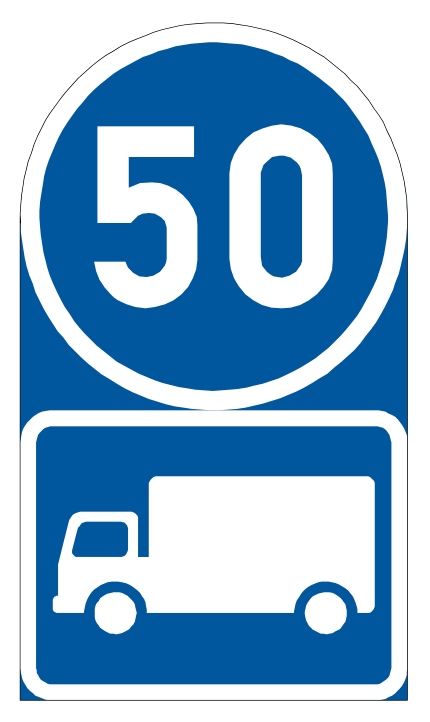
- · Applies during the times shown
- · Speed limit of 60km/h applies to motorcycles only
- ✓ Goods vehicles must travel at 50km/h or faster
Why: Goods vehicles must travel at 50km/h or faster.
122.What must you do at a flashing red disc?
- ✓ Stop, then proceed when it is safe
- · Stop and wait for green
- · Proceed without stopping
Why: A flashing red disc means stop, and then proceed only when it is safe, exactly like a stop sign.
123.If the traffic lights are out of order, how is the intersection treated?
- · Treat as a green light for all
- · Yield to traffic on the right
- ✓ Four‑way stop, go in order of arrival
Why: When the lights are out of order, treat the intersection as a four‑way stop: stop before the line, then go in order of arrival.
124.What does a steady yellow disc indicate?
- · Proceed with caution
- ✓ Stop unless stopping would be dangerous
- · Stop and wait for green
Why: A steady yellow disc means stop, unless you are so close that stopping would be dangerous; it warns that red is next.
125.Which statement about a flashing green arrow is correct?
- · You must stop and wait for green
- · You may proceed without yielding
- ✓ You may proceed, yielding to oncoming traffic and pedestrians
Why: A flashing green arrow means you may proceed in that direction, yielding to oncoming traffic and pedestrians.
126.What does a steady bus or tram signal (white symbol) mean?
- · All traffic must stop
- ✓ Buses and trams may proceed while other traffic waits
- · Only pedestrians may cross
Why: A steady bus or tram signal, a white symbol, tells buses and trams they may proceed while other traffic waits.
127.What does this sign or marking mean?
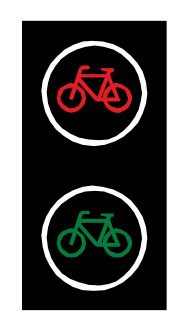
- · Steady green: go, yielding to pedestrians and vehicles in the intersection
- ✓ Cyclist signals: same meanings
- · Steady green arrow: go that way, even if the disc is red
Why: This one means: Cyclist signals: same meanings.
128.What must you do when you see this?
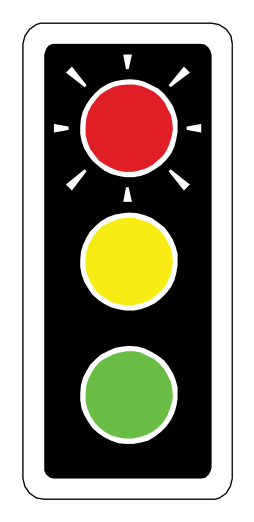
- · Steady yellow arrow: the green arrow is ending
- · Steady green man: cross
- ✓ Flashing red: stop, then go when safe, like a stop sign
Why: This one means: Flashing red: stop, then go when safe, like a stop sign.
129.What does this sign or marking mean?
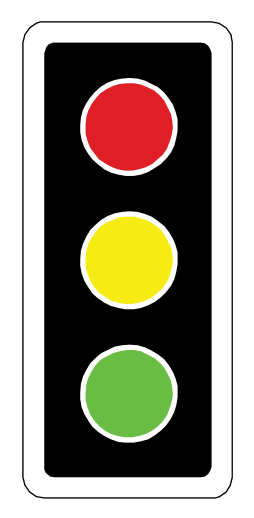
- · REGULATORY SIGNS: TRAFFIC SIGNALS
- · Steady yellow disc
- ✓ Steady red disc
Why: Steady red disc.
130.What does this sign or marking mean?
- ✓ Flashing red disc
- · Flashing green arrow
- · Proceed
Why: Flashing red disc.
131.What does this sign or marking mean?
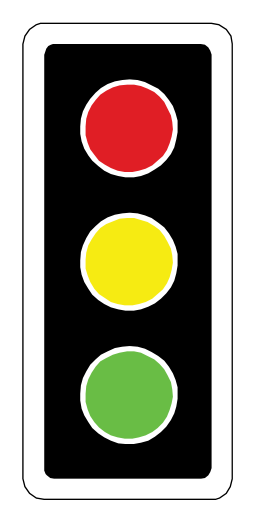
- ✓ Steady yellow disc
- · Steady green arrow
- · Proceed
Why: Steady yellow disc.
132.What does this sign or marking mean?
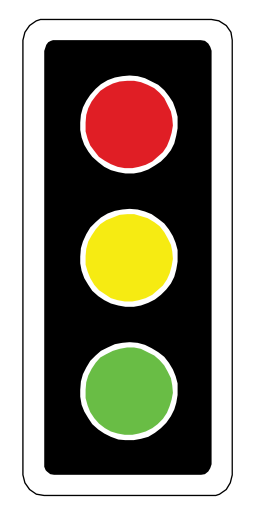
- · Steady bus/tram
- · Proceed
- ✓ Steady green disc
Why: Steady green disc.
133.What does this sign or marking mean?
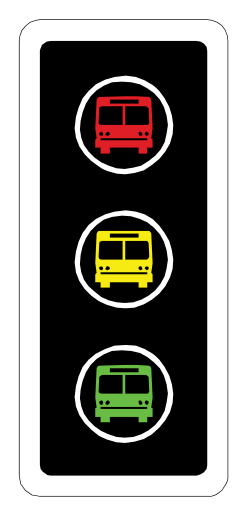
- · Proceed
- ✓ Steady bus/tram
- · Flashing green arrow
Why: Steady bus/tram.
134.What does this sign or marking mean?
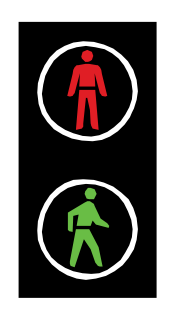
- · Steady green man
- ✓ Steady red man
- · Proceed
Why: Steady red man.
135.What does this sign or marking mean?
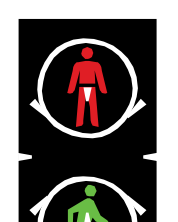
- ✓ Flashing red man
- · Proceed
- · Steady yellow disc
Why: Flashing red man.
136.What does this sign or marking mean?
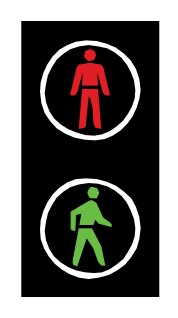
- · REGULATORY SIGNS: TRAFFIC SIGNALS
- · Steady red man
- ✓ Steady green man
Why: Steady green man.
137.What does this sign or marking mean?
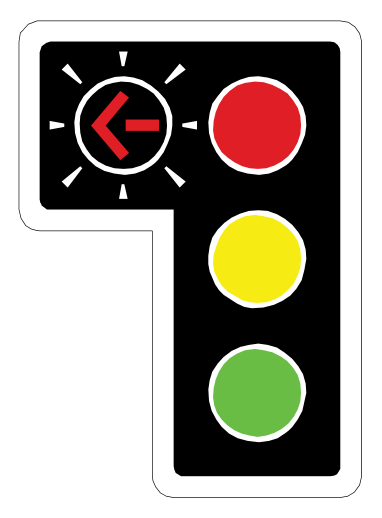
- ✓ Flashing red arrow left
- · Flashing green arrow
- · Warning
Why: Flashing red arrow left.
138.What does this sign or marking mean?
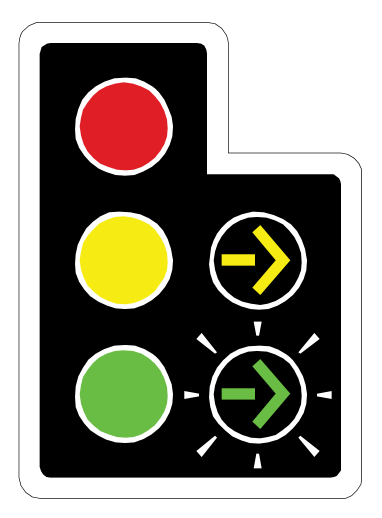
- · Pedal cyclist signals
- ✓ Flashing green arrow
- · Flashing red man
Why: Flashing green arrow.
139.What does this sign or marking mean?
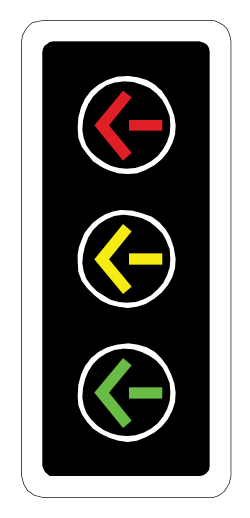
- · Flashing green arrow
- ✓ Steady yellow arrow
- · Steady red man
Why: Steady yellow arrow.
140.What does this sign or marking mean?
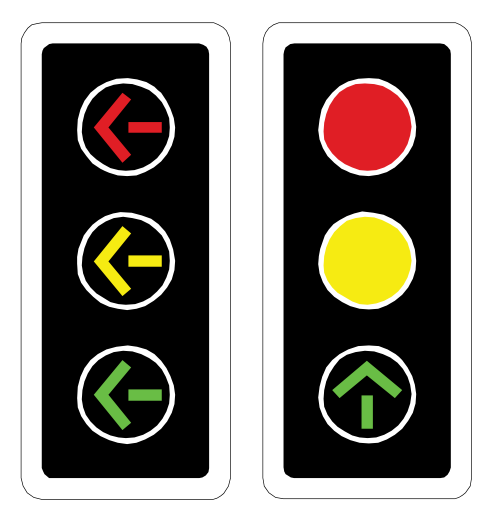
- · Steady red disc
- · Steady red man
- ✓ Steady green arrow
Why: Steady green arrow.
141.What does this sign or marking mean?
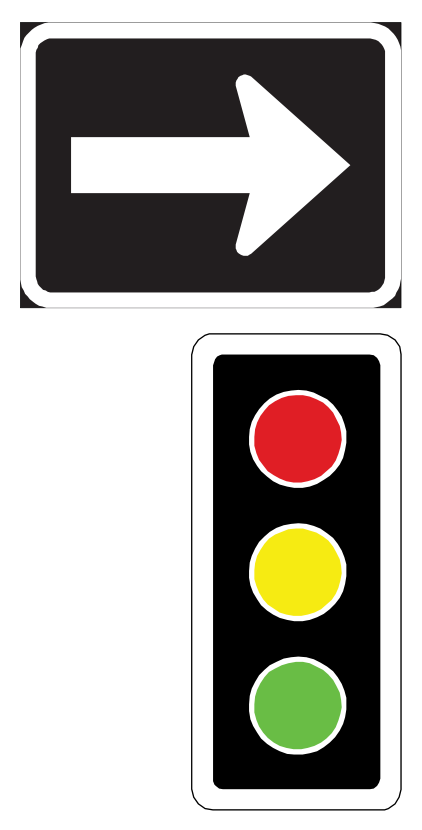
- ✓ REGULATORY SIGNS: TRAFFIC SIGNALS
- · Steady green arrow
- · Flashing red disc
Why: REGULATORY SIGNS: TRAFFIC SIGNALS.
142.What does this sign or marking mean?
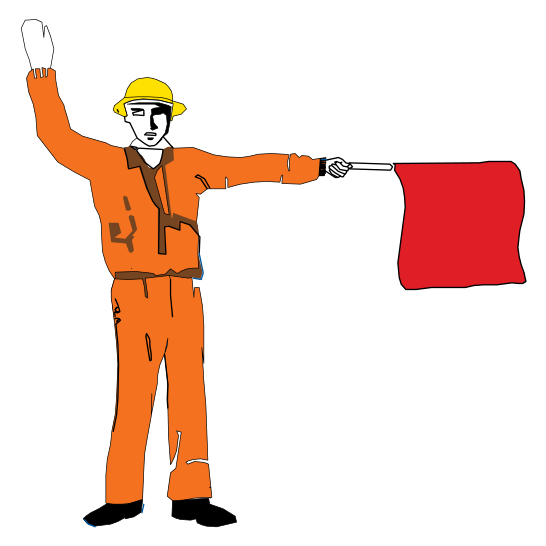
- ✓ Stop
- · Steady green arrow
- · Pedal cyclist signals
Why: Stop.
143.What does this sign or marking mean?
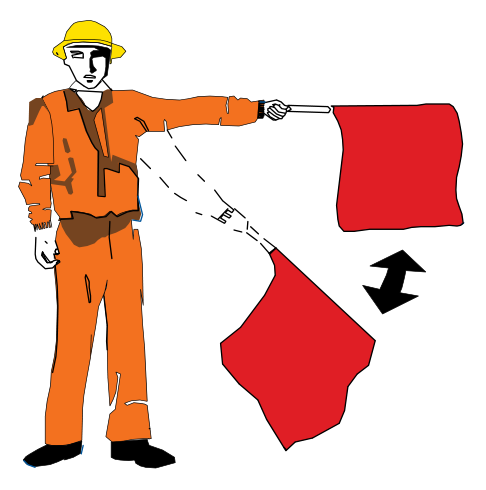
- ✓ Warning
- · Steady green disc
- · Steady yellow disc
Why: Warning.
144.What does this sign or marking mean?
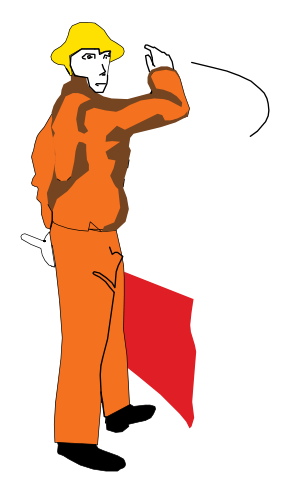
- · Steady green disc
- · Steady green man
- ✓ Proceed
Why: Proceed.
145.What does a green arrow pointing down on an overhead lane signal mean?
- ✓ You may use that lane
- · You must stop
- · The lane is closed
Why: A green arrow pointing down means you may use that lane.
146.Which signal has the highest authority when signals conflict?
- · Temporary sign
- ✓ Traffic officer's signal
- · Road marking
Why: A traffic officer's signal overrides every other signal, sign and marking.
147.What does a flashing yellow arrow pointing sideways indicate?
- ✓ Move out of this lane
- · Lane is open
- · Proceed with caution
Why: A flashing yellow arrow means move out of this lane because it is about to close.
148.How does a traffic officer signal that you may proceed?
- · Arm raised, palm towards you
- · Arm raised and lowered
- ✓ Arm sweeping through, waving direction
Why: The officer sweeps an arm through, waving you on in the direction to travel.
149.When a scholar patrol holds up a stop sign at a school crossing, what must you do?
- · Slow down and proceed if clear
- ✓ Stop and stay stopped until they lower it
- · Ignore if the traffic light is green
Why: Their stop sign is a lawful signal – you must stop and stay stopped until they lower it.
150.What shape and colour are warning signs?
- ✓ Upright triangle with red border
- · Circular with blue background
- · Square with yellow border
Why: Warning signs are upright triangles with a red border and a black symbol.
151.When a tunnel ahead warning sign is shown, what must you do?
- · Speed up to clear quickly
- ✓ Switch on your headlights and do not overtake inside
- · Turn off your headlights
Why: The lesson says to switch on your headlights and not overtake inside a tunnel.
152.If a steep downhill warning sign appears, what should you do?
- · Accelerate to maintain speed
- · Apply the handbrake
- ✓ Change to a lower gear if you need to
Why: For a steep downhill you must change to a lower gear if you need to.
153.What background colour do temporary warning signs have?
- · Red
- ✓ Yellow
- · White
Why: Temporary versions of warning signs have a yellow background.
154.When a drift warning sign is shown, what is the correct action?
- ✓ Go very slowly and test the brakes afterwards
- · Stop completely before crossing
- · Maintain normal speed
Why: The lesson advises to go very slowly and test the brakes after a drift.
155.What does this sign or marking mean?
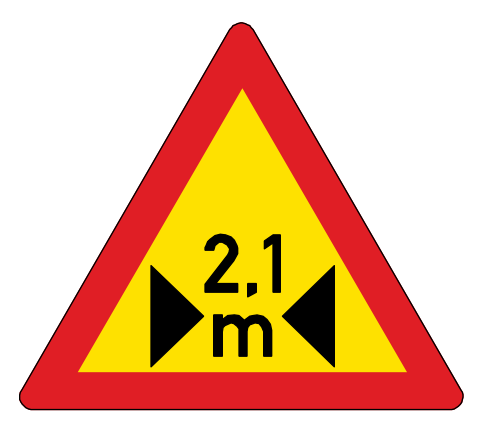
- · Tar becomes gravel: loose stones
- ✓ Temporary width restriction
- · Tunnel: headlights on, no overtaking
Why: This one means: Temporary width restriction.
156.What must you do when you see this?
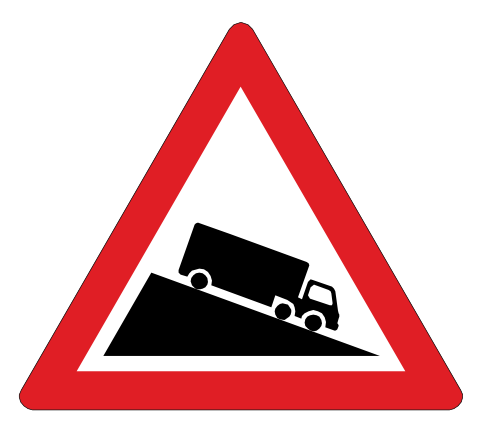
- · Structure less than 5 m wide
- · Slow-moving vehicles ahead
- ✓ Steep downhill: lower gear
Why: This one means: Steep downhill: lower gear.
157.What does this sign or marking mean?
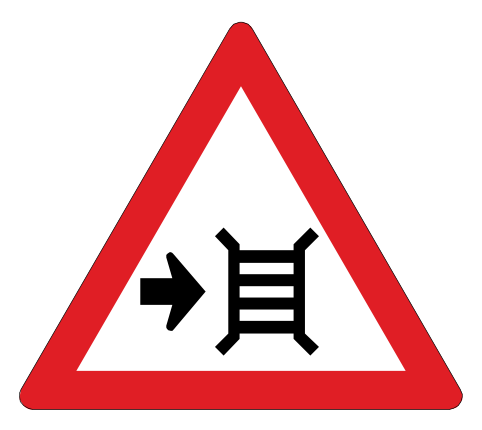
- · Vehicle height regulatory restriction ahead
- ✓ Motor gate ahead with cattle grid
- · Tarred road becomes a gravel road ahead
Why: Motor gate ahead with cattle grid. Pass on the side of the cattle grid.
158.What does this sign or marking mean?
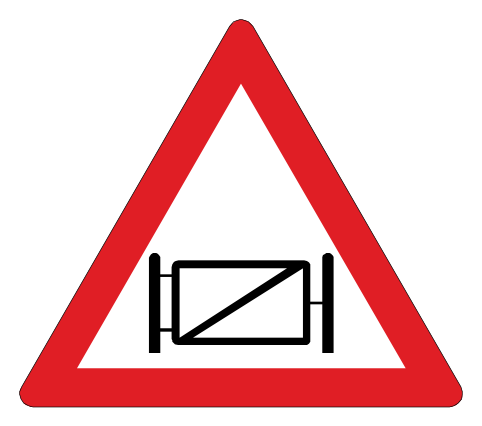
- · Speed humps ahead
- ✓ Gate, railway boom or barrier ahead
- · Vehicle length regulatory restriction ahead (temporary version)
Why: Gate, railway boom or barrier ahead.
159.What does this sign or marking mean?
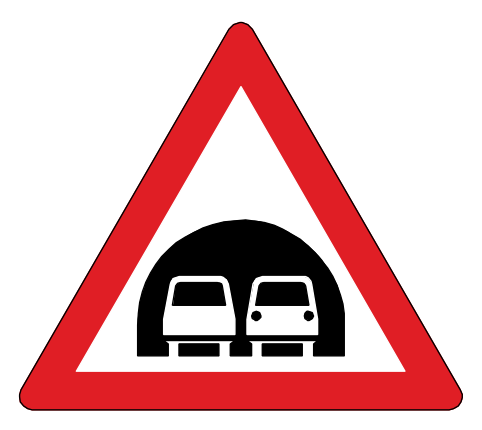
- · Reduced visibility can be expected ahead (e.g
- ✓ Tunnel ahead
- · Steep downhill ahead
Why: Tunnel ahead. Switch your headlights on and don’t overtake.
160.What does this sign or marking mean?
- ✓ Steep downhill ahead
- · Vehicle height regulatory restriction ahead (temporary version)
- · Strong crosswinds can be expected ahead
Why: Steep downhill ahead. Change to a lower gear if necessary.
161.What does this sign or marking mean?
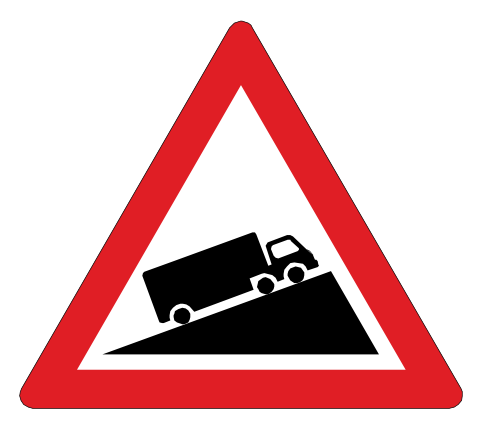
- · Structure ahead that is less than 5m wide, e.g
- · Gravel road becomes a tarred road ahead
- ✓ Steep uphill ahead
Why: Steep uphill ahead. You may not cross a No Overtaking line to overtake a slow moving vehicle.
162.What does this sign or marking mean?
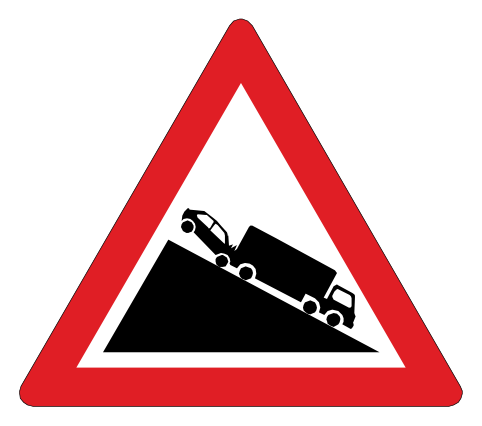
- · Vehicle length regulatory restriction ahead
- ✓ Slow moving vehicles ahead
- · Road narrows at a bridge ahead
Why: Slow moving vehicles ahead.
163.What does this sign or marking mean?
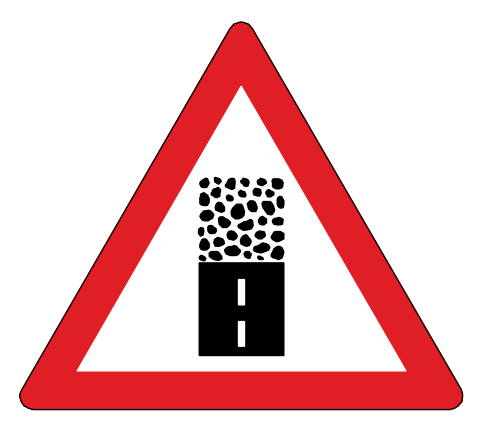
- · Road width regulatory restriction ahead
- · Steep uphill ahead
- ✓ Tarred road becomes a gravel road ahead
Why: Tarred road becomes a gravel road ahead, with loose stones that can damage windscreens and paintwork.
164.What does this sign or marking mean?
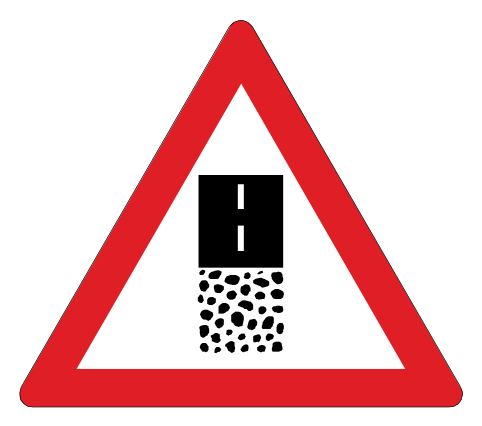
- · Speed humps ahead
- ✓ Gravel road becomes a tarred road ahead
- · Vehicle height regulatory restriction ahead
Why: Gravel road becomes a tarred road ahead.
165.What does this sign or marking mean?
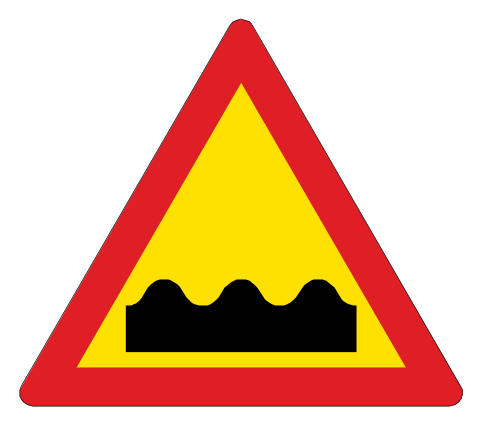
- · Steep downhill ahead
- · Vehicle height regulatory restriction ahead
- ✓ Temporary uneven, potholed, or bumpy road surface ahead
Why: Temporary uneven, potholed, or bumpy road surface ahead.
166.What does this sign or marking mean?
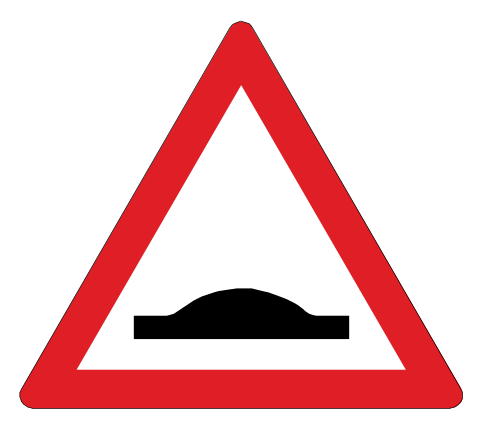
- ✓ Speed humps ahead
- · Vehicle height regulatory restriction ahead (temporary version)
- · Road width regulatory restriction ahead (temporary version)
Why: Speed humps ahead. Slow down and obey any speed limit sign.
167.What does this sign or marking mean?
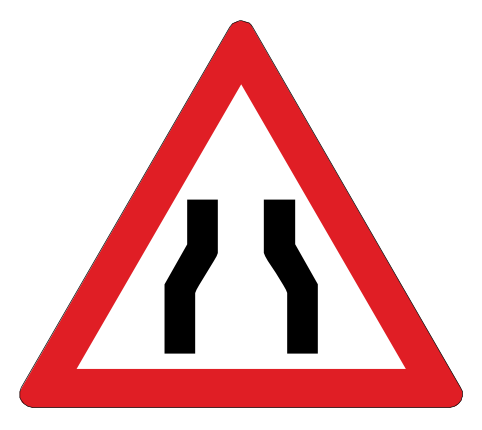
- · Hazard ahead
- · Surface step in the road surface ahead (temporary version)
- ✓ Road ahead narrows from both sides
Why: Road ahead narrows from both sides. Keep well to the left.
168.What does this sign or marking mean?
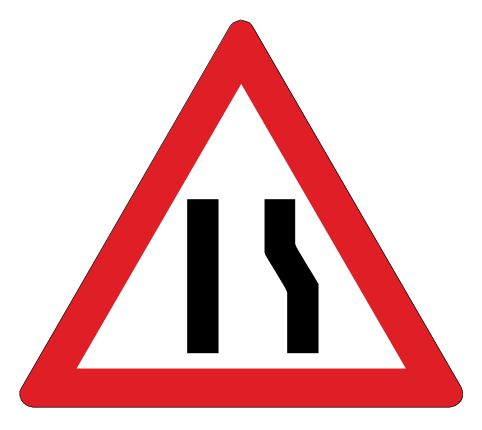
- ✓ Road ahead narrows from one side
- · Tarred road becomes a gravel road ahead
- · Gravel road becomes a tarred road ahead
Why: Road ahead narrows from one side. Keep well to the left.
169.What does this sign or marking mean?
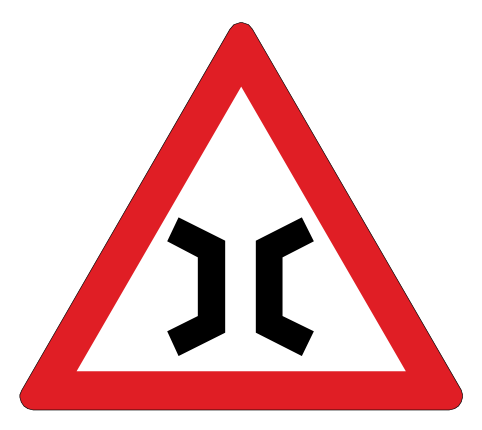
- · Steep uphill ahead
- ✓ Road narrows at a bridge ahead
- · Water crosses the road at a drift ahead
Why: Road narrows at a bridge ahead. Slow down and approach with caution.
170.What does this sign or marking mean?
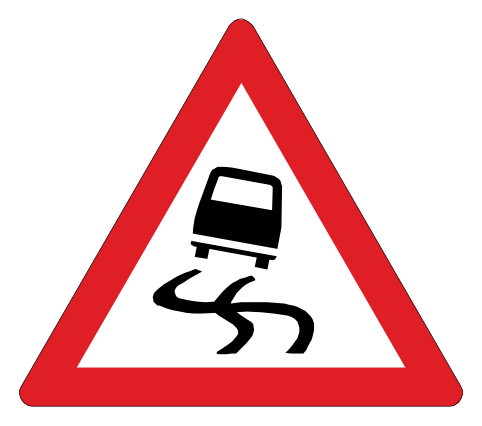
- · Strong crosswinds can be expected ahead
- ✓ Slippery road ahead, especially when wet
- · Soft shoulder at road’s edge ahead (temporary version)
Why: Slippery road ahead, especially when wet. Drive with caution.
171.What does this sign or marking mean?
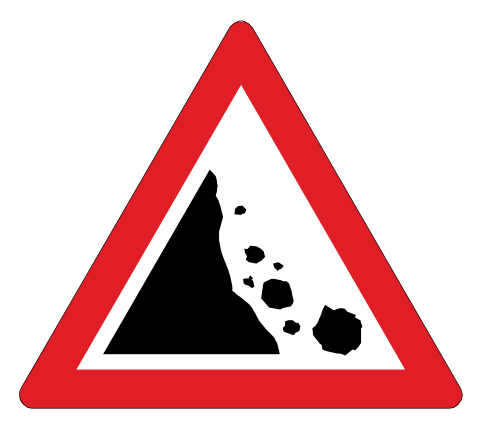
- · Temporary uneven, potholed, or bumpy road surface ahead
- ✓ Falling rocks ahead, especially after rain
- · Steep downhill ahead
Why: Falling rocks ahead, especially after rain.
172.What does this sign or marking mean?
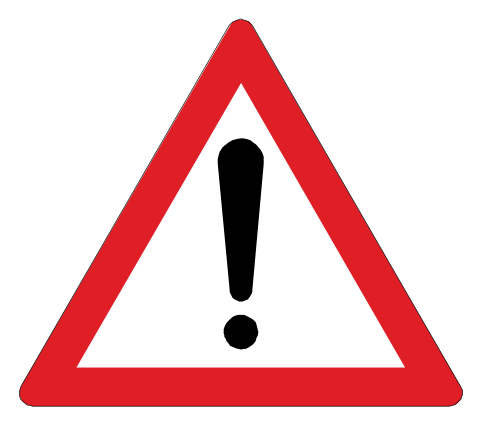
- ✓ General warning sign, usually with an explanatory plate beneath it
- · Steep uphill ahead
- · Road ahead narrows from one side
Why: General warning sign, usually with an explanatory plate beneath it.
173.What does this sign or marking mean?
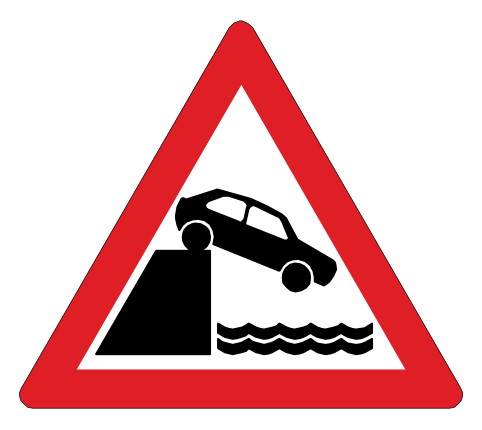
- · Water crosses the road at a drift ahead
- · Steep uphill ahead
- ✓ Jetty edge or river bank ahead, close to the road
Why: Jetty edge or river bank ahead, close to the road.
174.What does this sign or marking mean?
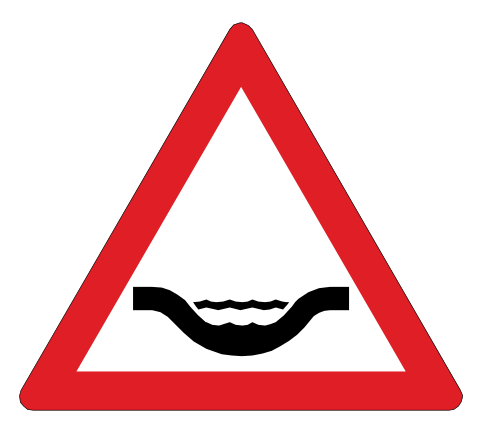
- · Vehicle height regulatory restriction ahead
- · Vehicle height regulatory restriction ahead (temporary version)
- ✓ Water crosses the road at a drift ahead
Why: Water crosses the road at a drift ahead. Go very slowly and test the brakes afterwards.
175.What does this sign or marking mean?
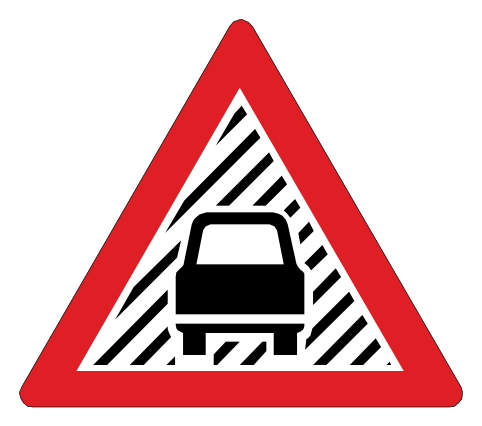
- · Vehicle height regulatory restriction ahead (temporary version)
- ✓ Reduced visibility can be expected ahead (e.g
- · Water crosses the road at a drift ahead
Why: Reduced visibility can be expected ahead (e.g. frequent mist).
176.What does this sign or marking mean?
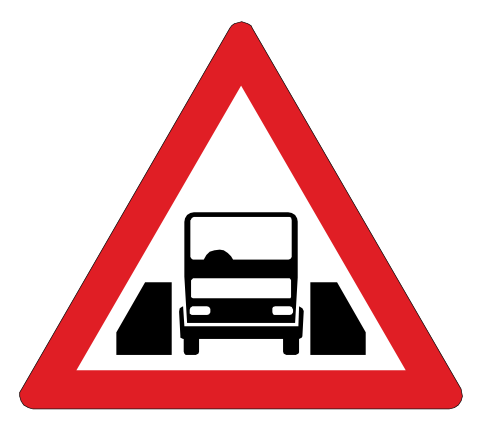
- · Loose stones on road surface ahead (temporary version)
- · Temporary uneven, potholed, or bumpy road surface ahead
- ✓ Structure ahead that is less than 5m wide, e.g
Why: Structure ahead that is less than 5m wide, e.g. bridge.
177.What does this sign or marking mean?
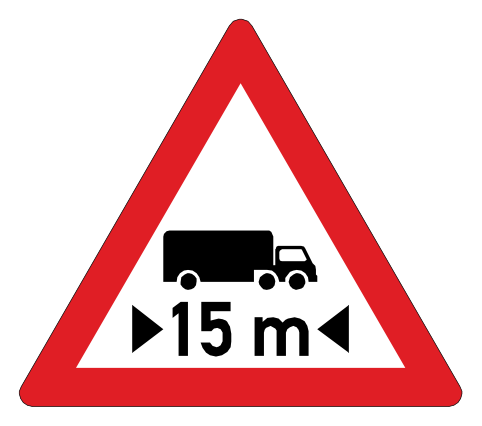
- ✓ Vehicle length regulatory restriction ahead
- · Steep downhill ahead
- · Road width regulatory restriction ahead (temporary version)
Why: Vehicle length regulatory restriction ahead.
178.What does this sign or marking mean?
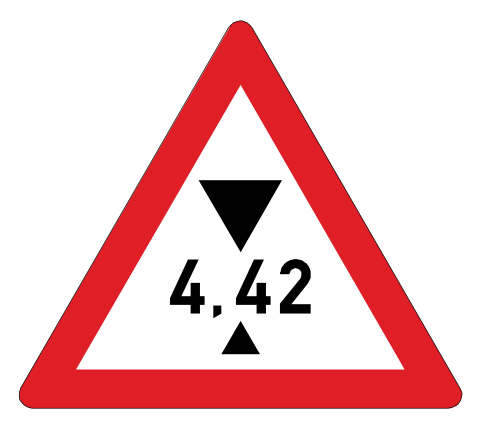
- · Structure ahead that is less than 5m wide, e.g
- ✓ Vehicle height regulatory restriction ahead
- · Steep uphill ahead
Why: Vehicle height regulatory restriction ahead.
179.What does this sign or marking mean?
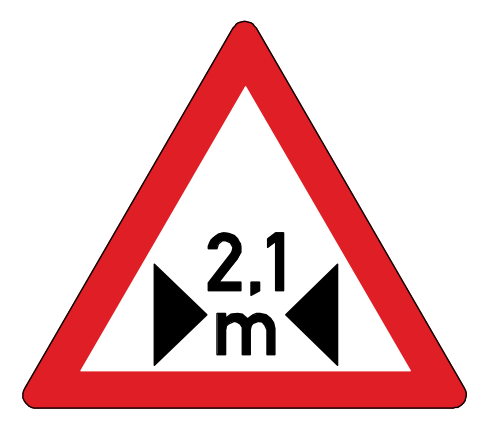
- · Road width regulatory restriction ahead (temporary version)
- · Vehicle length regulatory restriction ahead (temporary version)
- ✓ Road width regulatory restriction ahead
Why: Road width regulatory restriction ahead.
180.What does this sign or marking mean?
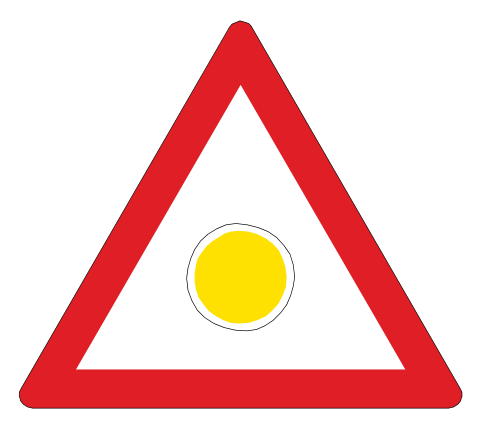
- · Loose stones on road surface ahead (temporary version)
- · Gravel road becomes a tarred road ahead
- ✓ Hazard ahead
Why: Hazard ahead. Slow down and approach with caution.
181.What does this sign or marking mean?
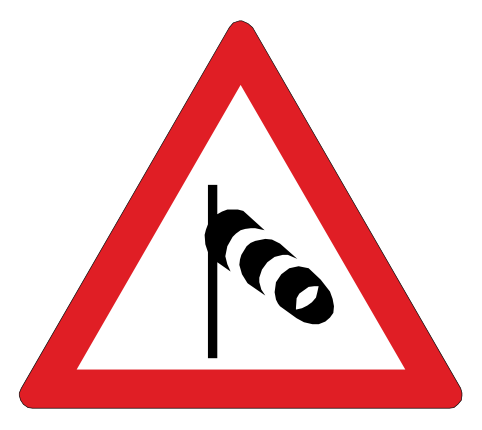
- · Vehicle length regulatory restriction ahead (temporary version)
- ✓ Strong crosswinds can be expected ahead
- · Steep downhill ahead
Why: Strong crosswinds can be expected ahead.
182.What does this sign or marking mean?
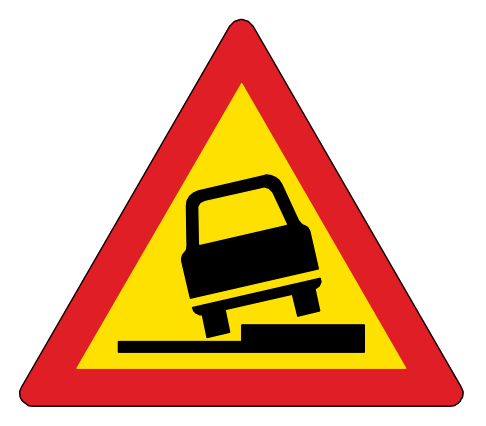
- ✓ Surface step in the road surface ahead (temporary version)
- · Structure ahead that is less than 5m wide, e.g
- · Steep downhill ahead
Why: Surface step in the road surface ahead (temporary version).
183.What does this sign or marking mean?
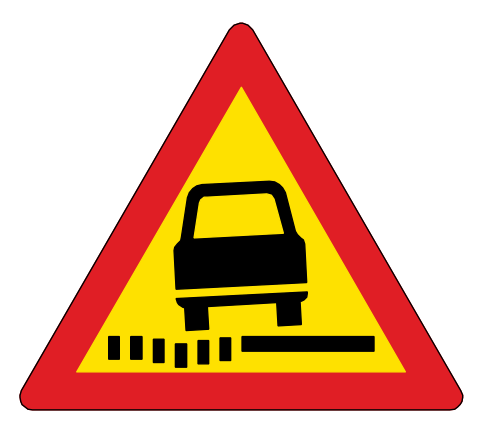
- · Jetty edge or river bank ahead, close to the road
- ✓ Soft shoulder at road’s edge ahead (temporary version)
- · Slippery road ahead, especially when wet
Why: Soft shoulder at road’s edge ahead (temporary version).
184.What does this sign or marking mean?
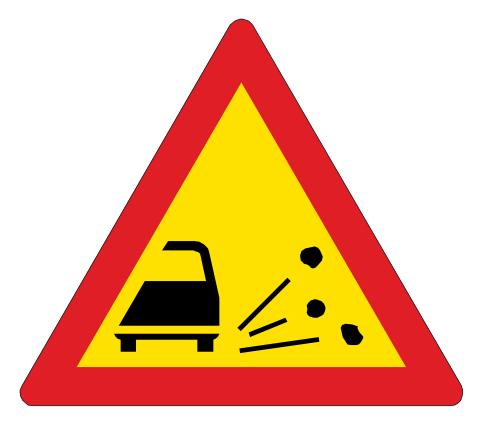
- ✓ Loose stones on road surface ahead (temporary version)
- · Speed humps ahead
- · Road ahead narrows from one side
Why: Loose stones on road surface ahead (temporary version).
185.What does this sign or marking mean?
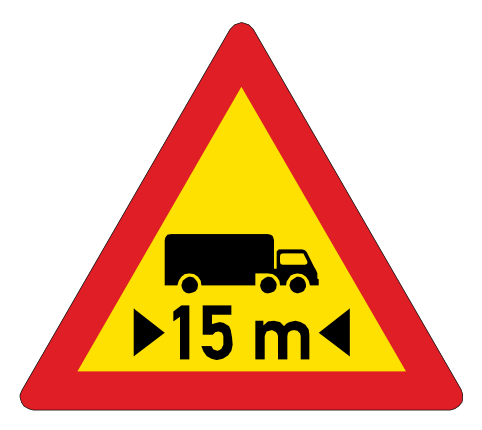
- · Road narrows at a bridge ahead
- · Road width regulatory restriction ahead (temporary version)
- ✓ Vehicle length regulatory restriction ahead (temporary version)
Why: Vehicle length regulatory restriction ahead (temporary version).
186.What does this sign or marking mean?
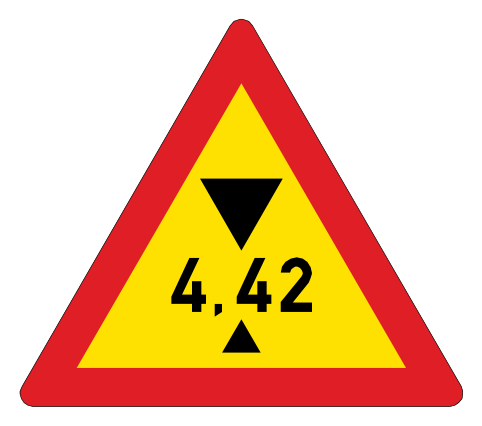
- · Soft shoulder at road’s edge ahead (temporary version)
- · Speed humps ahead
- ✓ Vehicle height regulatory restriction ahead (temporary version)
Why: Vehicle height regulatory restriction ahead (temporary version).
187.What does a single curved arrow warning sign indicate?
- · A junction ahead
- ✓ A bend to the left or right
- · A lane ending
Why: A single curved arrow warns of a bend to the left or the right.
188.Which sign warns of a series of bends?
- · Sharp bend sign
- ✓ Winding road sign
- · Crossroad sign
Why: A winding road sign warns of a series of bends.
189.What sequence of bends is shown by a double curve warning sign?
- · Two sharp right‑angled bends
- ✓ First left then right, or first right then left
- · A single bend to the left
Why: A double curve warns of a bend followed by another, first left then right, or first right then left.
190.When should you reduce speed for a bend?
- · During the bend
- · After the bend
- ✓ Before the bend
Why: Slow down before the bend, not in it.
191.What does a sign showing two lanes merging into one represent?
- · A traffic circle ahead
- ✓ Lanes merging, where two lanes become one
- · A lane ending on the right
Why: Lanes merging, where two lanes become one, is shown by that layout‑change sign.
192.What does this sign or marking mean?
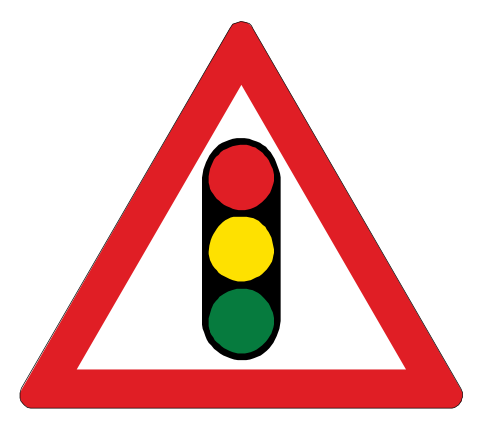
- · Sharp bend
- ✓ Traffic signals ahead
- · Two combined sharp bends, starting left
Why: This one means: Traffic signals ahead.
193.What must you do when you see this?
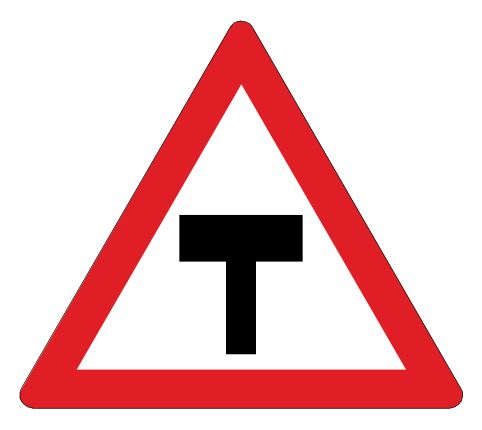
- ✓ T-junction ahead
- · Gentle curve to the right
- · Two combined sharp bends, starting left
Why: This one means: T-junction ahead.
194.What does this sign or marking mean?
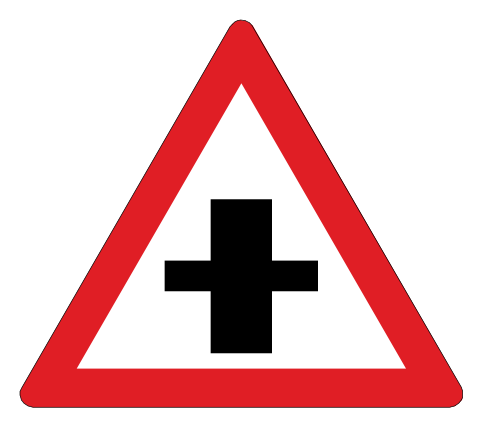
- · Y junction ahead
- ✓ Priority road with secondary crossroad ahead
- · Secondary road with priority crossroad ahead
Why: Priority road with secondary crossroad ahead.
195.What does this sign or marking mean?
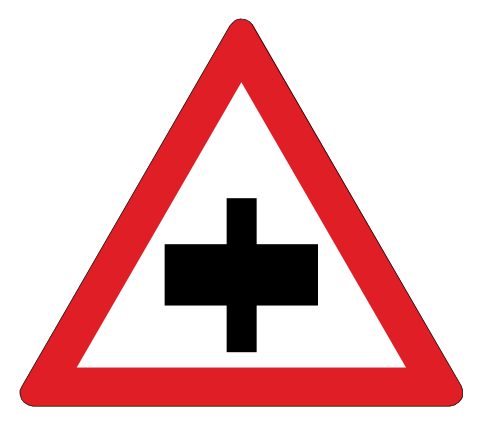
- · Staggered junctions ahead
- ✓ Secondary road with priority crossroad ahead
- · Crossroad ahead
Why: Secondary road with priority crossroad ahead.
196.What does this sign or marking mean?
- · Staggered junctions ahead
- ✓ T-junction ahead
- · Y junction ahead
Why: T-junction ahead.
197.What does this sign or marking mean?
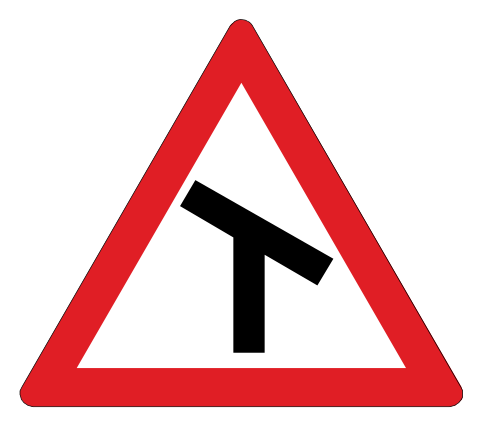
- · Side road junction ahead
- · T-junction ahead
- ✓ Skew T-junction ahead
Why: Skew T-junction ahead.
198.What does this sign or marking mean?
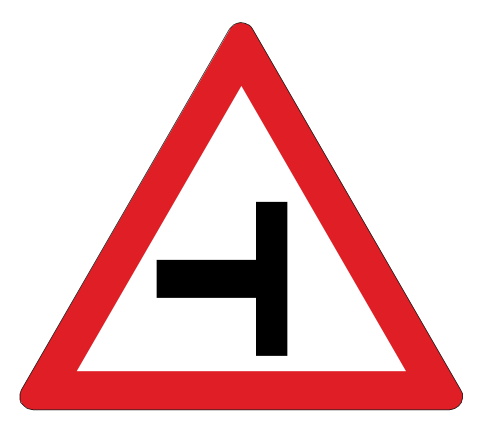
- · Skew T-junction ahead
- ✓ Side road junction ahead
- · Secondary road with priority crossroad ahead
Why: Side road junction ahead.
199.What does this sign or marking mean?
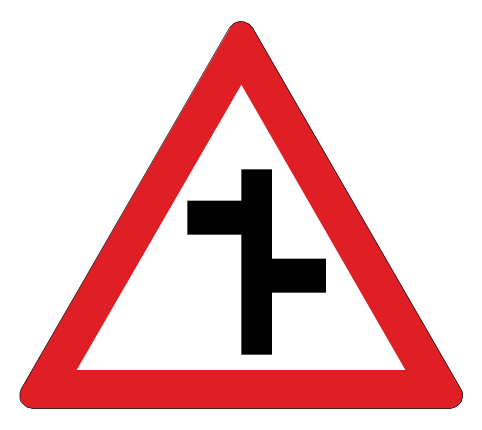
- · T-junction ahead
- ✓ Staggered junctions ahead
- · Skew T-junction ahead
Why: Staggered junctions ahead.
200.What does this sign or marking mean?
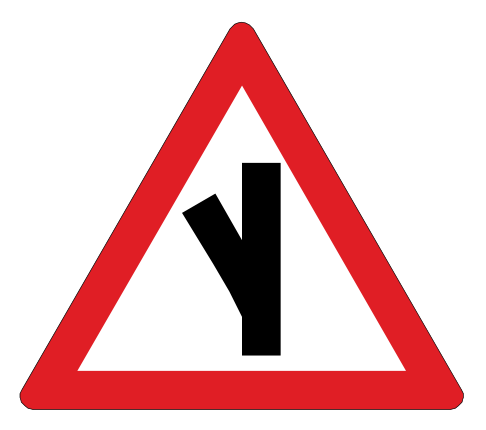
- ✓ Sharp junction ahead
- · Skew T-junction ahead
- · Y junction ahead
Why: Sharp junction ahead.
201.What does this sign or marking mean?
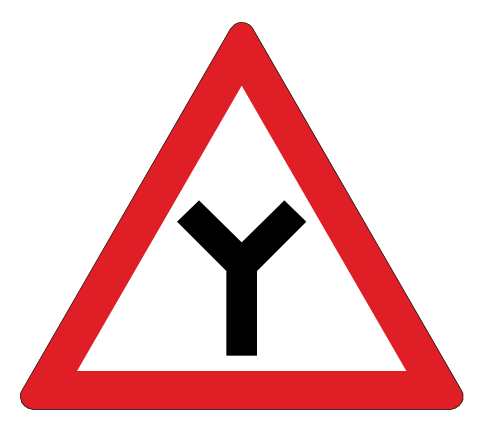
- · T-junction ahead
- ✓ Y junction ahead
- · Sharp junction ahead
Why: Y junction ahead.
202.What does a marked pedestrian crossing ahead sign tell you to do?
- ✓ Be ready to stop
- · Accelerate
- · Change lane
Why: The lesson says a marked pedestrian crossing ahead means you should be ready to stop.
203.Which sign uses a buck picture?
- · Cattle
- ✓ Wild animals
- · Sheep
Why: The transcript states the sign with a buck represents wild animals.
204.What is the instruction for all animal warning signs?
- ✓ Slow down, expect the animal, never hoot
- · Speed up, overtake safely
- · Stop and wait for police
Why: The lesson says the instruction for all animal signs is to slow down, expect the animal on the road, and never hoot at it.
205.A supplementary plate showing “two hundred metres” tells you:
- · Maximum speed limit
- · Distance to next town
- ✓ How long to stay alert
Why: The transcript explains the plate tells you how long to stay alert.
206.Which of these is NOT a vehicles-and-work warning sign?
- · Trams ahead
- · Agricultural vehicles
- ✓ Motorcycles ahead
Why: The lesson lists trams and agricultural vehicles, but not motorcycles, under vehicles and work signs.
207.What does this sign or marking mean?
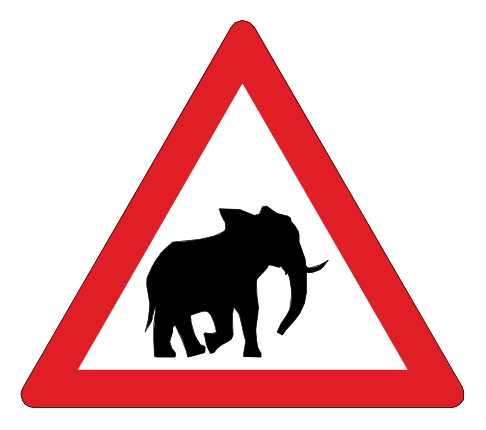
- · Children ahead: school or playground
- · Marked pedestrian crossing ahead
- ✓ Elephants, in the parks
Why: This one means: Elephants, in the parks.
208.What must you do when you see this?
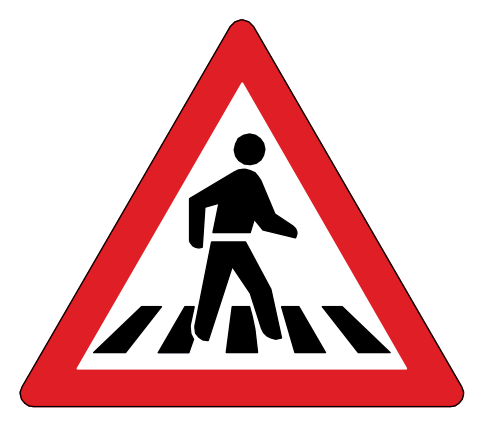
- ✓ Marked pedestrian crossing ahead
- · Accident ahead
- · Cyclists ahead
Why: This one means: Marked pedestrian crossing ahead.
209.What does this sign or marking mean?
- · Horses ahead
- · Pedestrians ahead
- ✓ Marked pedestrian crossing ahead
Why: Marked pedestrian crossing ahead.
210.What does this sign or marking mean?
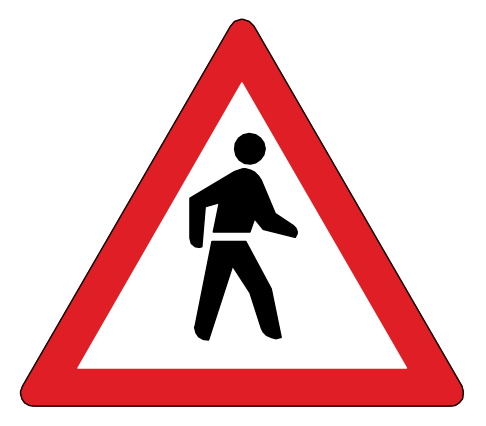
- · Children ahead
- · Warthogs ahead
- ✓ Pedestrians ahead
Why: Pedestrians ahead.
211.What does this sign or marking mean?
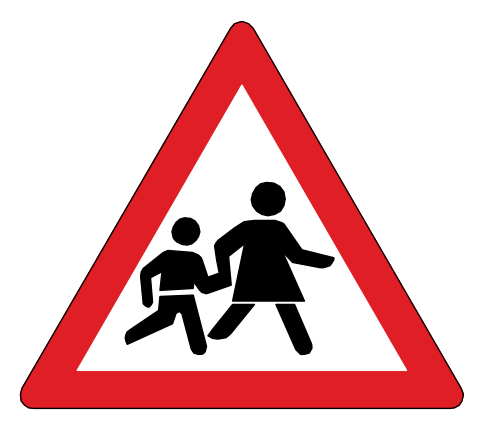
- · Agricultural vehicles ahead
- · Elephants ahead
- ✓ Children ahead
Why: Children ahead.
212.What does this sign or marking mean?
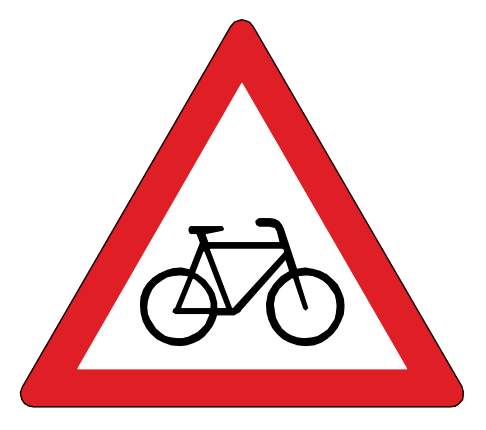
- · Warthogs ahead
- · Horses and riders ahead
- ✓ Cyclist ahead
Why: Cyclist ahead.
213.What does this sign or marking mean?
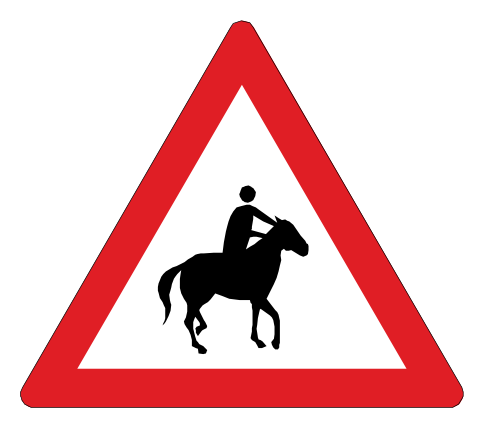
- ✓ Horses and riders ahead
- · Hippos ahead
- · Accident ahead
Why: Horses and riders ahead.
214.What does this sign or marking mean?
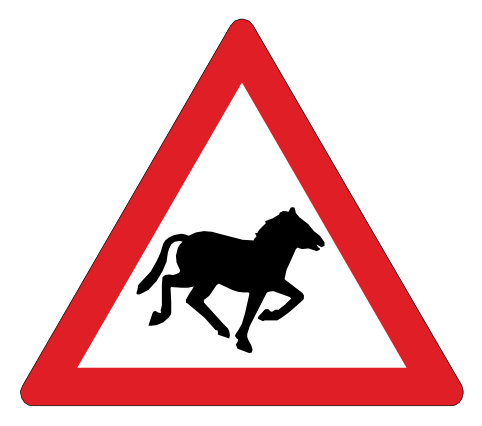
- · Hippos ahead
- ✓ Horses ahead
- · Horses and riders ahead
Why: Horses ahead.
215.What does this sign or marking mean?
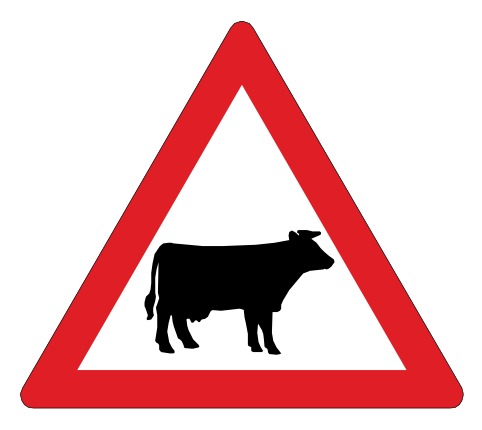
- · Horses and riders ahead
- ✓ Cattle ahead
- · Accident ahead
Why: Cattle ahead.
216.What does this sign or marking mean?
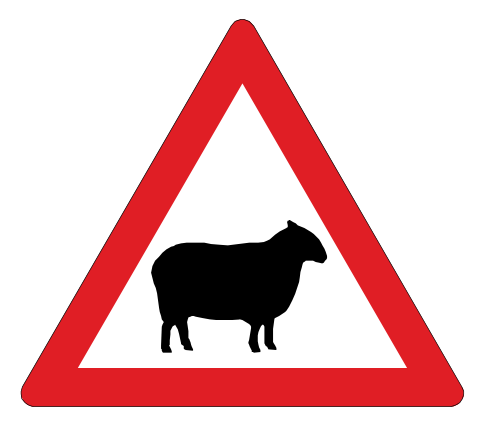
- · Agricultural vehicles ahead
- ✓ Sheep ahead
- · Road works ahead
Why: Sheep ahead.
217.What does this sign or marking mean?
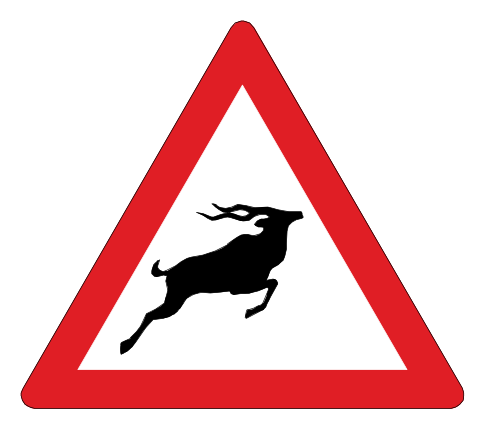
- · Warthogs ahead
- ✓ Wild animals ahead
- · Road works ahead
Why: Wild animals ahead.
218.What does this sign or marking mean?
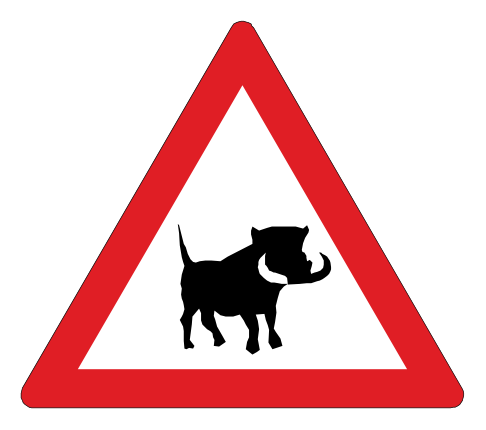
- · Agricultural vehicles ahead
- · Elephants ahead
- ✓ Warthogs ahead
Why: Warthogs ahead.
219.What does this sign or marking mean?
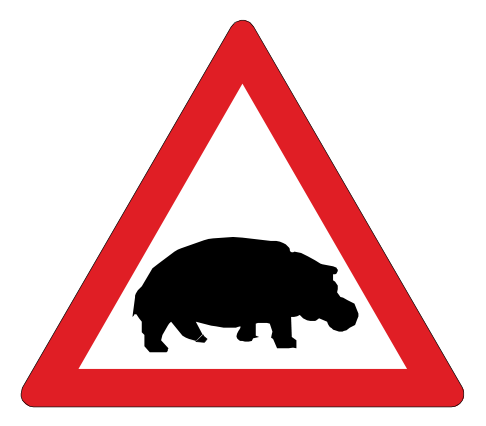
- · Cyclist ahead
- · Wild animals ahead
- ✓ Hippos ahead
Why: Hippos ahead.
220.What does this sign or marking mean?
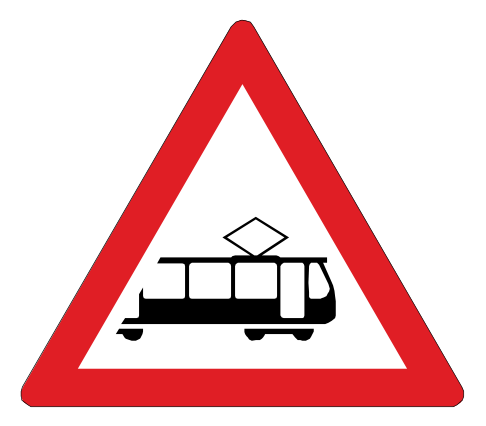
- · Grader working ahead
- · Elephants ahead
- ✓ Trams ahead
Why: Trams ahead.
221.What does this sign or marking mean?
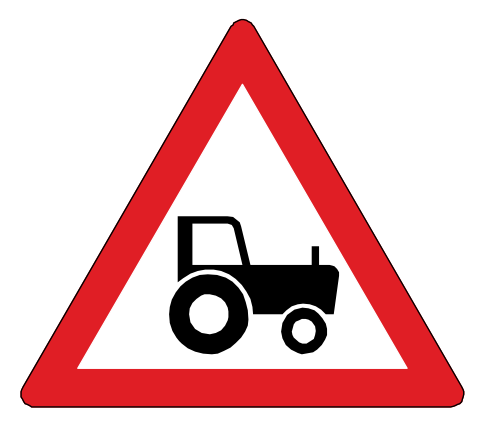
- ✓ Agricultural vehicles ahead
- · Cattle ahead
- · Horses ahead
Why: Agricultural vehicles ahead.
222.What does this sign or marking mean?
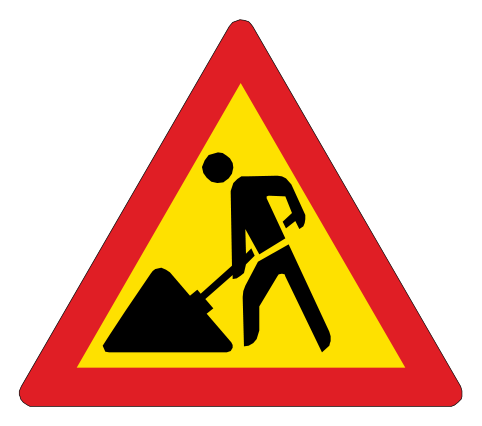
- · Children ahead
- · Horses ahead
- ✓ Road works ahead
Why: Road works ahead.
223.What does this sign or marking mean?
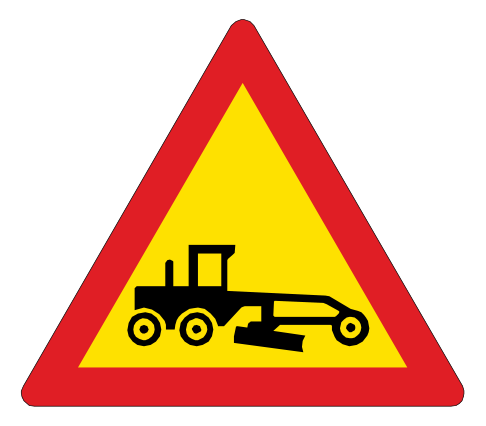
- ✓ Grader working ahead
- · Sheep ahead
- · Cattle ahead
Why: Grader working ahead.
224.What does this sign or marking mean?
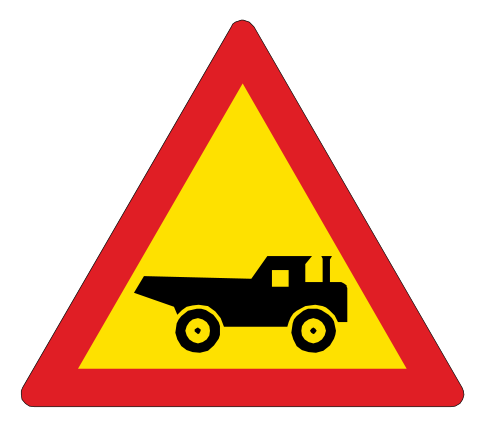
- · Road works ahead
- · Accident ahead
- ✓ Construction vehicles entering or crossing the road ahead
Why: Construction vehicles entering or crossing the road ahead.
225.What does this sign or marking mean?
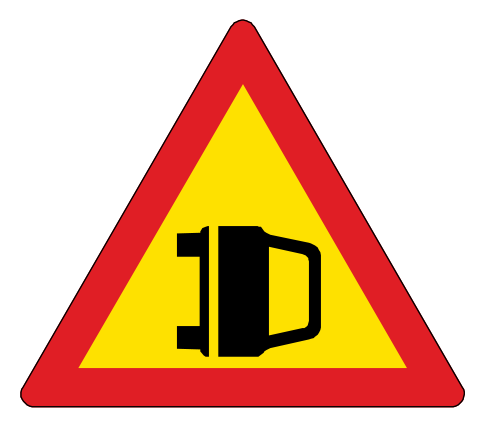
- · Grader working ahead
- ✓ Accident ahead
- · Sheep ahead
Why: Accident ahead.
226.What colour pattern identifies a danger plate?
- ✓ Red and white stripes
- · Blue and yellow stripes
- · Green and black stripes
Why: Danger plates are described as red and white striped rectangles.
227.If a danger plate shows an arrowhead pointing right, what must you do?
- · Pass the obstruction on the left
- ✓ Pass the obstruction on the right
- · Stop completely
Why: A danger plate with an arrowhead tells you to pass the obstruction on the side the arrowhead points to.
228.A barricade with two red and three yellow stripes means:
- · Speed limit reduction
- · Pedestrian crossing ahead
- ✓ Roadway beyond is temporarily closed
Why: Two red and three yellow stripes indicate the roadway beyond the barricade is temporarily closed.
229.What does an inward‑pointing arrow on a road‑ends plate indicate?
- ✓ Road ends here – turn back
- · Road ends ahead – turn left or right
- · Road continues straight
Why: Inward‑pointing arrows mean the road ends here and you must turn back.
230.An extra lower plate beneath a white‑cross railway crossing plate signals:
- · A level crossing with a barrier
- ✓ Two or more railway lines
- · A pedestrian crossing
Why: A lower plate under the white cross means there are two or more railway lines.
231.What does this sign or marking mean?
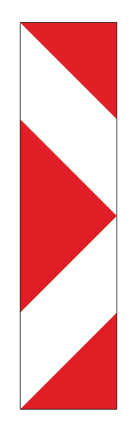
- · Sharp bend: the place and direction
- ✓ Arrowhead: pass the obstruction on that side
- · On a fluorescent background: an especially serious hazard
Why: This one means: Arrowhead: pass the obstruction on that side.
232.What must you do when you see this?
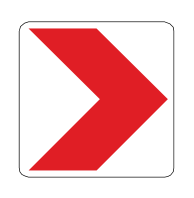
- · Several plates stacked, each adding a detail
- ✓ Sharp bend: the place and direction
- · Inward arrows: the road ends here, turn back
Why: This one means: Sharp bend: the place and direction.
233.What does this sign or marking mean?
- · Inward pointing arrows indicate that the road ends at this point
- · Outward pointing arrows indicate where the road ends at a T-junction
- ✓ Marks the place and direction of a sharp bend in the road
Why: Marks the place and direction of a sharp bend in the road.
234.What does this sign or marking mean?
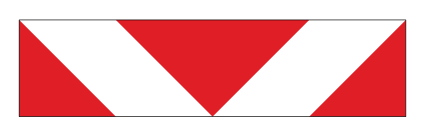
- · The red and white stripes indicate a boom control
- · Railway crossing
- ✓ Danger plate
Why: Danger plate. Marks the position of an overhead structure across the road.
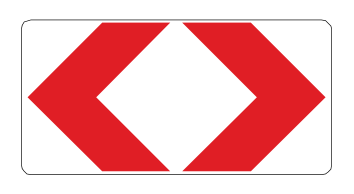
235.What does this sign or marking mean?
- · Marks the place and direction of a sharp bend in the road
- · Outward pointing arrows indicate where the road ends at a T-junction
- ✓ Marks the position of a separation in the road (e.g
Why: Marks the position of a separation in the road (e.g. at a freeway exit).
236.What does this sign or marking mean?
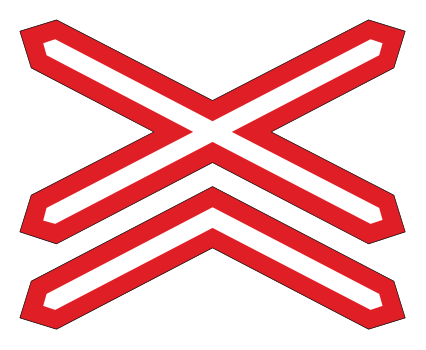
- ✓ Railway crossing
- · Danger plate
- · Marks the position of a separation in the road (e.g
Why: Railway crossing. Extra lower plate indicates two or more railway lines.
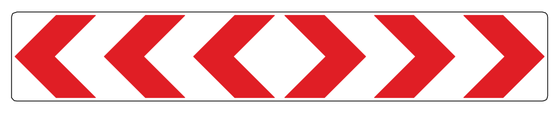
237.What does this sign or marking mean?
- · Marks the position of a separation in the road (e.g
- ✓ Outward pointing arrows indicate where the road ends at a T-junction
- · Railway crossing
Why: Outward pointing arrows indicate where the road ends at a T-junction and you must turn either left or right.
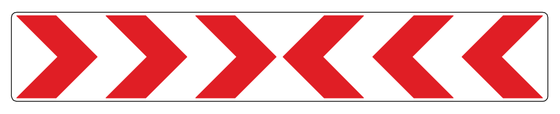
238.What does this sign or marking mean?
- · Marks the position of a separation in the road (e.g
- · Marks the place and direction of a sharp bend in the road
- ✓ Inward pointing arrows indicate that the road ends at this point
Why: Inward pointing arrows indicate that the road ends at this point and does not continue beyond the plate. You must turn back.
239.What does this sign or marking mean?

- ✓ The red and white stripes indicate a boom control
- · Outward pointing arrows indicate where the road ends at a T-junction
- · Railway crossing
Why: The red and white stripes indicate a boom control. Access is allowed only when the boom is raised.
240.What does this sign or marking mean?
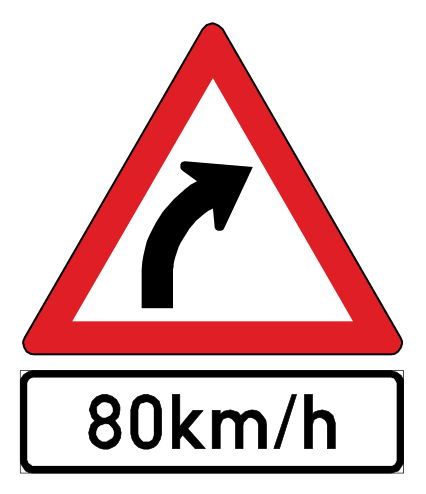
- · Advanced warning signs with multiple combinations
- ✓ Advanced warning signs in high visibility backgrounds
- · Advanced warning signs with supplementary plates
Why: Advanced warning signs in high visibility backgrounds.
241.What does this sign or marking mean?
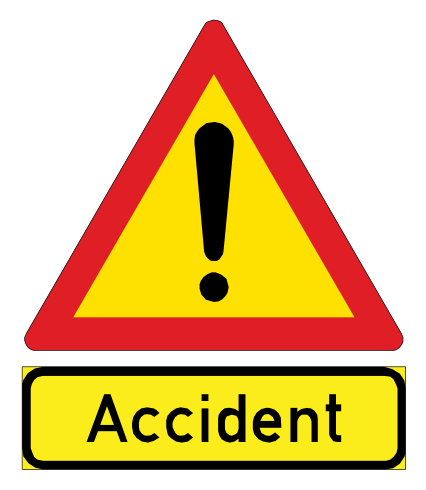
- · Advanced warning signs in high visibility backgrounds
- ✓ Advanced warning signs with supplementary plates
- · Advanced warning signs with multiple combinations
Why: Advanced warning signs with supplementary plates.
242.What does this sign or marking mean?
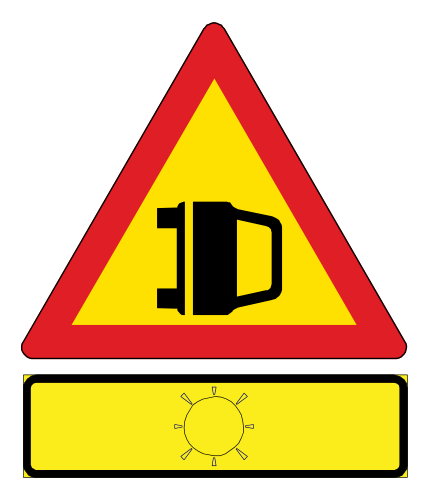
- · Advanced warning signs in high visibility backgrounds
- ✓ Advanced warning signs with multiple combinations
- · Advanced warning signs with supplementary plates
Why: Advanced warning signs with multiple combinations.
243.What does each white diagonal bar on a freeway exit countdown sign represent?
- · 200 metres to the exit
- ✓ 100 metres to the exit
- · 500 metres to the exit
Why: Each white diagonal bar equals one hundred metres to the exit.
244.What colour background is used for the temporary version of the exit countdown sign at roadworks?
- · Blue
- · Green
- ✓ Yellow
Why: A temporary version on a yellow background does the same at roadworks.
245.What does a red bar across the end of a road sign indicate?
- ✓ No through road ahead
- · Road is under construction
- · Speed limit reduced
Why: A red bar across the end means there is no way through ahead.
246.What does a yellow diamond on a white background signify?
- · A pedestrian crossing ahead
- ✓ The road you are on has priority at the junction ahead
- · A temporary speed limit
Why: A yellow diamond on white means the road you are on has priority at the junction ahead.
247.A supplementary plate showing a number under a sign provides what type of information?
- · Maximum load limit
- · Vehicle height restriction
- ✓ Recommended speed (advice)
Why: A number on a supplementary plate is a recommended speed, which is advice, not a limit.
248.What does this sign or marking mean?
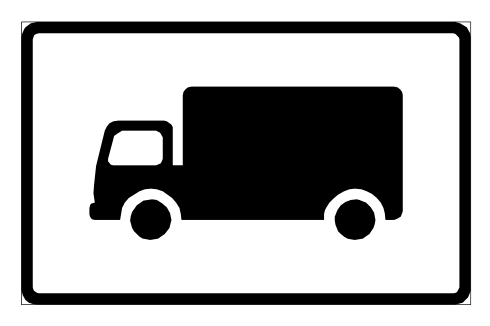
- · Recommended speed: advice, not a limit
- · Temporary countdown at roadworks
- ✓ Refers to goods vehicles
Why: This one means: Refers to goods vehicles.
249.What must you do when you see this?
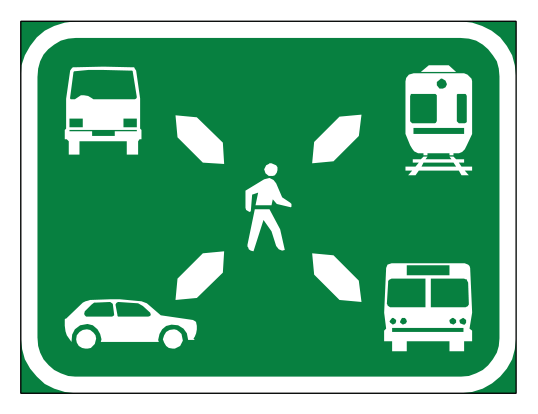
- · 200 m
- ✓ Modal transfer point
- · Park and ride
Why: This one means: Modal transfer point.
250.What does this sign or marking mean?
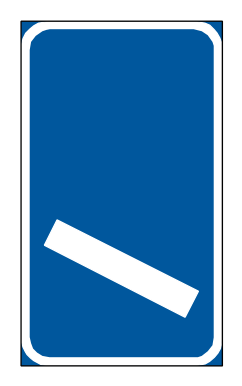
- · Temporary high speed exit countdown sign
- ✓ These signs provide information about the road ahead so that you can
- · Information centre where you can obtain information about the local area
Why: These signs provide information about the road ahead so that you can plan your road and lane usage.
251.What does this sign or marking mean?
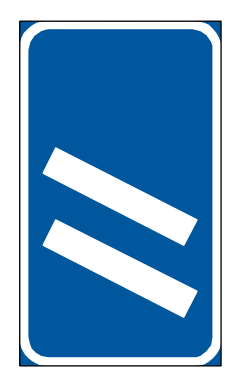
- · No through road ahead, as indicated by the red bar
- · Information centre where you can obtain information about the local area
- ✓ High speed freeway exit countdown signs
Why: High speed freeway exit countdown signs. Each white bar represents 100m to the exit.
252.What does this sign or marking mean?
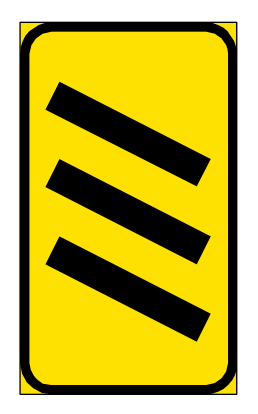
- · Modal transfer
- · High speed freeway exit countdown signs
- ✓ Temporary high speed exit countdown sign
Why: Temporary high speed exit countdown sign. Example shown: 300m to the exit.
253.What does this sign or marking mean?
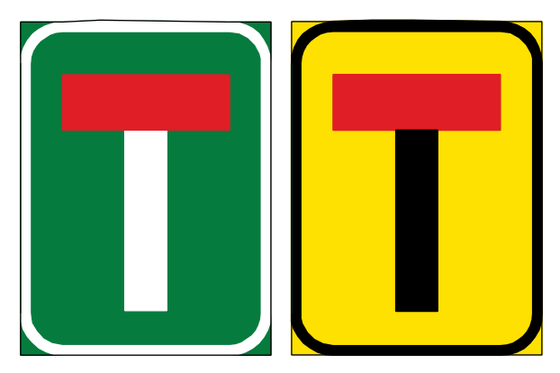
- · Temporary high speed exit countdown sign
- · These signs provide information about the road ahead so that you can
- ✓ No through road ahead, as indicated by the red bar
Why: No through road ahead, as indicated by the red bar.
254.What does this sign or marking mean?
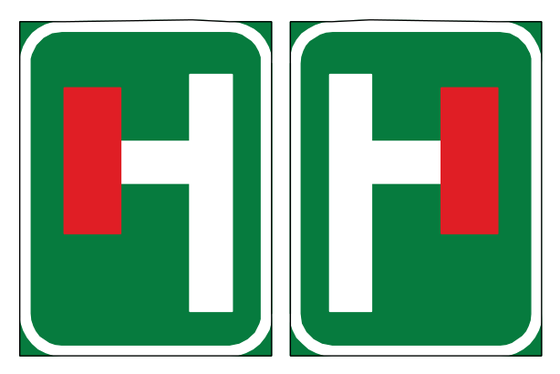
- · No through road ahead, as indicated by the red bar
- · Priority road
- ✓ No through road to the left (or right), as indicated by the red bar
Why: No through road to the left (or right), as indicated by the red bar.
255.What does this sign or marking mean?
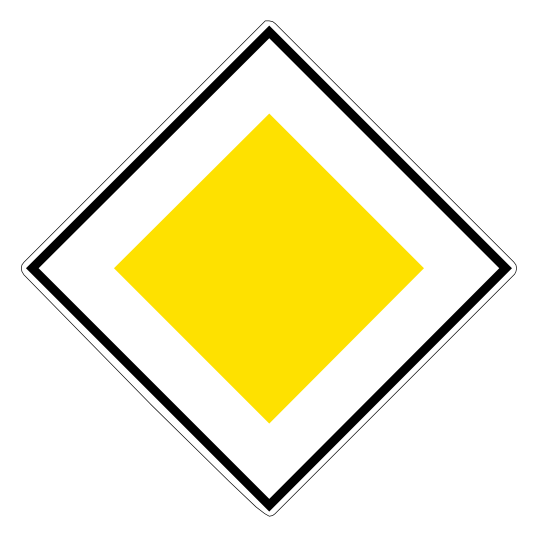
- ✓ Priority road
- · Modal transfer
- · Information centre where you can obtain information about the local area
Why: Priority road. The road you are travelling on has priority at the junction ahead.
256.What does this sign or marking mean?
- ✓ Modal transfer
- · Information centre where you can obtain information about the local area
- · High speed freeway exit countdown signs
Why: Modal transfer. At this point you can change your mode of transport, e.g. from car to train or from train to bus.
257.What does this sign or marking mean?
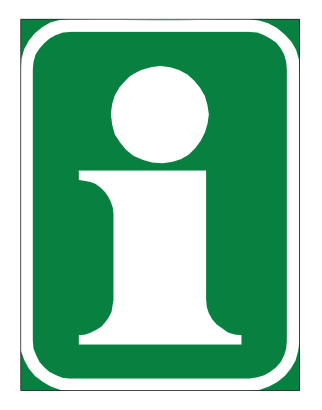
- · Temporary high speed exit countdown sign
- ✓ Information centre where you can obtain information about the local area
- · No through road ahead, as indicated by the red bar
Why: Information centre where you can obtain information about the local area, directions and so on.
258.What colour sign indicates a temporary diversion at roadworks?
- ✓ Yellow
- · Blue
- · Brown
Why: Yellow is temporary, at roadworks or a detour.
259.Which route number format is used for a metropolitan road inside a city?
- · R followed by a number
- · N followed by a number
- ✓ M followed by a number
Why: An M with a number is a metropolitan route inside a city.
260.On which colour sign would you find a regional route number?
- · Green with white lettering
- ✓ Blue with white lettering
- · White with black lettering
Why: Blue with white lettering is a regional route.
261.What does the toll route symbol on a guidance sign indicate?
- · The route is an alternative free road
- ✓ The route ahead charges a toll
- · The route is a temporary detour
Why: A toll route symbol tells you the route ahead charges a toll.
262.After seeing a green sign with a route number, what type of road are you on?
- · Regional road
- · Local town road
- ✓ Freeway system
Why: Green and a number means you are on the freeway system.
263.What must you do when you see this?
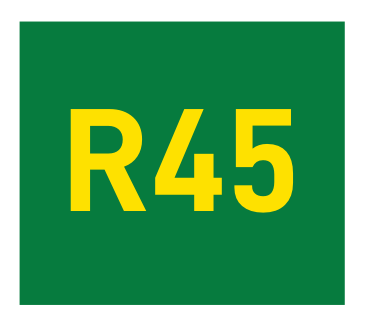
- · White: local, in a town or city
- · Toll plaza: you will stop ahead
- ✓ Regional route
Why: This one means: Regional route.
264.What does this sign or marking mean?
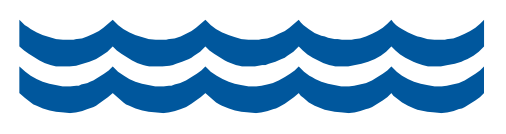
- · Toll road name symbol
- ✓ River name symbol
- · Interchange name symbol
Why: River name symbol.
265.What does this sign or marking mean?

- · Dual carriage freeway name symbol
- ✓ Toll road name symbol
- · Conservancy name symbol
Why: Toll road name symbol.
266.What does this sign or marking mean?
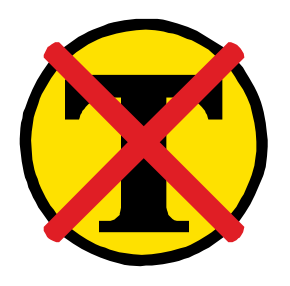
- · River name symbol
- · Conservancy name symbol
- ✓ End of toll road name symbol
Why: End of toll road name symbol.
267.What does this sign or marking mean?
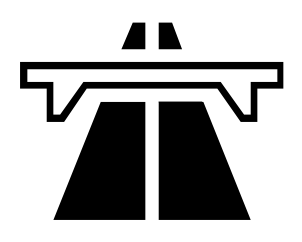
- · Interchange name symbol
- ✓ Dual carriage freeway name symbol
- · Single carriage freeway name symbol
Why: Dual carriage freeway name symbol.
268.What does this sign or marking mean?
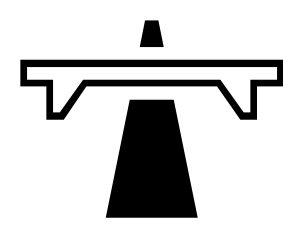
- · Toll road name symbol
- · Conservancy name symbol
- ✓ Single carriage freeway name symbol
Why: Single carriage freeway name symbol.
269.What does this sign or marking mean?
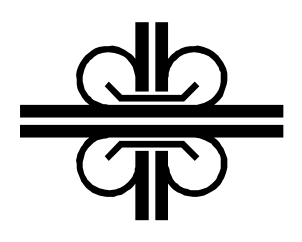
- · End of toll road name symbol
- · Single carriage freeway name symbol
- ✓ Interchange name symbol
Why: Interchange name symbol.
270.What does this sign or marking mean?
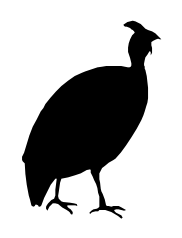
- ✓ Conservancy name symbol
- · Dual carriage freeway name symbol
- · Toll road name symbol
Why: Conservancy name symbol.
271.What does this sign or marking mean?
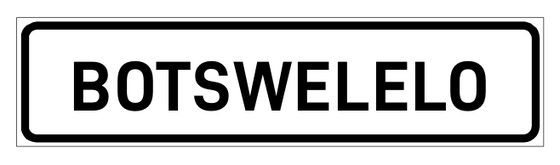
- · Freeway
- · Interchange
- ✓ Suburb
Why: Suburb.
272.What does this sign or marking mean?
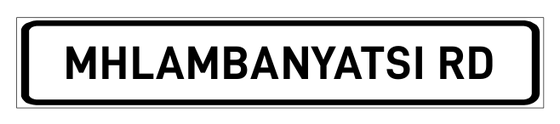
- ✓ Street
- · Interchange
- · Freeway
Why: Street.
273.What does this sign or marking mean?
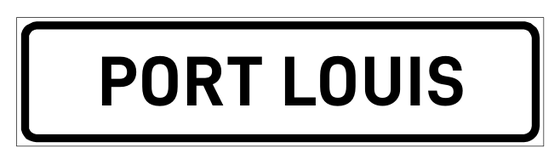
- · Interchange
- ✓ Municipality
- · Suburb
Why: Municipality.
274.What does this sign or marking mean?
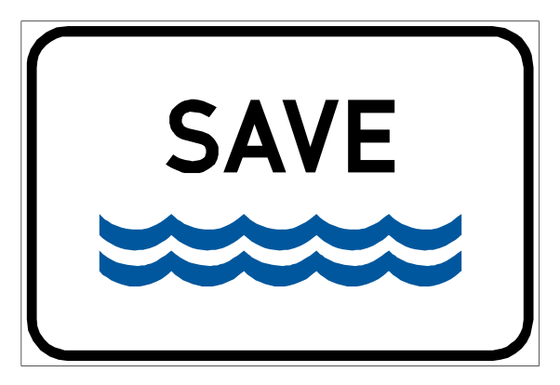
- · Suburb
- ✓ River
- · Freeway
Why: River.
275.What does this sign or marking mean?
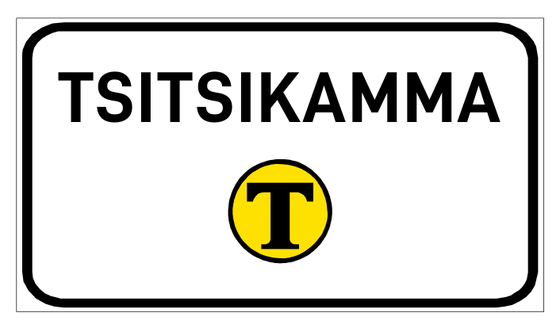
- ✓ Freeway
- · Municipality
- · River
Why: Freeway.
276.What does this sign or marking mean?
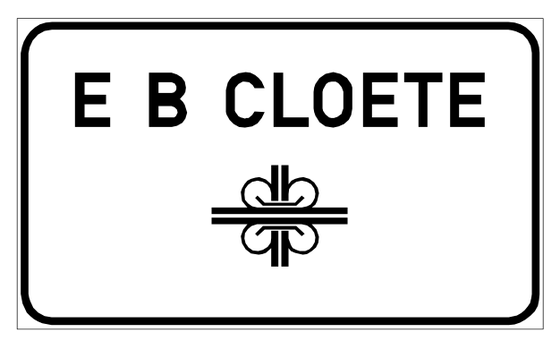
- ✓ Interchange
- · Freeway
- · Mountain pass
Why: Interchange.
277.What does this sign or marking mean?
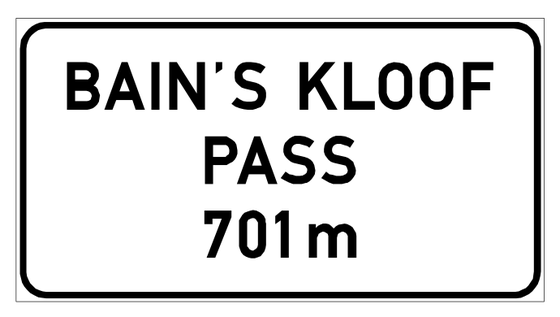
- · Freeway
- · Municipality
- ✓ Mountain pass
Why: Mountain pass.
278.Which colour of guidance sign indicates tourism destinations?
- ✓ Brown
- · Green
- · White
Why: Brown signs are tourism signs, pointing to attractions, services and accommodation.
279.Which symbol would you find on a green or blue direction sign?
- ✓ Library
- · Hospital
- · Beach
Why: Green and blue direction signs carry symbols for places such as a library, not for hospitals or beaches.
280.Which arrow direction is NOT shown on tourism signs?
- ✓ Diagonally to the left
- · Straight on
- · To the right ahead
Why: Tourism signs use arrows straight on, to the right, diagonally to the right and to the right ahead; they do not use diagonally to the left.
281.Which of these is a local direction symbol on white signs inside a town?
- · Mine
- ✓ National park
- · Library
Why: White local signs point to places like a mine or library, but national parks are shown on brown tourism signs, not local signs.
282.Rest areas are graded into how many classes?
- ✓ Three
- · Two
- · Four
Why: Rest areas are graded class one, two and three, giving three classes.
283.What does this sign or marking mean?
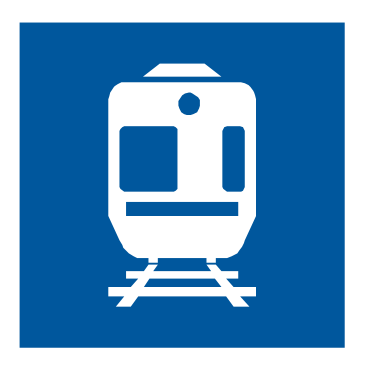
- · Airport
- · Power Station
- ✓ Railway station
Why: Railway station.
284.What does this sign or marking mean?
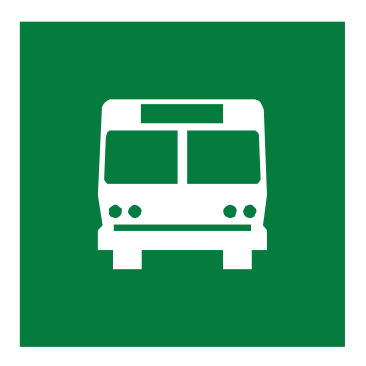
- ✓ Bus terminus
- · Shopping Centre
- · Detour direction
Why: Bus terminus.
285.What does this sign or marking mean?
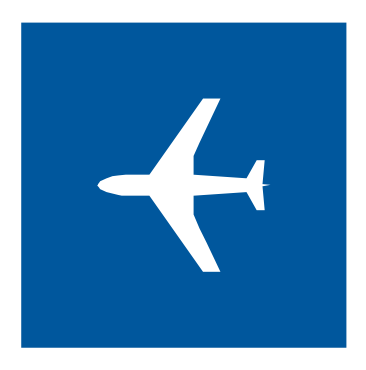
- · Border/customs post
- ✓ Airport
- · Industrial Area
Why: Airport.
286.What does this sign or marking mean?
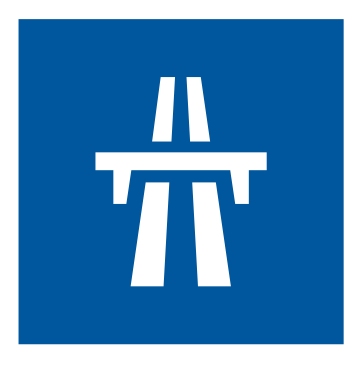
- · Alternative route
- · Harbour
- ✓ Freeway
Why: Freeway.
287.What does this sign or marking mean?
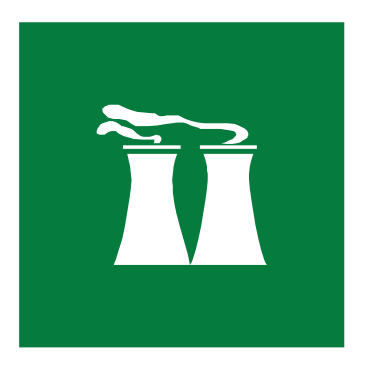
- ✓ Power Station
- · Alternative route
- · Shopping Centre
Why: Power Station.
288.What does this sign or marking mean?
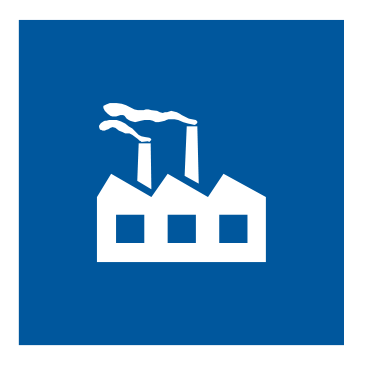
- ✓ Industrial Area
- · Mini-bus rank
- · Shopping Centre
Why: Industrial Area.
289.What does this sign or marking mean?
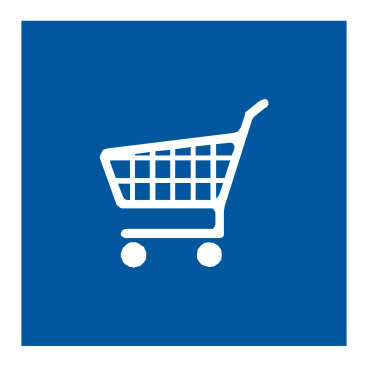
- · Freeway
- · Detour direction
- ✓ Shopping Centre
Why: Shopping Centre.
290.What does this sign or marking mean?

- · Alternative route
- · Freeway route number
- ✓ City Centre/CBD
Why: City Centre/CBD.
291.What does this sign or marking mean?

- · Freeway route number
- · SADC route number
- ✓ Toll route
Why: Toll route.
292.What does this sign or marking mean?
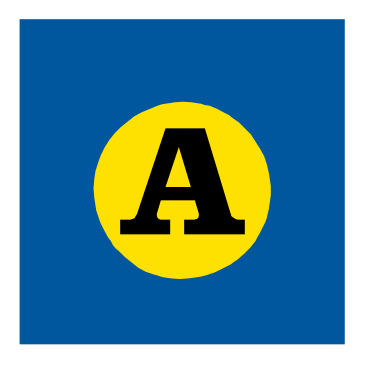
- · Toll plaza
- · Freeway route number
- ✓ Alternative route
Why: Alternative route.
293.What does this sign or marking mean?
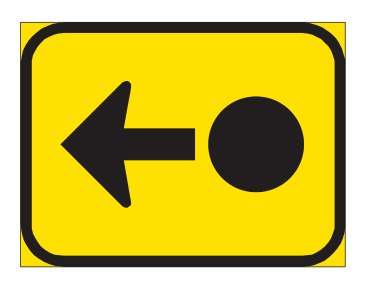
- · Mini-bus rank
- · National route number
- ✓ Detour direction
Why: Detour direction.
294.What does this sign or marking mean?
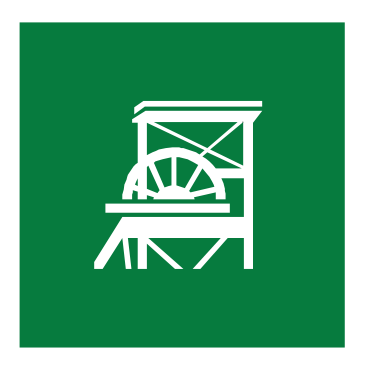
- · Mini-bus rank
- · Industrial Area
- ✓ Mine
Why: Mine.
295.What does this sign or marking mean?
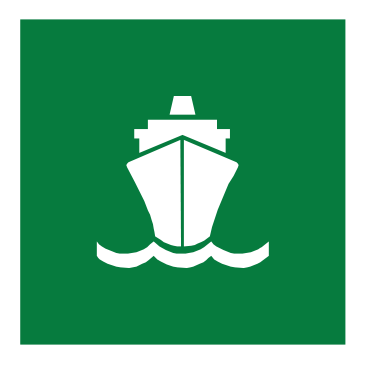
- ✓ Harbour
- · National route number
- · Airport
Why: Harbour.
296.What does this sign or marking mean?
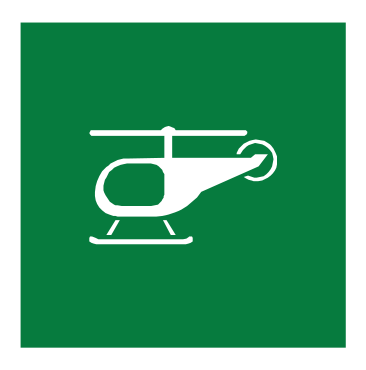
- · Border/customs post
- ✓ Heliport
- · National route number
Why: Heliport.
297.What does this sign or marking mean?
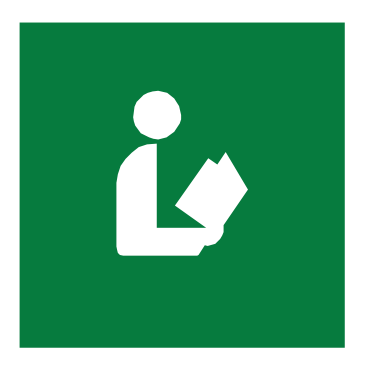
- · Shopping Centre
- · Power Station
- ✓ Library
Why: Library.
298.What does this sign or marking mean?
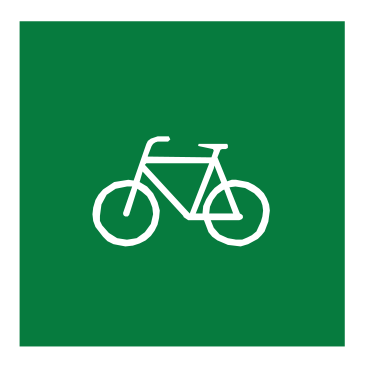
- · Metro route number south
- · Toll plaza
- ✓ Bicycle route
Why: Bicycle route.
299.What does this sign or marking mean?
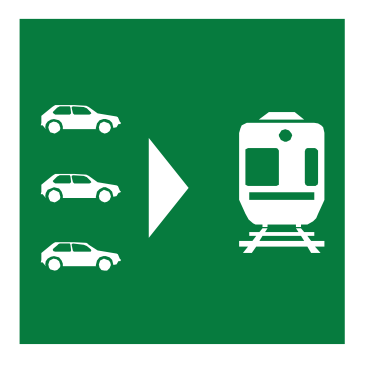
- ✓ Park and ride train
- · Harbour
- · Railway station
Why: Park and ride train.
300.What does this sign or marking mean?
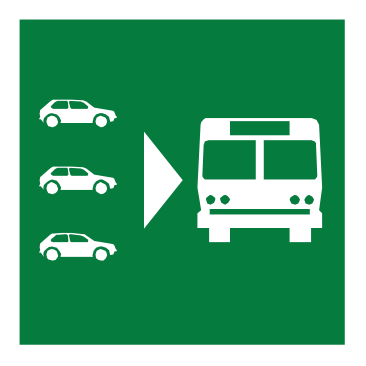
- · Freeway
- ✓ Park and ride bus
- · SADC route number
Why: Park and ride bus.
301.What does this sign or marking mean?
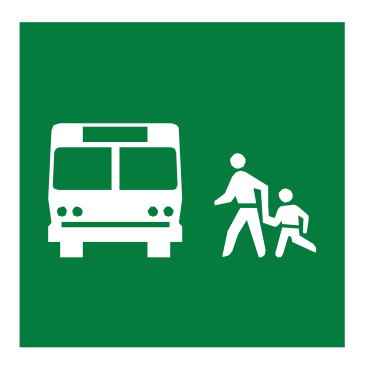
- · SADC route number
- · Heliport
- ✓ Pick up point
Why: Pick up point.
302.What does this sign or marking mean?
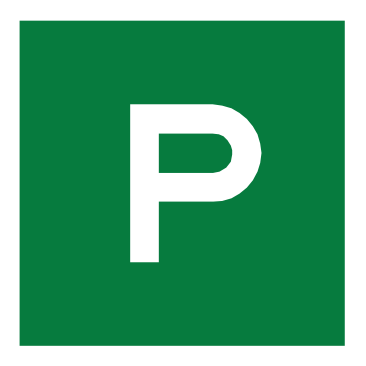
- · City Centre/CBD
- ✓ Parking area
- · Toll plaza
Why: Parking area.
303.What does this sign or marking mean?
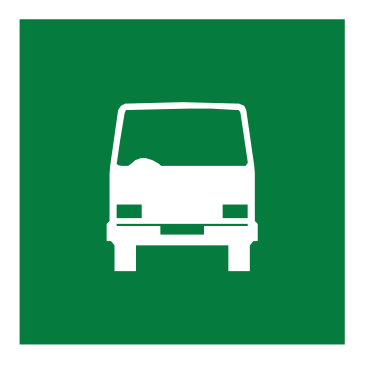
- ✓ Mini-bus rank
- · Toll route
- · Bus terminus
Why: Mini-bus rank.
304.What does this sign or marking mean?
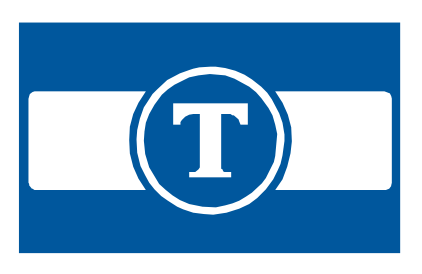
- · Metro route number south
- · Park and ride bus
- ✓ Toll plaza
Why: Toll plaza.
305.What does this sign or marking mean?
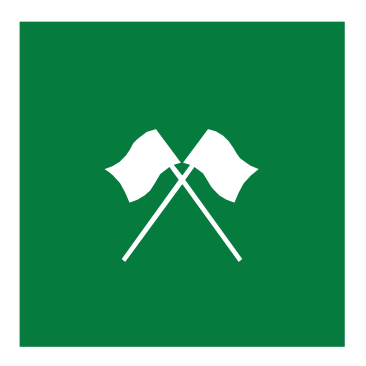
- · Industrial Area
- · Heliport
- ✓ Border/customs post
Why: Border/customs post.
306.What does this sign or marking mean?
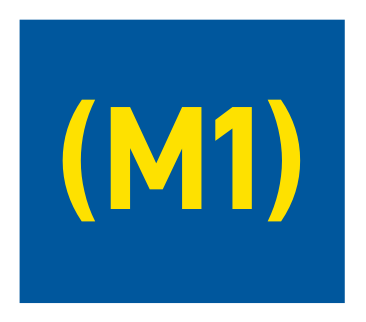
- ✓ Freeway route number
- · Toll route
- · Shopping Centre
Why: Freeway route number.
307.What does this sign or marking mean?
- · Bus terminus
- ✓ Metro route number south
- · Harbour
Why: Metro route number south.
308.What does this sign or marking mean?
- ✓ Regional route number
- · Pick up point
- · Harbour
Why: Regional route number.
309.What does this sign or marking mean?
- ✓ National route number
- · Parking area
- · Freeway route number
Why: National route number.
310.What does this sign or marking mean?
- ✓ SADC route number
- · Power Station
- · Harbour
Why: SADC route number.
311.What does this sign or marking mean?

- · Conference facilities
- ✓ Business centre
- · Heliport
Why: Business centre.
312.What does this sign or marking mean?

- · Harbour
- · Mine
- ✓ Shopping centre
Why: Shopping centre.
313.What does this sign or marking mean?
- · Fire station
- · Border post/customs
- ✓ Railway station
Why: Railway station.
314.What does this sign or marking mean?
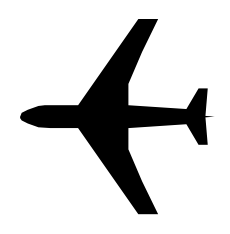
- ✓ Airport
- · These symbols are found in a town
- · Railway station
Why: Airport.
315.What does this sign or marking mean?
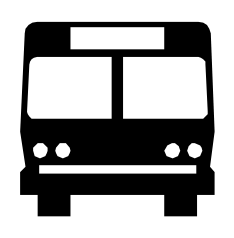
- · Border post/customs
- · These symbols are found in a town
- ✓ Bus station
Why: Bus station.
316.What does this sign or marking mean?
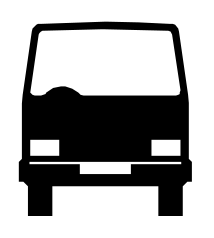
- ✓ Mini-bus rank
- · Airport
- · Border post/customs
Why: Mini-bus rank.
317.What does this sign or marking mean?
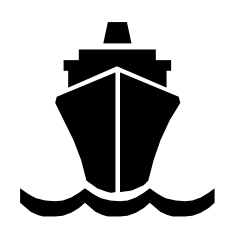
- · Border post/customs
- ✓ Harbour
- · Railway station
Why: Harbour.
318.What does this sign or marking mean?
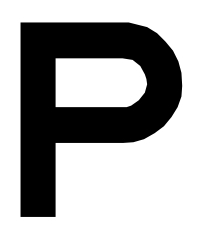
- ✓ Parking area
- · Power station
- · Fire station
Why: Parking area.
319.What does this sign or marking mean?
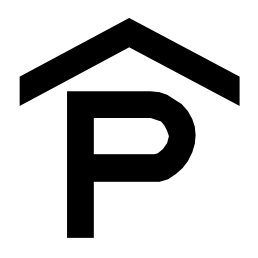
- · Bus station
- ✓ Parking garage
- · Conference facilities
Why: Parking garage.
320.What does this sign or marking mean?
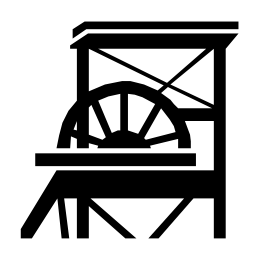
- ✓ Mine
- · Produce market
- · Information centre
Why: Mine.
321.What does this sign or marking mean?

- · Railway station
- ✓ Information centre
- · Industrial area
Why: Information centre.
322.What does this sign or marking mean?

- ✓ These symbols are found in a town
- · Fire station
- · Shopping centre
Why: These symbols are found in a town or city to indicate the nature of the destination to which the white direction sign is pointing.
323.What does this sign or marking mean?
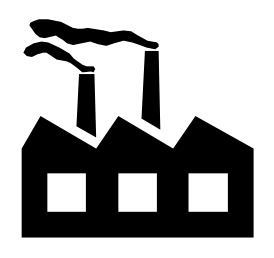
- · Railway station
- · Shopping centre
- ✓ Industrial area
Why: Industrial area.
324.What does this sign or marking mean?
- · Information centre
- ✓ Dump site
- · These symbols are found in a town
Why: Dump site.
325.What does this sign or marking mean?
- · Shopping centre
- ✓ Produce market
- · Mini-bus rank
Why: Produce market.
326.What does this sign or marking mean?
- ✓ Conference facilities
- · Heliport
- · Border post/customs
Why: Conference facilities.
327.What does this sign or marking mean?
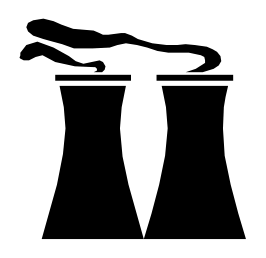
- · Conference facilities
- · Border post/customs
- ✓ Power station
Why: Power station.
328.What does this sign or marking mean?
- · Fire station
- · Information centre
- ✓ School
Why: School.
329.What does this sign or marking mean?
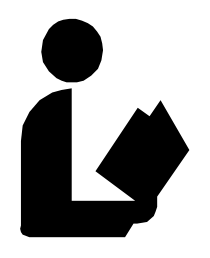
- ✓ Library
- · Power station
- · Parking garage
Why: Library.
330.What does this sign or marking mean?
- ✓ Swimming pool
- · Mini-bus rank
- · Heliport
Why: Swimming pool.
331.What does this sign or marking mean?
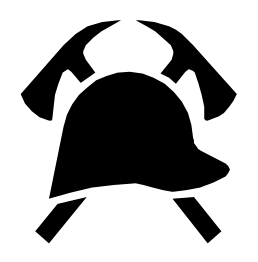
- · Parking garage
- · Heliport
- ✓ Fire station
Why: Fire station.
332.What does this sign or marking mean?
- ✓ Border post/customs
- · Parking area
- · Harbour
Why: Border post/customs.
333.What does this sign or marking mean?
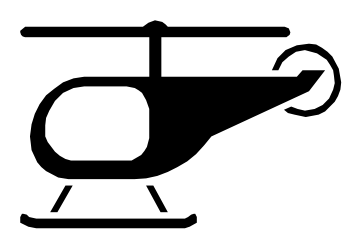
- ✓ Heliport
- · Library
- · School
Why: Heliport.
334.What colour is a diagrammatic sign on a freeway?
- ✓ Green
- · Blue
- · Red
Why: A diagrammatic sign is a guidance sign, usually green on a freeway.
335.In a lane‑merging diagrammatic sign, what does the sign indicate?
- ✓ Which lane must give way
- · Which lane is an exit‑only lane
- · Which lane is a bus lane
Why: The sign shows which lane must give way when two lines become one.
336.How is a lane that ends shown on a diagrammatic sign?
- ✓ One line stops with a diagonal
- · One line splits into two
- · One line circles back
Why: A lane ending is shown by one line stopping with a diagonal, signalling traffic must move over.
337.When a diagrammatic sign shows a left lane peeling off, what does that lane represent?
- · A merging lane
- ✓ An exit‑only lane
- · A dedicated bus lane
Why: The left lane that peels off is sometimes an exit‑only lane; staying in it will leave the freeway.
338.What should you do if the line for your lane on a diagrammatic sign ends or leaves the freeway?
- ✓ Change lanes early with mirrors, signal and blind‑spot check
- · Accelerate to stay in the lane
- · Ignore and continue
Why: If the line leaves the freeway or ends, you must change lanes early, using mirrors, signal and blind‑spot checking.
339.What must you do at a solid white stop line across your lane?
- · Yield to traffic
- ✓ Stop behind it
- · Proceed if clear
Why: A stop line is a solid white line across your lane: stop behind it.
340.Which line may be crossed only when it is safe?
- ✓ Single broken white line
- · Double solid line
- · No‑overtaking solid line
Why: A single broken white line is a lane line: you may cross it when it is safe.
341.When may you enter a yellow cross‑hatched box junction?
- · Any time you are turning right
- · Only after the light turns green
- ✓ Only if your exit is clear
Why: A box junction, the yellow crosshatch, may not be stopped in: you may only enter it if your exit is clear, unless you are turning right and waiting for a gap.
342.What does a yellow line at the left edge of the road indicate?
- · Lane marking for buses
- ✓ Road shoulder – may not be driven on except daytime exception
- · Pedestrian crossing
Why: A yellow line at the left edge marks the road shoulder, which you may not drive on except in the daytime exception.
343.A parking bay marked with a wheelchair symbol is reserved for whom?
- · Bicycles
- · Hazardous goods vehicles
- ✓ Disabled persons
Why: A wheelchair symbol reserves a parking bay for disabled persons.
344.What does this sign or marking mean?
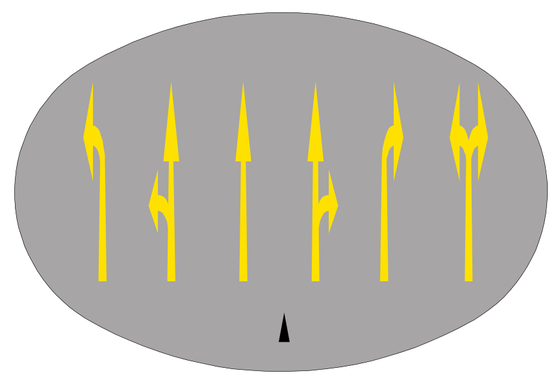
- · Broken: cross when safe
- · Stop line: solid white, stop behind it
- ✓ Mandatory arrows, white or yellow: obey
Why: This one means: Mandatory arrows, white or yellow: obey.
345.What does this sign or marking mean?
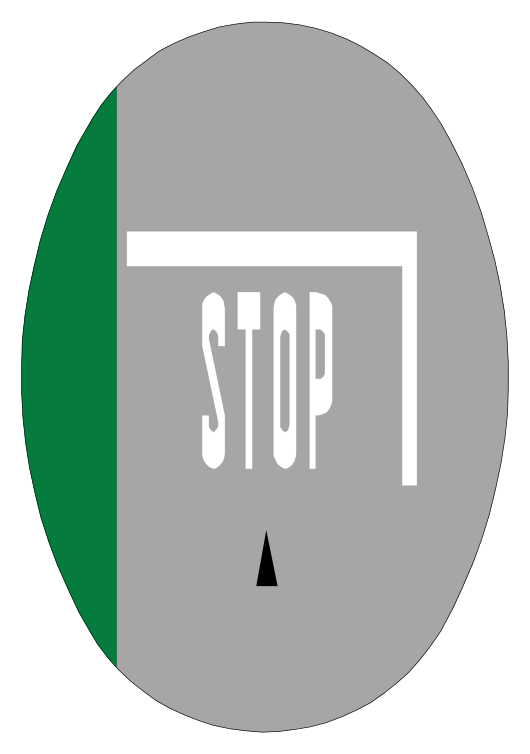
- · Yield line
- · Lane reserved for bicycles only
- ✓ Stop line
Why: Stop line.
346.What does this sign or marking mean?
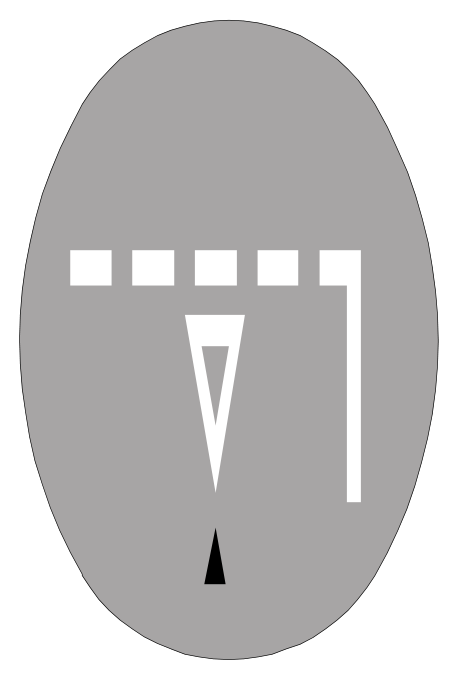
- · ROAD SURFACE MARKINGS: REGULATORY MARKINGS
- ✓ Yield line
- · Lane reserved for trams only
Why: Yield line.
347.What does this sign or marking mean?
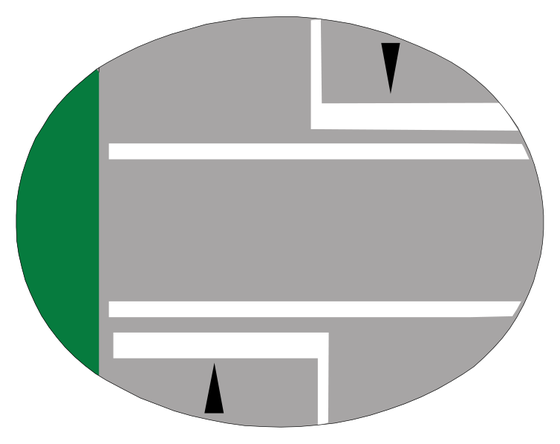
- · Exclusive use lane symbol
- · Yield line
- ✓ Pedestrian crossing
Why: Pedestrian crossing.
348.What does this sign or marking mean?
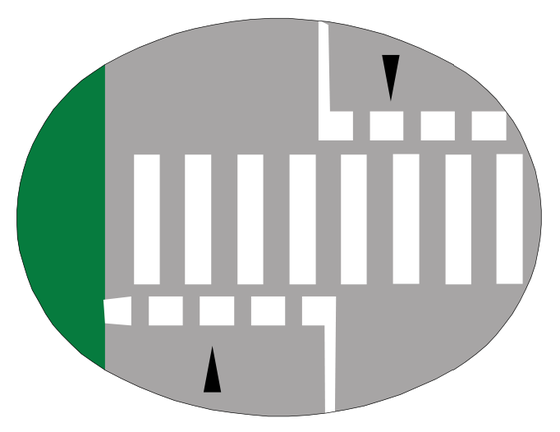
- · ROAD SURFACE MARKINGS: REGULATORY MARKINGS
- · Lane reserved for hazardous goods vehicles only
- ✓ Block pedestrian crossing
Why: Block pedestrian crossing.
349.What does this sign or marking mean?
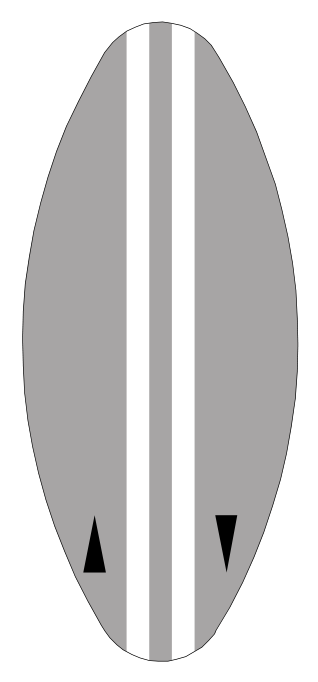
- · Stop line
- · No motorcycles
- ✓ No crossing double-line
Why: No crossing double-line.
350.What does this sign or marking mean?
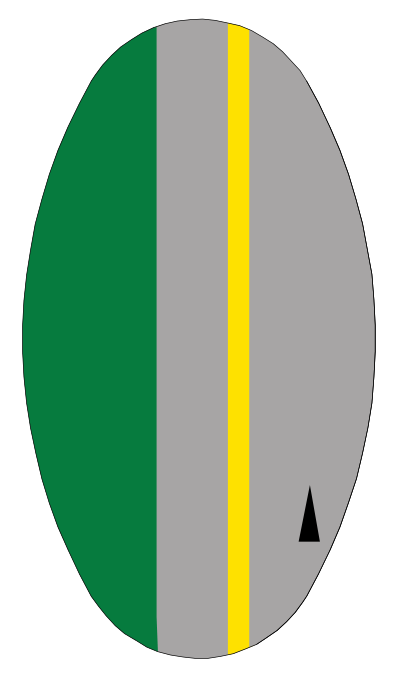
- ✓ ROAD SURFACE MARKINGS: REGULATORY MARKINGS
- · Lane reserved for bicycles only
- · Mini-circle
Why: ROAD SURFACE MARKINGS: REGULATORY MARKINGS.
351.What does this sign or marking mean?
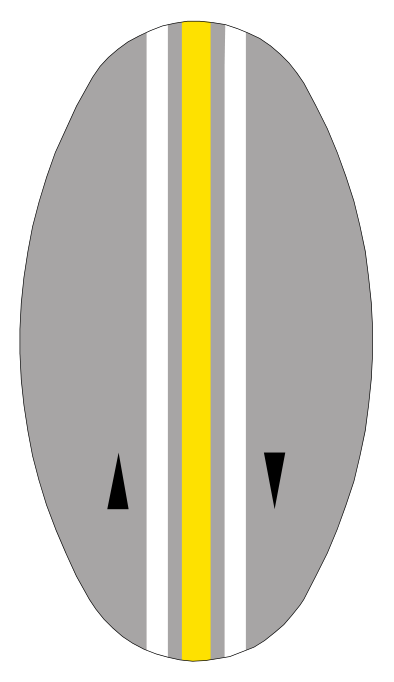
- · No crossing double-line
- · Exclusive parking bay
- ✓ Painted island
Why: Painted island.
352.What does this sign or marking mean?
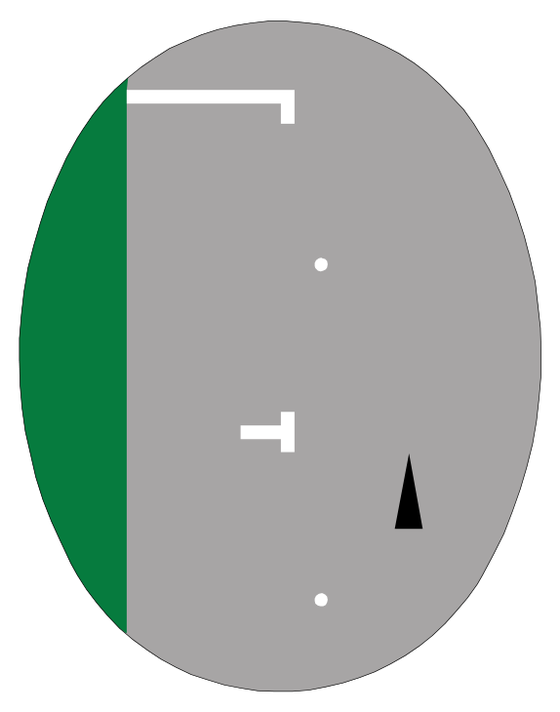
- ✓ Parking bay
- · Block pedestrian crossing
- · Yield line
Why: Parking bay.
353.What does this sign or marking mean?
- ✓ Mini-buses
- · Lane reserved for buses only
- · No crossing double-line
Why: Mini-buses.
354.What does this sign or marking mean?
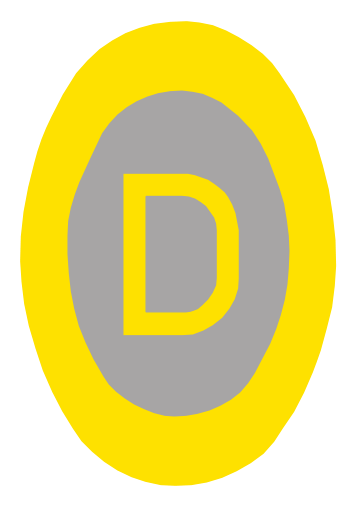
- · No crossing double-line
- ✓ Defence force Police in an emergency only
- · Exclusive use lane symbol
Why: Defence force Police in an emergency only.
355.What does this sign or marking mean?
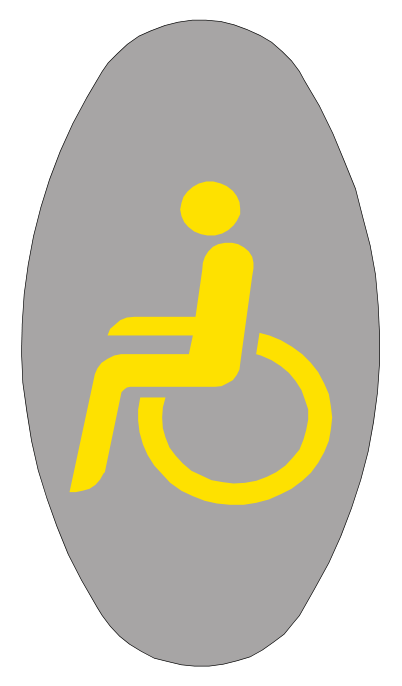
- ✓ Exclusive parking bay
- · Lane reserved for bicycles only
- · Block pedestrian crossing
Why: Exclusive parking bay.
356.What does this sign or marking mean?
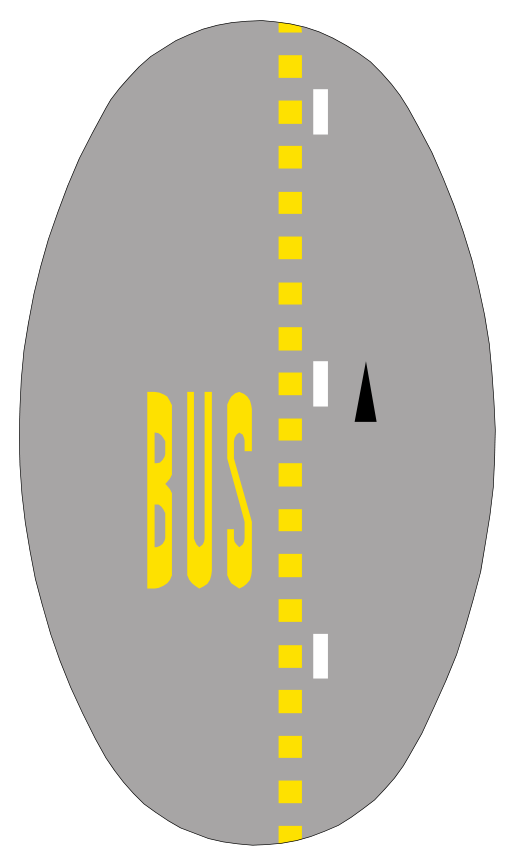
- · Ambulances Buses Taxis
- · Block pedestrian crossing
- ✓ Lane reserved for buses only
Why: Lane reserved for buses only.
357.What does this sign or marking mean?
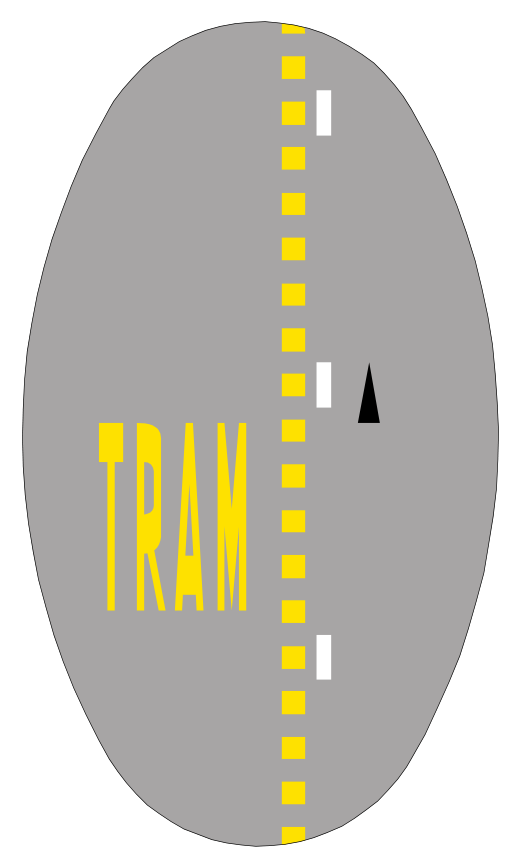
- · ROAD SURFACE MARKINGS: REGULATORY MARKINGS
- · Mini-buses
- ✓ Lane reserved for trams only
Why: Lane reserved for trams only.
358.What does this sign or marking mean?
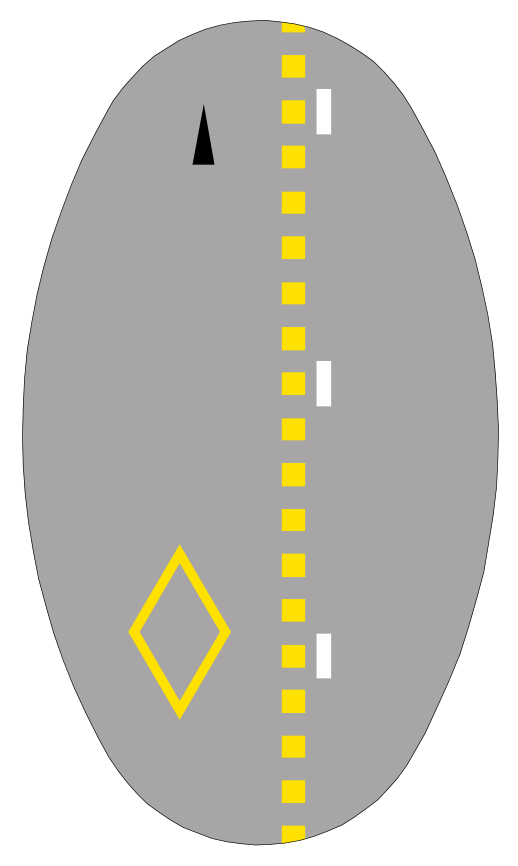
- · Disabled persons parking
- ✓ Lane reserved for hazardous goods vehicles only
- · Lane reserved for buses only
Why: Lane reserved for hazardous goods vehicles only.
359.What does this sign or marking mean?
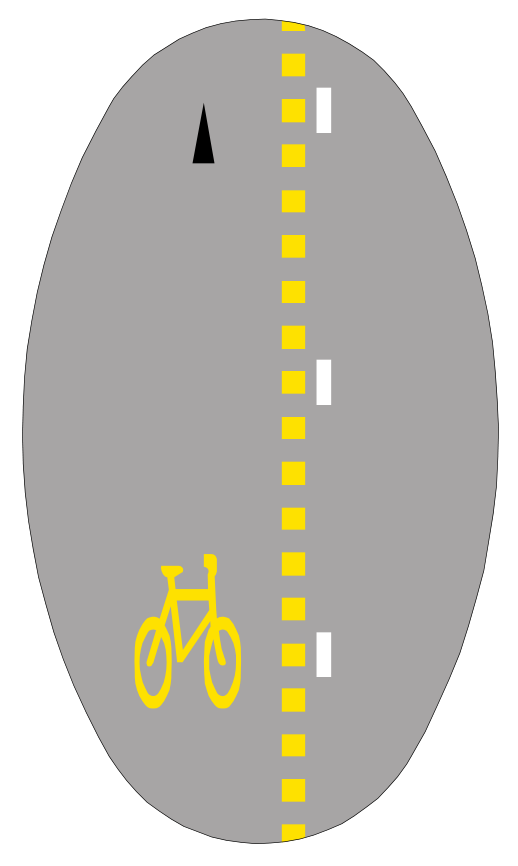
- ✓ Lane reserved for bicycles only
- · No crossing double-line
- · Lane reserved for hazardous goods vehicles only
Why: Lane reserved for bicycles only.
360.What does this sign or marking mean?
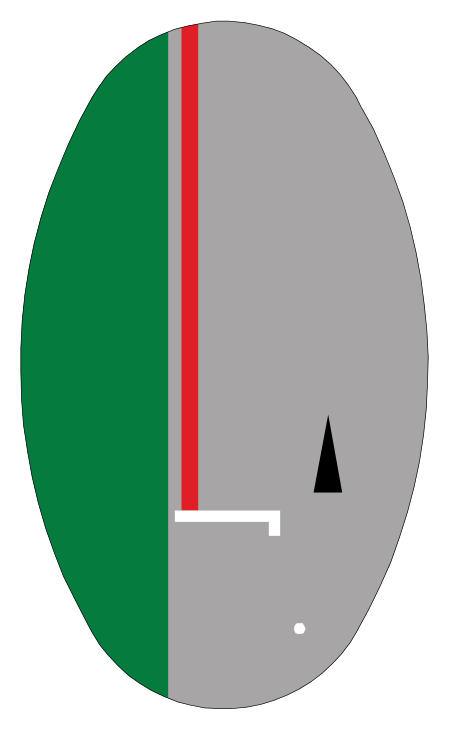
- · Mini-buses
- · Mini-circle
- ✓ No stopping solid red line
Why: No stopping solid red line.
361.What does this sign or marking mean?
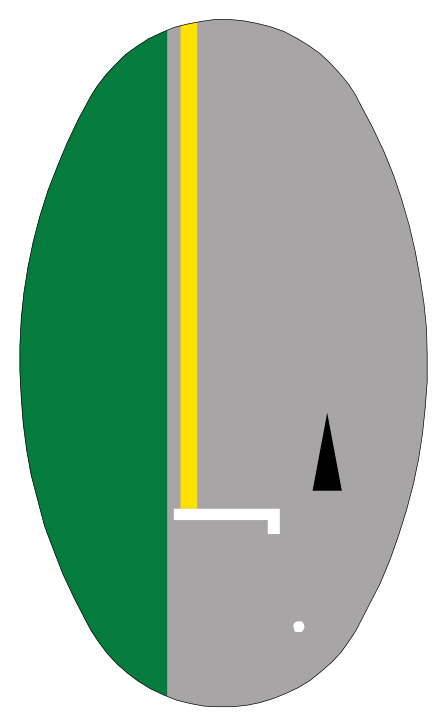
- ✓ No parking solid yellow line
- · Stop line
- · Exclusive parking bay
Why: No parking solid yellow line.
362.What does this sign or marking mean?
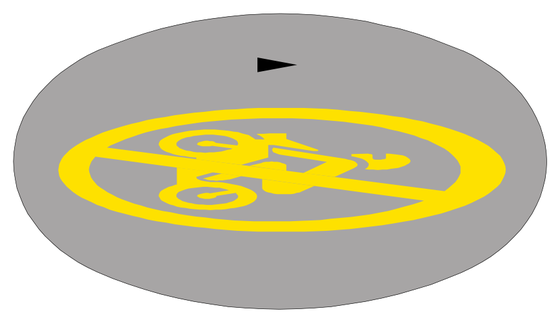
- ✓ No motorcycles
- · Disabled persons parking
- · Mini-buses
Why: No motorcycles.
363.What does this sign or marking mean?
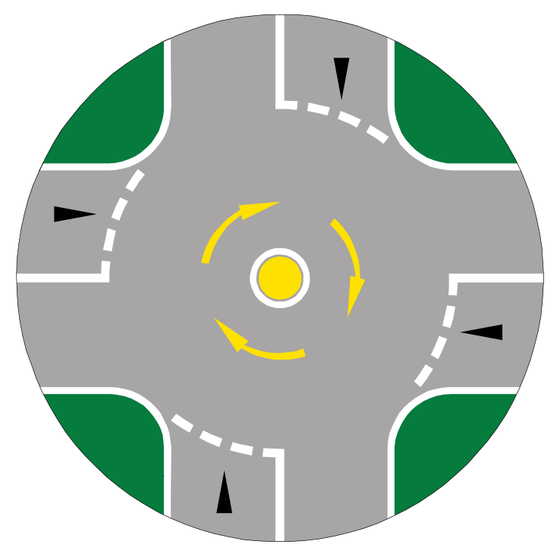
- ✓ Mini-circle
- · Pedestrian crossing
- · Mini-buses
Why: Mini-circle.
364.What does this sign or marking mean?
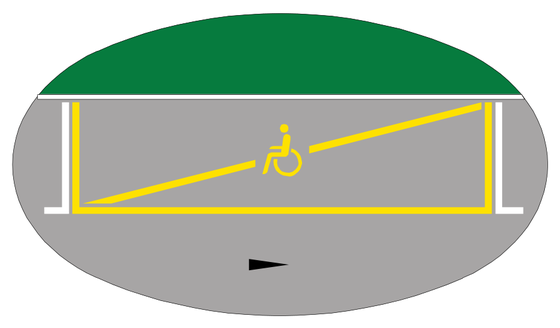
- ✓ Disabled persons parking
- · ROAD SURFACE MARKINGS: REGULATORY MARKINGS
- · Lane reserved for hazardous goods vehicles only
Why: Disabled persons parking.
365.What does this sign or marking mean?
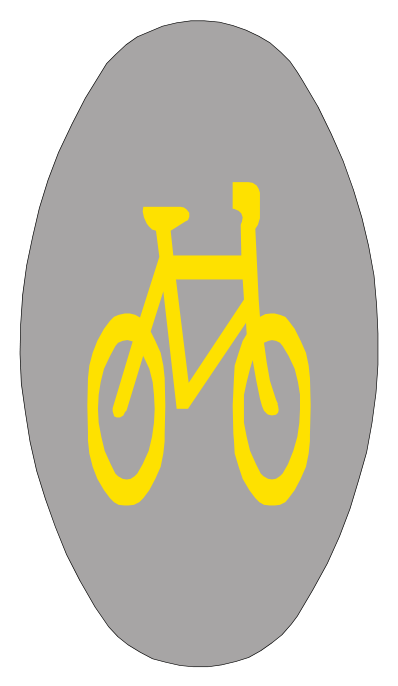
- · Block pedestrian crossing
- ✓ Exclusive use lane symbol
- · Lane reserved for buses only
Why: Exclusive use lane symbol.
366.What does a solid red line painted along the kerb mean?
- ✓ No stopping at any time
- · No parking at any time
- · Stop only to pick up passengers
Why: A solid red line means you may not stop there at any time.
367.What is permitted on a solid yellow line?
- · Park for a short time
- ✓ Stop briefly to set down a passenger
- · Never stop
Why: A solid yellow line allows a brief stop to set down or pick up a passenger but no parking.
368.When may you stop at a broken red line?
- · At any time
- · Only on weekends
- ✓ During the times shown on the sign
Why: A broken red line means you may not stop during the times shown on the accompanying sign.
369.Which letter marks a parking bay reserved for a taxi?
- · A
- ✓ T
- · B
Why: The letter T is the symbol used for a taxi‑exclusive parking bay.
370.At a mini‑circle junction you must:
- · Drive anticlockwise
- ✓ Give way to the vehicle that reaches its yield line first
- · Drive over the painted circle
Why: Mini‑circles require you to give way to the vehicle that reaches its yield line first and to drive clockwise.
371.What does this sign or marking mean?
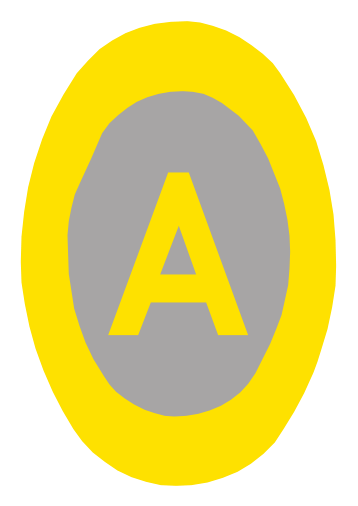
- ✓ Exclusive bay: A ambulance, B bus, L loading, T taxi
- · Mini-circle: first to the yield line, clockwise, never over the marking
- · Broken red: no stopping during the hours on the sign
Why: This one means: Exclusive bay: A ambulance, B bus, L loading, T taxi.
372.What must you do when you see this?
- · Solid red: no stopping at any time
- ✓ Mini-circle: first to the yield line, clockwise, never over the marking
- · Broken red: no stopping during the hours on the sign
Why: This one means: Mini-circle: first to the yield line, clockwise, never over the marking.
373.What does a short white dash line on the road indicate?
- ✓ It separates lanes travelling in the same direction
- · It separates traffic moving in opposite directions
- · It warns that a lane is about to change course
Why: A lane line is short white dashes and separates lanes going the same way.
374.Which marking warns that vehicles on the other side are about to change course, such as a lane becoming an exit?
- · Dividing line
- · Continuity line
- ✓ Reversible‑lane double lines
Why: A continuity line is longer and thinner dashes and warns that vehicles on the other side are about to change course.
375.A large X with the letters R X painted on the surface means:
- · Speed hump ahead
- ✓ Railway crossing ahead
- · Cycle crossing ahead
Why: The X with R X is the railway crossing ahead marking.
376.A solid line painted on the road means:
- · May
- ✓ Do not
- · Proceed with caution
Why: The way to think about them: solid means do not.
377.Which guidance marking indicates that the number of lanes will increase ahead?
- ✓ Furcation arrows
- · Direction‑of‑travel indicators
- · Kerbing painted white or yellow
Why: Furcation arrows show that the number of lanes increases ahead, in the direction shown.
378.What does this sign or marking mean?
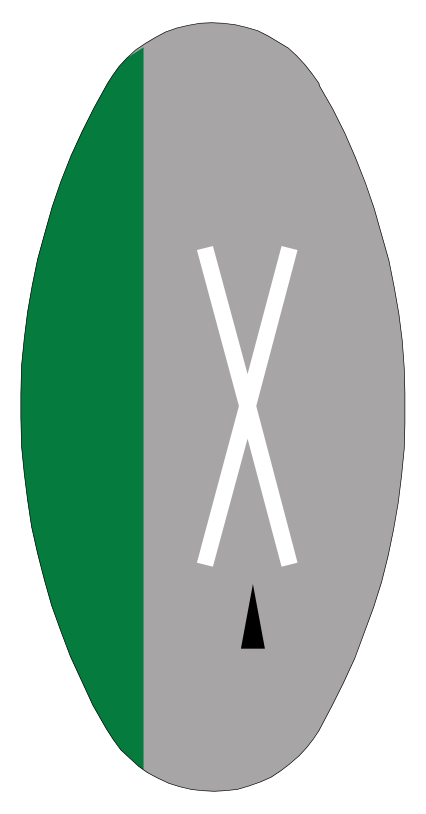
- ✓ Railway crossing ahead
- · Mandatory arrows ahead
- · Speed hump, banded
Why: This one means: Railway crossing ahead.
379.A red‑bordered triangle with a cross warns you that:
- ✓ a crossroad is ahead
- · a speed limit is reduced
- · a pedestrian crossing is ahead
Why: The transcript says a red‑bordered triangle with a cross means a crossroad is coming.
380.When you want to turn left at the suburban intersection, which lane should you be in?
- · the right lane marked right only
- ✓ the left lane marked straight and left
- · any lane
Why: The left lane is painted with arrows for straight and left, so you pick that lane for a left turn.
381.At a freeway exit, you should move into the exit lane when you see:
- · two white bars
- · the last white bar
- ✓ three white bars
Why: The transcript instructs to change lanes at three bars, not waiting for the last bar.
382.A yellow sign showing ‘60’ inside a red ring means:
- · the speed limit is unchanged
- ✓ the speed limit is now 60 km/h
- · the speed limit is 60 km/h higher
Why: The yellow 60 in a red ring tells you the limit is now sixty kilometres per hour.
383.Which type of sign takes precedence over permanent signs?
- ✓ yellow signs
- · blue signs
- · green signs
Why: The lesson states that yellow signs override the permanent ones.
384.What does this sign or marking mean?
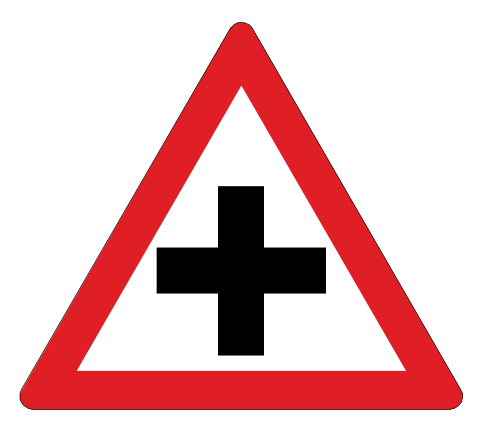
- ✓ Crossroad ahead
- · Lane arrows: pick the matching lane, stop behind the line, go when clear
- · Do not wait for the last bar
Why: This one means: Crossroad ahead.
385.What must you do when you see this?
- · Stop-and-go board: stop, then go with caution
- ✓ Roadworks ahead
- · The crossing road has priority
Why: This one means: Roadworks ahead.
Rules of the road
130 questions. The real paper asks 28 of these and you need 22 right.
Sit this section as a test386.How long is a licence disc valid from its date of issue?
- ✓ 12 months
- · 6 months
- · 24 months
Why: The disc is valid for twelve months from the date of issue.
387.Where must a valid licence disc be displayed?
- ✓ On the windscreen
- · On the dashboard
- · On the rear window
Why: A valid disc must be on the windscreen.
388.How often should you check your mirrors while driving?
- ✓ Every 5–8 seconds
- · Every 15 seconds
- · Only when changing lanes
Why: You must look in the mirrors every five to eight seconds.
389.Which of the following is NOT allowed while you are driving?
- · Both hands on the wheel
- · One hand on the wheel
- ✓ Letting a passenger steer
Why: Nobody else may steer; only the driver may control the vehicle.
390.Which signal may you use if your vehicle's electric indicators fail?
- ✓ Hand signals
- · Horn
- · Brake lights
Why: You give warning with hand signals if the electric ones fail.
391.What is the purpose of the following distance?
- · To increase fuel efficiency
- ✓ To stop without swerving
- · To overtake safely
Why: The gap exists so that if the vehicle ahead stops suddenly, you can stop too, without swerving.
392.How do you check if you are following too closely?
- ✓ Count to two seconds after the vehicle passes a fixed point
- · Maintain a one‑metre gap
- · Match the speed of the vehicle ahead
Why: Pick a fixed point, count; if you reach it before two full seconds you are too close.
393.In good conditions, what is the minimum recommended following gap?
- · One second
- · Five seconds
- ✓ Two seconds
Why: A two‑second gap is advised when conditions are good.
394.Which of the following is NOT one of the five situations that require a longer following distance?
- ✓ Bright daylight
- · Loose surface such as gravel
- · Heavy load or many passengers
Why: The five situations are poor visibility, wet road, high speed, heavy load/passengers, and loose surface.
395.If a vehicle tailgates you, what should you do?
- · Brake sharply to warn them
- ✓ Ease off the accelerator and let your gap absorb the surprise
- · Accelerate to increase distance
Why: Do not brake sharply; ease off a little and let your own gap absorb the surprise.
396.What is the general speed limit on a public road inside an urban area?
- ✓ 60 km/h
- · 80 km/h
- · 100 km/h
Why: Sixty kilometres per hour is the general limit on a public road in an urban area.
397.Which vehicle type has a specific limit of 80 km/h outside urban areas?
- · Passenger car
- ✓ Goods vehicle over 9,000 kg
- · Bus/minibus over 3,500 kg
Why: A goods vehicle with a mass over nine thousand kilograms may not exceed eighty kilometres per hour outside an urban area.
398.On a freeway, what is the general speed limit for a standard vehicle?
- · 100 km/h
- · 80 km/h
- ✓ 120 km/h
Why: One hundred and twenty kilometres per hour is the general limit on a freeway.
399.If a temporary yellow roadwork sign shows 40 km/h, what is the speed limit?
- · 80 km/h
- ✓ 40 km/h
- · 100 km/h
Why: A temporary yellow sign at roadworks that says forty sets the limit at forty kilometres per hour, overriding any other limit.
400.A bus or minibus carrying passengers with a mass over 3,500 kg may not exceed what speed, even on a freeway?
- · 120 km/h
- ✓ 100 km/h
- · 80 km/h
Why: A bus or minibus carrying passengers with a mass over three thousand five hundred kilograms may not exceed one hundred kilometres per hour, even on a freeway.
401.When a road is divided by a painted line or a physical barrier, where must you stay?
- ✓ On the left of the division
- · On the right of the division
- · In the centre of the division
Why: You stay on the left of the division at all times.
402.You may drive across a broken dividing line only for which reasons?
- ✓ To overtake another vehicle
- · To park on the opposite side
- · To avoid a pothole
Why: A broken line can be crossed only to overtake or to make a U‑turn, and only when it is safe.
403.What is the legal status of driving across a solid dividing line?
- ✓ It is an offence
- · It is allowed if traffic is light
- · It is allowed at night
Why: Driving across a solid dividing line is an offence.
404.Which action is NOT allowed when changing lanes?
- ✓ Moving into another lane if it endangers others
- · Checking mirrors before signalling
- · Ensuring the blind spot is clear
Why: You may not move into another lane unless you can do it without obstructing or endangering anyone.
405.When may you cross to the other side of a divided road?
- ✓ Only at an opening or space made for it
- · Whenever you see a gap in traffic
- · Only if you are overtaking
Why: You may only cross to the other side where there is an opening or a space made for it.
406.Where may you overtake a vehicle?
- ✓ On the right with a clear view
- · On the left on a two‑lane road
- · On the shoulder of the road
Why: You overtake on the right, but only when you can see far enough ahead and the road is clear.
407.Overtaking is forbidden when which condition exists?
- · When the road is straight and dry
- ✓ When a no‑overtaking line is present
- · When the vehicle ahead is travelling at the speed limit
Why: A sign or road marking such as a no‑overtaking line prohibits overtaking.
408.Before you start to overtake, you must be sure that:
- · Your windows are down
- · Your headlights are on high beam
- ✓ No vehicle behind you is already overtaking you
Why: You must check that nobody behind you is already overtaking you.
409.On a narrow road, after you have passed a vehicle going the same way, you should:
- ✓ Keep a safe following distance before pulling out
- · Pull back immediately into the left lane
- · Stop and wait for a traffic officer
Why: On a narrow road you pass on the right and keep a safe following distance before you pull out.
410.If another vehicle is already passing oncoming traffic, you must:
- · Pull out to overtake it as well
- ✓ Wait until the road is clear before pulling out
- · Speed up to pass before it reaches you
Why: When another vehicle is passing oncoming traffic, you must wait until the road is clear before pulling out.
411.In how many situations may you overtake on the left?
- ✓ Four
- · Three
- · Five
Why: The lesson states there are four situations where overtaking on the left is allowed.
412.Which is NOT a permitted reason to overtake on the left?
- · Vehicle ahead turning right
- · Road is one-way
- ✓ Shoulder is a lane
Why: The shoulder is not a lane, so you may never use it to overtake on the left.
413.When another vehicle overtakes you, you must:
- ✓ Move left as far as safe and keep speed
- · Speed up to block them
- · Stay in lane and maintain speed
Why: When overtaken you must move left as far as safe and do not speed up until the vehicle has passed.
414.On a freeway, a flashing headlight from the vehicle behind means they want to:
- · Warn of danger
- ✓ Pass
- · Signal to stop
Why: On a freeway a flashing headlight from the driver behind indicates they want to pass; you should signal and move left when safe.
415.You may never cross which line when overtaking on the left?
- · White centre line
- · Red stop line
- ✓ Yellow line at left edge
Why: Even when overtaking on the left you must never cross the yellow line at the left edge of the road.
416.What is the purpose of the road shoulder?
- ✓ For emergencies and breakdowns
- · For overtaking slower traffic
- · For parking
Why: The shoulder is for emergencies and breakdowns, not for normal traffic.
417.When may you move onto the left shoulder?
- · When traffic is heavy regardless of time
- ✓ When the road has a single lane each way, it is daylight, you have a clear view of at least 150 m and it does not endanger anyone
- · Only on divided roads with a white edge line
Why: The exception applies only if all four conditions are met: single lane, between sunrise and sunset, no danger, and a clear view of 150 m.
418.What are the weekday peak hours when public‑transport lanes are reserved?
- ✓ 06:00–09:00 and 16:00–18:30
- · 07:00–10:00 and 15:00–17:00
- · 05:30–08:30 and 14:30–17:30
Why: Reserved lanes are in force from six to nine in the morning and four to six‑thirty in the afternoon, Monday to Friday.
419.Which days are excluded from the reserved‑lane restrictions?
- · Saturdays
- · Mondays
- ✓ Public holidays
Why: The restrictions apply Monday to Friday, public holidays excluded.
420.How can you identify the start of a reserved lane?
- · By a speed limit sign
- ✓ By a sign and a yellow line
- · By a blue road marking
Why: Look for the sign and the yellow line that marks the start of the reservation.
421.What does the blue circular sign with three curved arrows indicate?
- ✓ Roundabout
- · Mini‑circle
- · Speed limit
Why: The blue circular sign with three curved arrows marks a roundabout.
422.At a roundabout you must yield to traffic approaching from which side?
- · Left
- ✓ Right
- · Opposite
Why: You yield to all traffic approaching from your right unless a sign or officer tells you otherwise.
423.In a mini‑circle you give way to a vehicle that has crossed which line?
- · Stop line
- · Yield line
- ✓ Pedestrian crossing
Why: You give way to any vehicle that will cross, or has already crossed, a yield line before you.
424.Which direction do you travel around both roundabouts and mini‑circles?
- ✓ Clockwise
- · Anticlockwise
- · Straight ahead
Why: At both kinds you drive clockwise, keeping the circle on your right.
425.When should you signal left when exiting a roundabout?
- · After you have passed the exit
- ✓ Just before the exit you intend to take
- · When you are approaching the first exit
Why: You indicate left just before the exit you intend to take.
426.When are you required to signal?
- ✓ When changing direction, slowing down or stopping
- · Only when turning left
- · Only when overtaking
Why: You must always signal your intention to change direction, to slow down, or to stop.
427.Which hand signal is prohibited on a freeway (unless it is an emergency)?
- ✓ Right‑turn arm straight out
- · Brake‑light flash
- · Indicator light
Why: Hand signals may not be used on a freeway, except in an emergency.
428.What is the hand signal for slowing down?
- ✓ Arm out, palm down, moving up and down
- · Arm straight out of the window
- · Arm out, palm forward, raised
Why: Slowing down: arm out, palm down, moving up and down.
429.When should you cancel your indicator?
- · As soon as you start to turn
- ✓ After you have completed the manoeuvre and checked it has cancelled
- · Never, keep it on
Why: Cancel the indicator once the manoeuvre is complete, and check that it has cancelled.
430.What must you do before you give any signal?
- · Accelerate
- · Sound the horn
- ✓ Check the mirrors
Why: Before any signal, check the mirrors first.
431.When turning right into a two‑way road, when may you cross the centre line?
- ✓ Only as you turn
- · Before you start the turn
- · Never cross it
Why: You cross the centre line only as you turn so you arrive on the left side of the new road.
432.If your lane shows a straight‑ahead arrow, you must:
- · Turn left
- · Turn right
- ✓ Go straight
Why: The lesson says if your lane has a straight‑ahead arrow, you go straight.
433.After signalling and checking, a left turn should end in which lane of the new road?
- · Right lane
- ✓ Left lane
- · Centre lane
Why: You turn into the left lane of the new road.
434.To prepare for a right turn, you should move as close as safely possible to:
- ✓ The centre line
- · The left side of the road
- · The middle of your lane
Why: You move as close as you safely can to the right side of your side of the road, which usually means the centre line.
435.When turning, you must pass a traffic island on its:
- ✓ Left side
- · Right side
- · Front
Why: As you turn, pass to the left of any traffic island in the intersection.
436.What must you do at a stop sign?
- ✓ Come to a complete stop behind the line
- · Slow down and give way
- · Proceed if the road is clear
Why: You must come to a complete stop, in line with the sign or before the stop line, wheels not turning.
437.At a four‑way stop, if two vehicles arrive at the same time, who goes first?
- · The vehicle on the left
- ✓ The vehicle on the right
- · The larger vehicle
Why: If two arrive at the same time, the one on the right goes first.
438.At an uncontrolled intersection, you must yield to traffic approaching from which side?
- · Your left
- ✓ Your right
- · Directly opposite
Why: At an uncontrolled intersection you yield to traffic approaching from your right.
439.What does a yield sign require you to do?
- · Come to a complete stop every time, as at a stop sign
- ✓ Slow down and give way, stopping only if you have to
- · Carry on at the same speed if the road looks clear
Why: At a yield sign you slow down and give way to traffic on the crossing road and to pedestrians crossing. You only stop if you have to, but you must be ready to.
440.At any intersection you must yield to which of the following?
- ✓ Vehicles already in the intersection
- · Vehicles approaching from the left
- · Pedestrians waiting to cross
Why: At every kind of intersection you yield to any vehicle already in the intersection, and to pedestrians already crossing.
441.What is the basic rule for stopping on a public road?
- ✓ You may not stop unless directed by a traffic officer or sign, or to avoid an accident
- · You may stop anywhere you like
- · You may stop only on the left side of the road
Why: You may not stop unless a traffic officer or road sign directs you, or you have to stop to avoid an accident.
442.How far must you stay from a tunnel, subway, bridge or narrow road when stopping?
- ✓ Six metres
- · Nine metres
- · Twelve metres
Why: You may not stop within six metres of a tunnel, a subway, a bridge, or a place where the road narrows.
443.How far must you stay from a pedestrian crossing when stopping?
- ✓ Nine metres on either side
- · Six metres on either side
- · Twelve metres on either side
Why: You may not stop within nine metres of a pedestrian crossing, on either side of it.
444.Which of these is NOT a place where stopping is forbidden?
- · On a painted island
- · Next to an excavation if it would obstruct traffic
- ✓ On the left‑hand side of the road facing oncoming traffic
Why: Stopping is forbidden on a painted island and next to an excavation if it would obstruct traffic, and on the right‑hand side facing oncoming traffic; the left‑hand side is not mentioned.
445.When must you make a compulsory stop?
- · When a traffic light requires it
- ✓ When a traffic officer or sign directs you
- · When you are within nine metres of a crossing
Why: Compulsory stops are required when a traffic officer, a road sign, a traffic light or a farm animal in the road requires it.
446.What is the minimum distance you must keep from a fire hydrant when parking?
- ✓ 1.5 metres
- · 2 metres
- · 3 metres
Why: The lesson states no parking within one and a half metres of a fire hydrant, on either side.
447.On a one‑way road you may park on the right‑hand side only if:
- ✓ the outer edges of the right‑hand wheels are not more than 450 mm from the edge of the road
- · you are in a demarcated bay
- · the road is wider than 5.5 metres
Why: The special allowance allows parking on the right‑hand side provided the outer edges of the right‑hand wheels are not more than four hundred and fifty millimetres from the edge of the road.
448.Which of the following is NOT a prohibited parking location?
- ✓ In a demarcated bay that is not reserved for a specific class of vehicle
- · On a pavement or sidewalk
- · Across a private or public entrance
Why: The lesson says you may park within a demarcated bay wherever there is one, but parking on a pavement or across an entrance is forbidden.
449.How far must you stay away from an intersection when parking?
- ✓ 5 metres
- · 10 metres
- · 15 metres
Why: The distances rule states no parking within five metres of an intersection.
450.Which yellow lettered symbol marks a bay reserved for fire vehicles?
- ✓ F
- · B
- · P
Why: The yellow symbols list shows ‘F’ stands for fire, indicating a fire‑vehicle bay.
451.What must a driver do when a pedestrian is on a crossing on his side?
- ✓ Yield and stop
- · Accelerate to pass before they cross
- · Honk to warn them
Why: You must yield to any pedestrian who is on the crossing, or about to step onto it, on your side of the road, and stop.
452.When is it illegal to overtake a vehicle?
- · When the vehicle is travelling at the speed limit
- ✓ When the vehicle has stopped at a pedestrian crossing
- · When the vehicle is on a highway
Why: You may never overtake a vehicle that has stopped at a pedestrian crossing.
453.What does a green man signal indicate?
- · Pedestrians must wait
- · Pedestrians may only cross after the driver stops
- ✓ Pedestrians have priority to cross
Why: A green man means they have priority.
454.How far should a pedestrian look for a crossing before stepping onto the road?
- ✓ Within fifty metres of a crossing
- · Within ten metres of a crossing
- · Anywhere they like
Why: Pedestrians should cross at a crossing where one is within fifty metres, rather than in the middle of the road.
455.If a vehicle hits a pedestrian, who is held responsible?
- · The pedestrian
- ✓ The driver of the vehicle
- · The nearest police officer
Why: If a vehicle collides with a pedestrian, the driver will be prosecuted, regardless of who had the right of way.
456.When must the headlamps, rear lamps and number‑plate lamp be switched on besides between sunset and sunrise?
- ✓ When visibility is less than 150 m
- · When visibility is less than 100 m
- · When visibility is less than 200 m
Why: They must be on whenever people or vehicles are not clearly visible at 150 metres.
457.What distance must the main beam illuminate?
- · At least 45 m
- ✓ At least 100 m
- · At least 150 m
Why: Main beam must let you see a person, vehicle or object at least 100 metres ahead.
458.Brake lights must be visible in sunlight at what minimum distance?
- · 20 m
- · 45 m
- ✓ 30 m
Why: Brake lights must be visible in sunlight at thirty metres.
459.A parked vehicle does NOT need its lamps lit if it is:
- ✓ Parked in a demarcated parking place or within 12 m of a lit street lamp
- · Parked on a public road
- · Parked on a private driveway
Why: The exception is when it is parked in a demarcated place or within twelve metres of a lit street lamp.
460.When must a motorcycle’s headlamp be on?
- · Only at night
- · Only when visibility is below 150 m
- ✓ Whenever the motorcycle is on a public road, day or night
Why: The headlamp must be on whenever the motorcycle is on a public road, day or night.
461.Which road user is allowed on a freeway?
- · Pedestrians
- · Motorcycles with an engine of 50 cc or less
- ✓ Tractors working on the freeway
Why: Tractors are allowed only when they are working on the freeway itself.
462.When may you stop on a freeway?
- · When you reach your destination
- ✓ When a traffic officer or road sign instructs you
- · When you see a pedestrian crossing
Why: Stopping is prohibited except when a traffic officer or a road sign tells you to, or in a marked stopping/parking area.
463.What must a learner driver do to drive legally on a freeway?
- ✓ Have a licensed driver accompany them
- · Drive only between 80‑100 km/h
- · Carry a learner's permit only
Why: Learner drivers may drive on a freeway provided a licensed driver accompanies them.
464.If a vehicle behind you flashes its headlights to overtake, you should:
- · Accelerate to maintain speed
- ✓ Signal and move to the left when safe
- · Remain in the right‑hand lane
Why: When the driver behind flashes, you must signal and move over to the left when it is safe.
465.Which action is prohibited on a freeway?
- ✓ Hand signals in normal driving
- · Hand signals in an emergency
- · Hand signals by maintenance workers
Why: Hand signals may not be used on a freeway, except in an emergency, and maintenance workers are exempt.
466.When may a driver use the hooter?
- · To greet another driver
- ✓ Only when necessary for safety
- · To complain about traffic
Why: The hooter may be used only when it is necessary for safety.
467.How far must a vehicle's hooter be audible?
- · 150 metres
- ✓ 90 metres
- · 30 metres
Why: The hooter must be loud enough for a person of normal hearing to hear it from ninety metres away.
468.Which device is not allowed on a private vehicle's warning system?
- · A standard hooter
- ✓ A device that plays a tune
- · A flashing light
Why: Hooters and warning devices that play a tune are not allowed on private vehicles.
469.What constitutes excessive noise for a vehicle?
- ✓ A loud exhaust
- · A well‑maintained engine
- · A quiet electric motor
Why: A loud exhaust is considered excessive noise and is an offence.
470.Which action would be considered obstructing traffic?
- · Driving at the speed limit
- ✓ Blocking an intersection
- · Using turn signals correctly
Why: Blocking an intersection hinders the free flow of traffic and counts as obstruction.
471.What must the driver ensure while seated?
- ✓ Full control and clear view of the road ahead
- · Comfortable position
- · Seat belt fastened
Why: The driver must be seated so as to keep full control of the vehicle and have a clear view of the road ahead.
472.How far may you reverse a vehicle?
- · As far as you like
- · Until you see a clear space
- ✓ Only as far as necessary
Why: You may not reverse further than is necessary.
473.When may a passenger’s body be allowed to stick out of the vehicle?
- · To wave at other drivers
- ✓ To give a hand signal
- · To reach for an object
Why: You may not allow any part of your body, or a passenger's body, to stick out of the vehicle, except to give a hand signal.
474.When is it lawful to use a cellphone while driving?
- ✓ With a hands‑free kit or headset
- · Holding it to your ear
- · Using it to text
Why: You may not hold or operate a cellphone or two‑way radio while driving; a hands‑free kit or headset is the only lawful way to use one.
475.What must you do when an emergency vehicle is sounding a siren or flashing lights?
- · Speed up to get ahead
- · Ignore it
- ✓ Give way
Why: You must give way to emergency vehicles that are sounding a siren or flashing their lights.
476.What is the maximum allowed distance between the towing vehicle and the towed vehicle?
- ✓ 3.5 metres
- · 2.0 metres
- · 4.0 metres
Why: The distance may not exceed three and a half metres.
477.When must a red flag be attached to the tow rope or bar?
- · If the gap exceeds 3.5 metres
- ✓ If the gap exceeds 1.8 metres
- · If the towed vehicle has no brakes
Why: A clearly visible red flag must be tied if the gap is more than one point eight metres.
478.Who must be in control of the towed vehicle?
- · Any passenger
- · The towing vehicle driver
- ✓ A licensed driver
Why: A licensed driver must be in control of the towed vehicle, steering and braking it, unless a rigid towing device is used.
479.What is the maximum speed when towing with a rope or chain?
- · 40 km/h
- ✓ 30 km/h
- · No limit
Why: When you tow with a rope or chain, the maximum speed is thirty kilometres per hour.
480.When is towing on a freeway unlawful?
- · When the towed vehicle has a red flag
- · When the gap is less than 1.8 metres
- ✓ When the freeway has a minimum speed of 30 km/h and no solid bar is used
Why: Towing on a freeway without a solid bar is unlawful if that freeway has a minimum speed of thirty kilometres per hour.
481.What is the minimum tread depth required on a tyre?
- ✓ 1 millimetre across the entire width and circumference
- · 2 millimetres across half the width
- · 1 millimetre on one side only
Why: The tread pattern must be clearly visible with a depth of at least one millimetre across the entire width and around the whole circumference.
482.What tread visibility is required for a motorcycle under fifty cc?
- · At least 50% of the tread width must be visible
- ✓ At least 80% of the tread width must be visible
- · The full tread width must be visible
Why: A motorcycle under fifty cc needs visible tread on at least eighty per cent of the tread width.
483.When must a child between three and fourteen years old use a seatbelt or child restraint?
- · No seatbelt needed if under 1.5 m tall
- · Must wear a seatbelt only
- ✓ Must wear a seatbelt or be in an approved child restraint unless taller than 1.5 m
Why: A child between three and fourteen must wear a seatbelt or be in an approved child restraint, unless the child is taller than one and a half metres.
484.What must infants under three years old use in a vehicle?
- ✓ Must use an approved child seat
- · May sit on an adult's lap
- · Only need a seatbelt
Why: Infants under three must use an approved child seat.
485.Who must wear a properly fastened protective helmet on a public road?
- · Only the rider must wear a helmet
- ✓ Rider, passenger or sidecar occupant must wear a properly fastened protective helmet
- · Helmet is optional on private roads
Why: Nobody may ride a motorcycle on a public road, as rider or passenger, or in a sidecar, without a properly fastened protective helmet.
486.What is the maximum distance a load may extend beyond the front of a vehicle?
- ✓ 300 millimetres
- · 1.8 metres
- · 150 millimetres
Why: The projection limit at the front is three hundred millimetres beyond the vehicle.
487.Which load must be marked with red flags on each corner during the day?
- · A load that projects 100 mm beyond the side of the vehicle
- · A load less than 600 mm wide that projects 200 mm beyond the rear
- ✓ A load that projects 150 mm or more beyond the side of the vehicle
Why: If a load projects one hundred and fifty millimetres or more beyond the side, it must be marked with red flags at each corner by day.
488.On a goods vehicle of twelve thousand kilograms or more, what is the maximum allowed width of a load?
- · 2.5 metres
- ✓ 2.6 metres
- · 3.0 metres
Why: The width limit is two point six metres on a goods vehicle of twelve thousand kilograms or more.
489.What colour reflectors are required on the rear corners of a wide load at night?
- ✓ Red reflectors
- · White reflectors
- · Yellow reflectors
Why: By night, red reflectors are placed on each rear corner of a wide load.
490.What is the maximum height a load may have on a goods vehicle?
- · The load may be no higher than 5.0 metres from the ground
- · The load may be no higher than 3.5 metres from the ground
- ✓ The load may be no higher than 4.3 metres from the ground
Why: On a goods vehicle the load may be no higher than four point three metres from the ground.
491.What warning must be displayed when driving a herd on a public road during daylight?
- ✓ Red flag 150 m ahead and behind
- · Red light 150 m ahead and behind
- · Orange cone 100 m ahead and behind
Why: A red flag must be displayed by day, placed at least 150 m in front of and behind the herd.
492.For how long must a vehicle be left on a non‑urban public road before it is considered abandoned?
- · 12 hours
- ✓ 24 hours
- · 48 hours
Why: A vehicle is abandoned on a non‑urban public road if it is left more than twenty‑four hours in the same place.
493.During which period are convoys prohibited over a weekend?
- · 6 am Saturday to 6 pm Sunday
- ✓ 6 pm Friday to 6 am Monday
- · 6 pm Friday to 6 am Sunday
Why: Convoys are banned from 6 pm the evening before the weekend until 6 am after it ends, i.e., 6 pm Friday to 6 am Monday.
494.Which of the following situations does NOT automatically make a vehicle abandoned?
- · Left 30 hours on a non‑urban road
- · Parked in a no‑stopping area
- ✓ Has a valid number plate
Why: Having a valid number plate does not make a vehicle abandoned; abandonment is triggered by no plate, a false plate, or no way to identify the owner.
495.What is the minimum distance a warning must be placed ahead of a herd when travelling at night?
- ✓ 150 metres
- · 100 metres
- · 200 metres
Why: At night a red light must be shown at least 150 m ahead of and behind the herd.
496.What is the minimum distance you must place the emergency triangle behind a stopped vehicle?
- · 30 metres
- ✓ 45 metres
- · 60 metres
Why: The triangle must be placed at least forty‑five metres behind the vehicle.
497.When must an emergency warning triangle be displayed?
- · Only when the vehicle is completely stopped
- ✓ When the vehicle breaks down or is stationary on a public road in a way that could endanger traffic
- · Whenever you park on a public road
Why: The triangle must be displayed when the vehicle breaks down or is stationary on a public road in a way that could endanger traffic.
498.On a bend or rise, where should you put the triangle?
- · Next to the car
- ✓ Where it is visible before the hazard
- · On the opposite side of the road
Why: On a bend or rise, put the triangle where it is visible before the hazard, not just next to the car.
499.What should you do after placing the triangle?
- ✓ Turn on the hazard lights
- · Turn off the engine
- · Call the police immediately
Why: You must switch on the hazard lights as part of the procedure.
500.On a freeway, stopping is only lawful in which situation?
- · Any breakdown
- ✓ Only in an emergency
- · When traffic is light
Why: On a freeway, stopping is only lawful in an emergency, so you must make it clear that this is one.
501.What is the first action you must take when you are involved in an accident?
- ✓ Stop immediately
- · Call emergency services
- · Continue driving
Why: The lesson says you must stop immediately when involved in an accident.
502.Within how many hours must you report an accident to the police if no officer attended the scene?
- · 12 hours
- ✓ 24 hours
- · 48 hours
Why: You must report the accident to the police within twenty‑four hours unless a police officer was already at the scene.
503.Which information must you give to anyone who has reasonable grounds to ask after an accident?
- ✓ Your name, address and vehicle registration number
- · Your driver’s licence number only
- · Your insurance policy number only
Why: You must give your name, address, the vehicle owner’s name and address, and the registration number.
504.If someone has been killed in the accident, what must you do before moving any vehicle?
- ✓ Mark the vehicle positions on the road surface
- · Call your insurer
- · Take photographs
Why: The rule says you must not move the vehicles until their positions are clearly marked on the road surface.
505.When is it permissible to move a vehicle that has come to rest after a fatal accident?
- ✓ If it is blocking the road or causing danger, after the positions are marked
- · Anytime to clear the scene
- · Never, even if it blocks traffic
Why: You may move the vehicles only if they block the road or cause danger, and only after their positions have been marked.
506.What is the legal blood‑alcohol limit for a non‑professional driver?
- ✓ 0.05 g per 100 ml
- · 0.02 g per 100 ml
- · 0.10 g per 100 ml
Why: The limit is point zero five grams per hundred millilitres for non‑professional drivers.
507.What is the breath‑alcohol limit for a professional driver?
- · 0.24 mg per litre
- ✓ 0.1 mg per litre
- · 0.5 mg per litre
Why: The breath limit for a professional driver is point one milligram per thousand millilitres.
508.Which description best matches reckless driving?
- · Driving while tired
- · Accidental failure to notice
- ✓ Deliberate disregard for safety
Why: Reckless driving is defined as deliberate disregard for the safety of other road users or property.
509.What must you obtain to hold a race on a public road?
- · Police approval on the day
- ✓ Written consent from the provincial MEC
- · No permission needed
Why: You may not hold a race on a public road without the written consent of the provincial MEC and any conditions they set.
510.Which statement about narcotic drugs is correct?
- · Only illegal drugs are prohibited
- · A small amount is allowed if you feel fine
- ✓ Any narcotic drug that affects driving disqualifies you completely
Why: Any narcotic drug that affects your driving disqualifies you completely.
511.Which vehicles are prohibited from being on the road?
- ✓ Quad bikes and unlicensed off‑road motorcycles
- · Motorcycles with sidecars
- · Tricycles with engines over 50 cc
Why: The transcript states that quad bikes and unlicensed off‑road motorcycles may not be on the road at all.
512.When may a motorcycle carry a passenger?
- ✓ Only if the engine exceeds 50 cc
- · Only during daylight hours
- · Never allowed
Why: No passenger is allowed if the engine is fifty cc or less; therefore a passenger may ride only when the engine is larger than 50 cc.
513.What is the maximum number of people allowed on a motorcycle?
- ✓ Two
- · Three
- · Four
Why: The lesson says never more than two people on a motorcycle.
514.How far may a load project behind the rear axle?
- ✓ 900 mm
- · 600 mm
- · 450 mm
Why: Loads may not project more than nine hundred millimetres behind the rear axle.
515.Which of the following is NOT permitted while riding a motorcycle?
- ✓ Keeping both hands off the handlebars
- · Keeping at least one hand on the handlebars
- · Keeping all wheels on the road
Why: Riders must keep at least one hand on the handlebars at all times; having both hands off is not allowed.
Vehicle controls
30 questions. The real paper asks 8 of these and you need 6 right.
Sit this section as a test516.In a manual car, which pedal is on the far right?
- ✓ Accelerator
- · Footbrake
- · Clutch
Why: From the right the pedals are the accelerator, the footbrake and the clutch.
517.In a manual car, which pedal is farthest to the right?
- · Footbrake
- · Clutch
- ✓ Accelerator
Why: From the right the three pedals are the accelerator, the footbrake and the clutch.
518.What hand position should you keep on the steering wheel when not changing gear or signalling?
- · Eight-to-four
- ✓ Ten-to-two or quarter-to-three
- · Five-to-eleven
Why: Keep both hands on it at ten-to-two or quarter-to-three, except when you change gear or give a hand signal.
519.Which control is used to hold the car still when parked on a hill?
- ✓ Parking brake
- · Footbrake
- · Clutch
Why: The parking brake’s only job is to hold the car still when it is parked or stopped on a hill.
520.What does the clutch do?
- · Speeds up engine
- · Stops the car
- ✓ Disconnects engine from gearbox
Why: The clutch disconnects the engine from the gearbox, so you can change gear or come to a stop without stalling.
521.To check that it is safe to move, you use:
- · indicator
- ✓ mirrors
- · steering wheel
Why: You check safety with the mirrors – the inside and the door mirrors – before any manoeuvre.
522.To tell other road users what you plan to do, you use:
- · clutch
- · footbrake
- ✓ indicator
Why: You signal your intention with the indicator, signalling before you change direction or turn and cancelling it when done.
523.To turn or change direction while the car is moving, you use:
- ✓ steering wheel
- · parking brake
- · accelerator
Why: You steer with the wheel, using both hands and only when the car is moving.
524.To select a gear you operate:
- · mirrors and indicator
- · accelerator and footbrake
- ✓ clutch and gear lever
Why: You select a gear using the clutch and the gear lever together, clutch down, move lever, clutch up smoothly.
525.To slow down before a sharp turn you use:
- · accelerator
- ✓ footbrake
- · parking brake
Why: You use the footbrake to slow down before a sharp turn.
526.Which control makes the motorcycle go faster?
- · Gear lever
- ✓ Throttle
- · Clutch
Why: The throttle is on the right handlebar and you twist it to go faster.
527.Where is the front brake located?
- ✓ Lever on the right handlebar
- · Pedal for the left foot
- · Switch on the left handlebar
Why: The front brake is a lever on the right handlebar.
528.What is the correct sequence to negotiate a sharp turn?
- · Clutch lever, mirrors, gear lever, indicator, front brake, handlebars
- · Mirrors, gear lever, indicator, front brake, clutch lever, handlebars
- ✓ Mirrors, indicator, front brake, clutch lever, gear lever, handlebars
Why: To negotiate a sharp turn you use the mirrors, the indicator switch, the front brake lever, the clutch lever, the gear lever and the handlebars, in that order.
529.Which statement about the rear brake is true?
- ✓ It holds the motorcycle stationary because there is no parking brake
- · It is a lever on the right handlebar
- · It is only used while the bike is moving
Why: The rear brake pedal also holds the motorcycle stationary, because a motorcycle has no parking brake.
530.What is the rule about using the front brake while steering?
- · Use the front brake and turn at the same time
- ✓ Never use the front brake and turn the handlebars at the same time
- · Brake after you have turned
Why: Never use the front brake and turn the handlebars at the same time; brake first, then turn.
531.When should you set your mirrors?
- ✓ Before you move, while stationary
- · After you start driving
- · Only when you need to change lane
Why: You set the mirrors before you move, while the car is stationary.
532.How often should you glance at the mirrors while moving?
- · Every 15 seconds
- · Continuously
- ✓ Every 5 to 8 seconds
Why: You should glance in the mirrors every five to eight seconds while moving.
533.What is the correct order before you change direction?
- · Signal, then check mirrors, then blind spot
- ✓ Mirrors, signal, blind spot, then move
- · Blind spot, then signal, then mirrors
Why: The order is mirrors, signal, then blind spot, then move.
534.How do you check a blind spot?
- ✓ Turn your head and look
- · Rely on side mirrors
- · Increase speed to see
Why: The only way to check a blind spot is to turn your head and look.
535.When must you check the mirrors again?
- ✓ Whenever you approach a possible hazard
- · Only at traffic lights
- · Only after you have passed the hazard
Why: Check the mirrors again whenever you approach anything that could be a hazard.
536.Which hand position on the steering wheel does the K53 recommend?
- ✓ Ten-to-two or quarter-to-three
- · One hand at the bottom of the wheel
- · Both hands together at the top
Why: Hold the wheel at ten-to-two or quarter-to-three, like the hands of a clock, with both hands on.
537.Which of these is NOT one of the clutch mistakes the K53 warns against?
- · Riding
- · Coasting
- ✓ Grinding
Why: Slipping, riding and coasting are the three clutch mistakes; grinding is not mentioned.
538.In the push‑pull steering method, what does one hand do while the other hand does the opposite?
- ✓ Push wheel up, pull down
- · Turn wheel left, turn right
- · Hold wheel steady
Why: Push‑pull steering means one hand pushes the wheel up while the other pulls it down, keeping the hands in position.
539.During the moving‑off sequence, what action follows checking the mirrors and blind spot?
- · Accelerate away
- ✓ Indicate
- · Check blind spot again
Why: After checking mirrors and the blind spot you must indicate before accelerating.
540.When must you not accelerate?
- · When the road is wet
- · When you are below the speed limit
- ✓ When another vehicle is overtaking you
Why: You must never speed up while another vehicle is overtaking you.
541.What should you use to slow down or stop a vehicle?
- ✓ Brakes
- · Gears
- · Engine
Why: Brakes are for slowing, gears are for driving.
542.Before you brake, you must first:
- · Accelerate a little
- ✓ Check the mirrors
- · Turn on hazard lights
Why: You check the mirrors first to warn anyone close behind you.
543.Which action can cause the wheels to lock?
- · Press the accelerator
- · Brake firmly and progressively
- ✓ Stamping hard on the brake
Why: Do not stamp so hard that the wheels stop turning.
544.Which of these does NOT lengthen stopping distance?
- ✓ Low speed
- · Heavy load
- · Wet road
Why: Speed lengthens stopping distance only when you are fast; low speed does not.
545.When using the parking brake, you should:
- · Pull the lever and immediately let go
- ✓ Press the ratchet button in and release only after it holds
- · Leave it disengaged when the car is parked
Why: Press the ratchet button in and release it only once the brake is holding to save the ratchet from wear.
About the learner's licence
25 questions. Not a marked section — the things people ask before they book.
546.How long is a learner's licence valid?
- ✓ 24 months
- · 12 months
- · 36 months
Why: Your learner's licence is valid for twenty‑four months from the day it is issued.
547.Who must accompany a learner driver in a car?
- · Any adult over 18
- ✓ A driver with a valid licence for that vehicle class sitting next to the learner
- · A police officer
Why: That person must hold a valid licence for the class of vehicle you are driving, and must sit next to you.
548.If the accompanying driver cannot sit next to the learner, where may they sit?
- · In the front passenger seat
- · In the rear left seat
- ✓ Directly behind the learner
Why: If that is not possible, directly behind you.
549.What is the rule for a learner on a motorcycle regarding passengers?
- ✓ May not carry any passenger at all
- · May carry one passenger if over 18
- · May carry a passenger if they hold a motorcycle licence
Why: A learner on a motorcycle may not carry any passenger at all, not even the instructor.
550.Can a learner driver carry passengers who pay a fare?
- · Yes, if the driver is a licensed taxi driver
- ✓ No, passengers must not pay a fare
- · Yes, if the fare is under R10
Why: You may carry passengers, provided they do not pay a fare. This is not a taxi licence.
551.What is the minimum age to apply for a learner's licence for a motorcycle of 125 cc or less without a sidecar?
- ✓ Sixteen
- · Seventeen
- · Eighteen
Why: You must be sixteen for a motorcycle of 125 cc or less, without a sidecar.
552.What is the maximum total mass for a light motor vehicle that allows the minimum age of seventeen?
- · Three thousand kilograms
- ✓ Three thousand five hundred kilograms
- · Four thousand kilograms
Why: A light motor vehicle is a car or bakkie with a total mass not more than three thousand five hundred kilograms.
553.Which of the following is NOT a legal reason that disqualifies you from applying for a learner's licence?
- · You already hold a valid licence for the same class
- · A court has disqualified you and the order still stands
- ✓ You have a medical condition affecting muscular coordination
Why: Legal reasons are a court ban, an existing licence for the same class, or an unexpired suspension.
554.Which medical condition does NOT disqualify you from getting a learner's licence?
- · Uncontrolled epilepsy
- ✓ Deafness
- · Uncontrolled diabetes
Why: Deafness is not regarded as a defect; deaf people may hold a licence.
555.When can you apply for a learner's licence if your licence has been suspended?
- · Never
- ✓ After the suspension period ends
- · Immediately after suspension
Why: If your licence has been suspended or cancelled and the period has not yet ended you cannot apply.
556.Which document is the usual choice for identification when applying for a learner's licence?
- ✓ South African identity document or smart identity card
- · Valid South African passport
- · Temporary identity certificate
Why: The transcript states a South African identity document or smart identity card is the usual choice.
557.How many passport‑size photographs must you bring to the testing centre?
- · One
- ✓ Two
- · Three
Why: You must bring two recent passport‑size photographs.
558.What is the name/number of the application form for a learner’s licence?
- · Form DL2
- · Form K53
- ✓ Form LL1
Why: The application form is called form LL1.
559.If you are not a permanent resident, which additional document must you present?
- · Birth certificate
- ✓ Traffic register number certificate
- · South African passport
Why: Non‑permanent residents must bring the identity document issued by their country together with a traffic register number certificate.
560.Which professional can issue a valid eye test certificate for the learner’s licence?
- ✓ Registered optometrist
- · General practitioner
- · Dentist
Why: A valid eye test certificate must come from a registered optometrist.
561.How many multiple‑choice questions are there in the learner's licence test?
- ✓ Sixty‑four
- · Sixty‑eight
- · Sixty
Why: The test normally has sixty‑four questions.
562.Into how many sections is the test divided?
- ✓ Three
- · Two
- · Four
Why: The test is split into three sections.
563.What is the pass mark for the 'Road signs, signals and markings' section?
- ✓ Twenty‑three
- · Twenty‑two
- · Twenty‑four
Why: Road signs, signals and markings: twenty‑eight questions, pass mark twenty‑three.
564.Which items are you handed for a paper‑based test?
- · A laptop and headphones
- · A question book and a calculator
- ✓ A question book, answer sheet, road‑sign chart and vehicle‑control picture book
Why: For the paper test you are handed a book of questions, an answer sheet, a chart of the road signs, and a book of road layouts and pictures of vehicle controls.
565.If you are unsure about the procedure during the test, what should you do?
- ✓ Put up your hand and ask quietly
- · Raise your voice and ask the examiner to repeat
- · Skip the question and come back later
Why: If you are unsure about the procedure, put up your hand and ask quietly.
566.What does the "K53" originally refer to?
- ✓ A file reference used when South Africa changed its driving test
- · A type of vehicle
- · A road sign
Why: K53 was simply the file reference used when South Africa changed its driving test to include a particular method of defensive driving.
567.Which sequence correctly lists the five steps of the K53 method?
- ✓ Search, Identify, Predict, Decide, Execute
- · Identify, Search, Predict, Execute, Decide
- · Predict, Search, Identify, Decide, Execute
Why: The method is a cycle of five steps: Search, Identify, Predict, Decide, Execute.
568.When you first notice a possible hazard, what is the first step in the K53 cycle?
- · Identify
- ✓ Search
- · Predict
Why: The first step is to Search – keep looking in every direction, near and far, using the mirrors.
569.What is the main purpose of keeping a clear space around your vehicle according to K53?
- · To increase speed
- · To reduce fuel consumption
- ✓ So nothing can surprise you and you never have to swerve
Why: The goal is a clear space around your vehicle at all times, so that nothing can surprise you and you never have to swerve.
570.Why does K53 require you to signal early and check mirrors often?
- · To impress other drivers
- ✓ So other drivers know what you are about to do and can keep their own clear space
- · To avoid paying fines
Why: Other drivers need their own clear space, and they can only keep it if they know what you are about to do.
Learn it properly, not by memorising
Knowing these answers is not the same as knowing the road. 59 short video lessons with the real signs on screen, a quiz after each one, and full practice papers. Free to start, no card.
Start learning free